
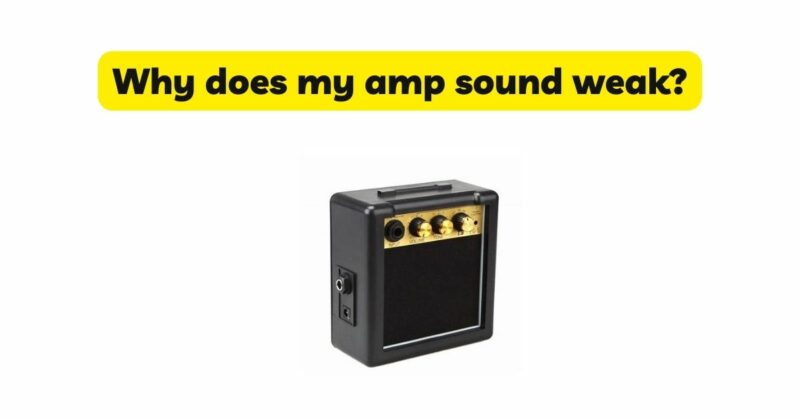
A weak-sounding amp can be frustrating, as it may lack the power, presence, and overall impact necessary to deliver a satisfying musical experience. Several factors can contribute to an amp sounding weak, including technical issues, improper settings, and external factors. In this article, we will explore common reasons why an amp may sound weak and provide practical solutions to help you enhance its power and performance. By understanding these factors and implementing the appropriate adjustments, you can unlock the full potential of your amp and enjoy a stronger and more dynamic sound.
- Technical Issues: a. Power Supply Problems: Insufficient power supply can cause an amp to sound weak and lacking in volume. Check the power cord, fuse, and outlet to ensure a stable and adequate power source. b. Faulty Tubes or Components: Worn-out or damaged tubes, capacitors, or other components can impact the overall output and performance of an amp, resulting in a weak sound. Have a qualified technician inspect and replace any faulty components. c. Speaker Issues: Damaged or low-quality speakers may not be able to handle the power or accurately reproduce sound, leading to a weak and distorted output. Consider upgrading to high-quality speakers that can handle the power and deliver a clearer and more robust sound.
- Improper Amp Settings: a. Inadequate Gain Staging: Improper gain staging can result in a weak and distorted sound. Adjust the gain control to find the right balance between clean and overdriven tones, allowing the amp to deliver a stronger output. b. Incorrect EQ Settings: Inappropriate equalization can affect the tonal balance and overall perceived volume. Adjust the bass, mid, and treble controls to optimize the amp’s frequency response and achieve a fuller sound.
- Speaker Load Mismatch: Using an amp with an improper speaker load can cause the amp to sound weak. Ensure that the speaker’s impedance matches the amp’s specifications to ensure optimal power transfer and maximize the amp’s performance.
- Guitar and Pickup Considerations: a. Weak Pickups: Low-output or poorly matched pickups may not provide enough signal strength to drive the amp effectively, resulting in a weak sound. Consider upgrading to higher-output pickups or adjusting the pickup height to increase signal strength. b. Tone Control Adjustments: The tone controls on the guitar can affect the perceived volume and overall tonal response. Experiment with the guitar’s tone controls to find the optimal setting that enhances the amp’s output.
- Room Acoustics: a. Sound Reflections: Unfavorable room acoustics, such as excessive reflections, can diminish the perceived volume and overall impact of the amp. Use acoustic treatment, such as diffusers or absorbers, to minimize unwanted reflections and improve the sound clarity and projection. b. Standing Waves: Standing waves caused by room dimensions can result in uneven frequency response and nulls, making the amp sound weak in certain areas of the room. Adjust the placement of the amp and your listening position to mitigate standing wave issues.
- External Factors: a. Cable Quality: Low-quality or damaged cables can introduce signal loss, impedance mismatch, or interference, affecting the overall sound quality and perceived volume. Use high-quality cables and regularly inspect them for any signs of wear or damage. b. Pedal Interactions: The placement and order of effects pedals in the signal chain can impact the overall sound and perceived volume. Experiment with different pedal configurations to find the optimal order and balance between the guitar, pedals, and the amp.
- Personal Preferences: It is important to consider personal preferences when evaluating the perceived volume and overall sound of an amp. Some players prefer a cleaner and more articulate sound, while others prefer a higher-gain or distorted tone. Adjust the amp settings and components to suit your desired tonal preferences and playing style.
Conclusion: A weak-sounding amp can hinder your ability to deliver a powerful and dynamic performance. By addressing technical issues, adjusting amp settings, considering speaker load matching, evaluating guitar and pickup choices, optimizing room acoustics, ensuring cable quality, and embracing personal preferences, you can enhance the power and performance of your amp. Remember to perform regular maintenance, experiment with different settings and components, and seek professional assistance when needed. With attention to these factors, you can overcome the challenges and enjoy a stronger and more impactful sound from your amp, allowing your music to shine with greater clarity and presence.