
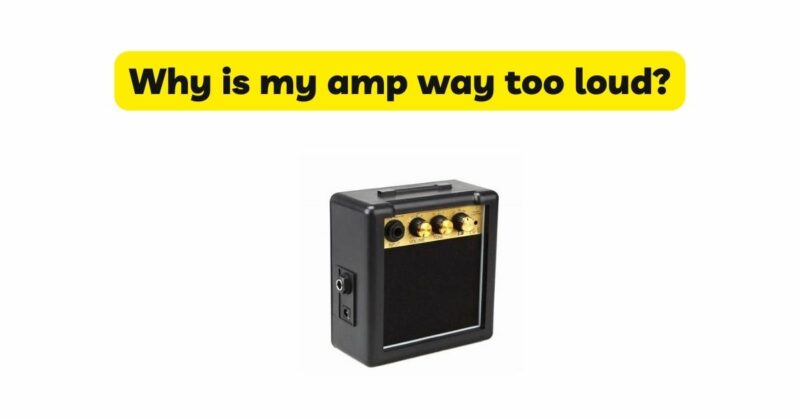
Amplifiers are powerful tools that can deliver captivating sound and electrifying performances. However, there are instances when an amplifier becomes excessively loud, causing concerns about volume control, distortion, and potential damage to speakers. In this article, we delve into the reasons behind an amplifier being too loud, exploring the various factors that contribute to excessive volume. Join us as we uncover the mysteries behind overwhelming amplifier loudness and discuss potential solutions to help you regain control over your sound.
Understanding Amplifier Loudness: Before we explore the causes of excessive amplifier loudness, it’s important to understand the factors that contribute to volume in amplifiers. Amplifier loudness is primarily determined by two key factors:
- Amplifier Gain: The gain control, typically found on the amplifier’s preamp section, determines the level of amplification applied to the incoming signal. Higher gain settings result in increased amplification and subsequently louder output volume. Adjusting the gain control can significantly impact the overall loudness of the amplifier.
- Power Amplification: The power amplifier section of an amplifier further amplifies the signal from the preamp and delivers it to the speakers. The power rating of the amplifier and the volume control directly affect the loudness of the output. Increasing the power delivered to the speakers will result in higher overall volume.
Causes of Excessive Amplifier Loudness: Now let’s explore some common causes behind an amplifier being too loud:
- High Gain Settings: One of the primary reasons for an excessively loud amplifier is having the gain control set too high. Higher gain settings result in increased amplification of the signal, leading to a louder output. This can occur when the gain control is inadvertently turned up, or when the amplifier is set for a higher-gain sound desired for certain musical styles or effects.
- Improper Volume Control: Incorrectly setting the volume control on the amplifier can lead to excessive loudness. If the volume control is set too high, it allows more power to be delivered to the speakers, resulting in louder output. Additionally, using an external volume boost, such as a pedal or effect, can further contribute to excessive loudness if not properly controlled.
- Inadequate Speaker Power Handling: Using speakers that have a lower power handling capacity than the amplifier can lead to excessive loudness. When the amplifier exceeds the speakers’ power handling capability, it can cause distortion, speaker damage, or even failure. It’s crucial to match the power handling specifications of the speakers with the amplifier to ensure optimal performance and prevent overpowering the speakers.
- Impedance Mismatch: Impedance mismatch occurs when the amplifier’s output impedance does not match the impedance of the connected speakers. This can lead to inefficient power transfer, resulting in increased output volume to compensate for the loss. It’s important to use speakers with the appropriate impedance rating and ensure proper matching with the amplifier to avoid excessive loudness and potential damage.
- Faulty Volume or Gain Controls: In some cases, faulty volume or gain controls on the amplifier can cause issues with volume regulation. A defective potentiometer or control circuitry may result in inconsistent or inaccurate volume adjustment, leading to unexpected increases in loudness. If you suspect a control issue, seeking professional repair or replacing the faulty components may be necessary.
- Environmental Factors: Environmental factors, such as the size and acoustics of the room, can impact perceived loudness. A smaller, confined space or one with reflective surfaces can amplify sound waves, making the amplifier appear louder than it actually is. Additionally, factors like proximity to walls or the listener’s position within the room can affect the perceived volume.
Solutions for Regaining Control Over Amplifier Loudness: Now let’s explore potential solutions to address excessive amplifier loudness:
- Adjust the Gain Control: Lowering the gain control on the amplifier can significantly reduce the amplification applied to the incoming signal, resulting in decreased loudness. Experiment with different gain settings to find the balance that achieves the desired sound without excessive volume.
- Control the Volume: Properly set the volume control on the amplifier to a level that suits your needs without overpowering the speakers. Pay attention to the level of the volume control and make adjustments accordingly. Utilizing a volume pedal or attenuator can provide additional control over the output volume.
- Use Suitable Speakers: Ensure that the speakers you are using have the appropriate power handling capacity to match the output of the amplifier. Using speakers with higher power handling capabilities will allow for increased headroom and reduced chances of distortion or speaker damage.
- Verify Impedance Matching: Check the impedance rating of the speakers and ensure that it matches the output impedance of the amplifier. Proper impedance matching ensures efficient power transfer and can help prevent excessive loudness and potential equipment damage.
- Seek Professional Assistance: If you have ruled out other potential causes and are still experiencing excessive loudness, seeking professional assistance from an experienced technician or audio engineer is recommended. They can help diagnose any underlying issues with the amplifier, controls, or speaker setup and provide appropriate solutions.
Conclusion: Excessive amplifier loudness can be frustrating and may lead to distorted sound, potential speaker damage, or an unpleasant listening experience. By understanding the factors that contribute to excessive volume, such as high gain settings, improper volume control, inadequate speaker power handling, impedance mismatch, faulty controls, and environmental factors, you can regain control over your amplifier’s loudness. By adjusting gain and volume controls, using appropriate speakers, ensuring impedance matching, and seeking professional assistance when needed, you can achieve a balanced and controlled sound that meets your requirements. Remember, achieving optimal volume is about finding the right balance between power, tone, and your desired listening environment.