
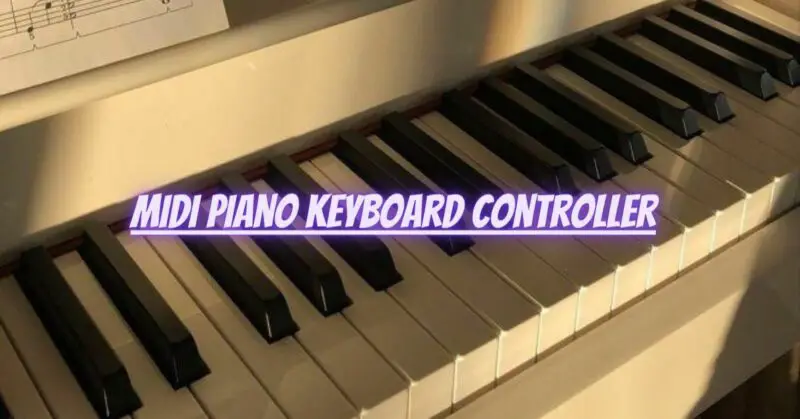
In the realm of modern music production and digital composition, the MIDI piano keyboard controller stands as a powerful and indispensable tool. Designed to interface seamlessly with computers and software, this innovative instrument unlocks a world of creative possibilities for musicians, composers, and producers alike. In this article, we’ll delve into the significance and benefits of a MIDI piano keyboard controller, and how it becomes your gateway to musical creativity and limitless expression.
1. Understanding MIDI Piano Keyboard Controller:
A MIDI (Musical Instrument Digital Interface) piano keyboard controller is a device that uses MIDI technology to transmit musical data to a computer or other MIDI-enabled devices. Unlike traditional standalone keyboards with built-in sounds, a MIDI controller does not produce sound on its own. Instead, it acts as a versatile interface for controlling virtual instruments, software synthesizers, and digital audio workstations (DAWs).
2. Endless Sound Possibilities:
The MIDI piano keyboard controller opens the door to endless sound possibilities. By connecting the controller to a computer running music production software, musicians can access an extensive library of virtual instruments, including pianos, strings, synthesizers, and more. This versatility empowers users to create music across genres and explore diverse sonic landscapes.
3. Realistic Piano Playing Experience:
MIDI piano keyboard controllers often feature weighted and graded hammer-action keys, replicating the feel of an acoustic piano. This realistic playing experience enhances the expressive capabilities of pianists and provides a familiar touch for those accustomed to playing traditional pianos.
4. Expressive Control:
One of the key advantages of a MIDI piano keyboard controller is its expressive control. Musicians can manipulate parameters like pitch bend, modulation, velocity, and aftertouch in real-time, adding depth and emotion to their performances. This level of control fosters dynamic and nuanced interpretations of musical compositions.
5. Recording and Arrangement:
A MIDI piano keyboard controller is an invaluable tool for recording and arrangement. Composers and producers can easily input musical ideas into their DAWs, edit and fine-tune performances, and arrange complex musical compositions efficiently.
6. Seamless Integration:
MIDI piano keyboard controllers offer seamless integration with music software and hardware. They typically connect via USB or MIDI ports, allowing for easy setup and compatibility with various devices, computers, and mobile devices.
7. Compact and Portable:
MIDI piano keyboard controllers are often compact and portable, making them ideal for musicians on the go. They fit easily into studio setups, home recording environments, and live performances, providing musicians with creative freedom wherever they go.
8. Learning and Education:
MIDI piano keyboard controllers are valuable tools for music education. They facilitate interactive learning experiences, allowing students to practice, record, and review their performances, as well as explore a vast array of virtual instruments and musical styles.
Conclusion:
The MIDI piano keyboard controller is a transformative instrument that empowers musicians, composers, and producers to explore the limitless potential of musical creativity. With its expressive control, realistic playing experience, and seamless integration with music software, this versatile tool becomes the gateway to a world of sounds, arrangements, and compositions. Embrace the power of a MIDI piano keyboard controller, and watch as your musical vision comes to life with authenticity, passion, and boundless expression. With the right MIDI controller, you have the means to embark on a journey of musical discovery, push the boundaries of sonic artistry, and leave an indelible mark on the ever-evolving landscape of modern music production.