
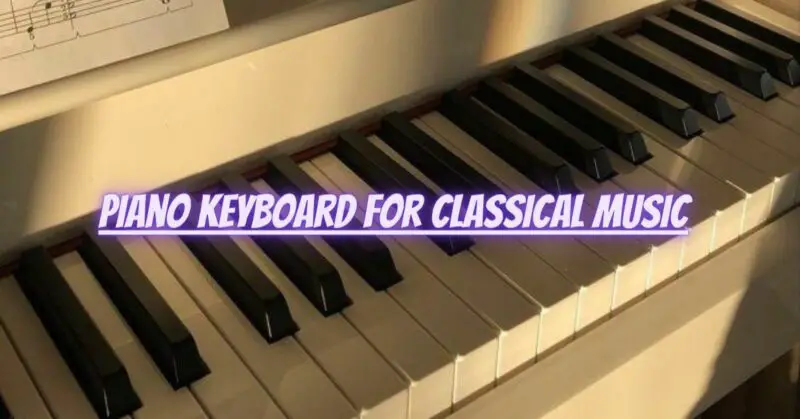
Classical music, with its rich heritage and timeless artistry, demands a piano keyboard that can faithfully capture the nuances and expressive qualities of the compositions. Choosing the right instrument is paramount for pianists dedicated to the performance and interpretation of classical masterpieces. In this article, we’ll explore the essential features that make an ideal piano keyboard for classical music, and how it can elevate the experience of both performers and listeners.
**1. ** Authentic Touch and Feel:
For classical music, an authentic touch and feel are crucial. Look for a piano keyboard with a fully weighted and graded hammer action. This simulates the resistance of an acoustic piano, with heavier touch in the lower register and lighter touch in the higher register, allowing pianists to expressively navigate the dynamics and nuances of classical compositions.
**2. ** Superior Sound Quality:
A piano keyboard with high-quality sound is essential to faithfully reproduce the grandeur and subtleties of classical pieces. Look for keyboards with advanced sound engines that offer authentic and expressive piano tones. Features like stereo sampling and resonance simulation add depth and realism to the sound, providing a truly immersive experience.
**3. ** Full-Size Keyboard:
Classical music often requires the full range of the piano keyboard, from the deep bass notes to the soaring treble. A full-size keyboard with 88 keys allows pianists to faithfully play classical compositions as intended by the composers.
**4. ** Responsive Dynamic Range:
A piano keyboard for classical music should offer a responsive dynamic range, allowing pianists to control the volume and tone with precision. The ability to play soft, gentle passages and powerful, resonant fortissimos enhances the expressive capabilities of the performer.
**5. ** Multiple Piano Voices:
While an authentic grand piano sound is a priority, having multiple piano voices can be beneficial for exploring different interpretations and musical styles. Look for a keyboard that offers various piano tones, including concert grand, studio grand, and classic piano, among others.
**6. ** Pedal Control:
Classical music often involves complex pedal techniques to sustain and shape the sound. A piano keyboard with a responsive sustain pedal and support for half-pedaling is essential for pianists to achieve the desired expressive effects in their performances.
**7. ** Realistic Resonance and Ambience:
Recreating the natural resonance and ambience of an acoustic piano is essential for classical music. Look for a keyboard with advanced sound modeling that simulates the sympathetic vibrations and reverberations found in acoustic grand pianos.
**8. ** Educational Tools and Recording Function:
For classical music students and learners, a piano keyboard with educational tools, such as built-in lessons and recording functions, can be invaluable for practice and self-assessment. Recording your performances allows you to review your progress and identify areas for improvement.
Conclusion:
In the pursuit of musical excellence and artistry, the choice of a piano keyboard for classical music is pivotal. An instrument that faithfully captures the touch, feel, and sound of an acoustic piano elevates the experience for both performers and audiences. With the right piano keyboard, classical pianists can express their creativity, interpret masterpieces with sensitivity, and preserve the timeless beauty of classical music. Embrace the power of an ideal piano keyboard for classical music, and watch as your performances resonate with depth, emotion, and artistic brilliance, leaving a lasting impact on the hearts of listeners and enriching the legacy of classical music for generations to come.