
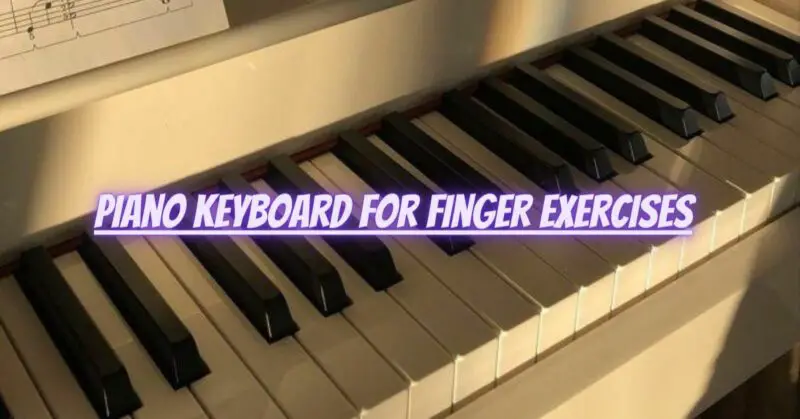
Mastering the piano requires more than just learning to play songs; it involves developing the necessary skills and techniques to create beautiful music. Finger exercises are a vital component of a pianist’s practice routine, as they build strength, dexterity, and artistry in the hands. When choosing a piano keyboard for finger exercises, certain features and characteristics can greatly enhance the effectiveness and enjoyment of these exercises. In this article, we’ll explore the significance of finger exercises for pianists and how to select the right piano keyboard to support your practice and progress.
1. Importance of Finger Exercises:
Finger exercises are designed to target specific hand movements, improve finger independence, and strengthen the muscles used in piano playing. They help pianists develop precise control over their fingers, promoting better accuracy, speed, and coordination on the keys.
**2. ** Weighted Hammer Action:
A piano keyboard with weighted hammer action is highly recommended for finger exercises. This feature closely mimics the feel of an acoustic piano, providing the necessary resistance and response to build finger strength and finger control.
**3. ** Touch Sensitivity:
Touch-sensitive keys are essential for finger exercises. These keys respond to the force of your touch, allowing you to control the volume and tone of each note. Touch sensitivity enables you to focus on nuances in your finger movements, enhancing your ability to play with expressiveness.
**4. ** Full-Size Keyboard:
A full-size keyboard with 88 keys is ideal for finger exercises. It provides a wider range of notes, allowing you to practice exercises that span across octaves. Moreover, a full-size keyboard ensures that you develop proper finger positioning and hand span, crucial for tackling more complex pieces.
**5. ** Built-In Metronome:
A piano keyboard with a built-in metronome is a valuable tool for finger exercises. The metronome helps you maintain a steady tempo as you work through various exercises, improving your sense of rhythm and timing.
**6. ** Practice Mode and Recording Function:
Some modern piano keyboards offer a practice mode and recording function. This allows you to record your finger exercises, review your performance, and identify areas for improvement. The practice mode often provides visual feedback and prompts to guide you through exercises effectively.
**7. ** Variety of Touch and Response Settings:
A piano keyboard with various touch and response settings allows you to customize the keyboard’s sensitivity to match your playing style and skill level. This adaptability ensures a personalized and comfortable practice experience.
**8. ** Educational Features:
Look for a piano keyboard with educational features tailored to finger exercises and technique training. Many keyboards offer integrated learning apps or online resources that provide exercises specifically designed to improve finger dexterity and hand coordination.
Conclusion:
A piano keyboard for finger exercises serves as a dedicated tool to enhance your technical skills and artistry on the piano. With the right features, such as weighted hammer action, touch sensitivity, a full-size keyboard, and a built-in metronome, you can create an immersive practice environment that promotes efficient progress and enjoyable learning. Embrace the power of finger exercises, and let your dedication to practice and honing your craft elevate your piano playing to new levels of mastery. With a piano keyboard tailored to support your finger exercises, you have the means to build strength, dexterity, and artistry in your hands, unlocking the full potential of your musical expression and leaving a lasting impression on audiences and fellow musicians alike.