
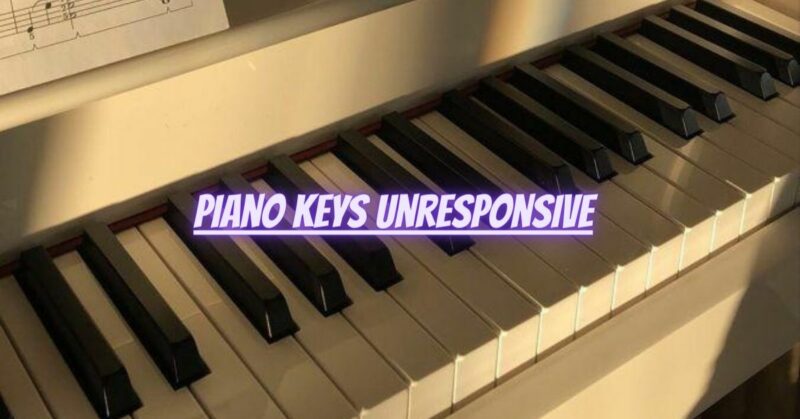
Experiencing unresponsive piano keys can be a frustrating issue for pianists and can significantly impact your playing experience. Unresponsive keys can manifest as keys not producing any sound, not registering key presses, or producing inconsistent volume levels. Several factors can contribute to unresponsive keys, but with careful troubleshooting, many of these issues can be resolved. In this article, we’ll explore the common causes of unresponsive piano keys and provide practical solutions to address the problem and restore the keyboard’s responsiveness.
1. Dust and Debris Buildup:
Accumulated dust, dirt, or debris between the keys can interfere with the proper functioning of the key mechanisms, leading to unresponsive keys.
Solution:
- Clean the keyboard regularly using a soft, lint-free cloth or compressed air to remove any dust and debris. Pay special attention to the areas between the keys.
2. Sticking or Binding Keys:
Keys can stick or bind due to worn or damaged components, such as key bushings, balance rail pins, or hammer felts.
Solution:
- Inspect the keys for any visible signs of sticking or binding. If you notice any issues, contact a qualified piano technician for evaluation and possible repairs.
3. Environmental Factors:
Changes in temperature and humidity levels can affect the materials and components of the piano, leading to unresponsive keys.
Solution:
- Keep your piano in a stable environment with controlled humidity levels to minimize the impact of temperature and moisture changes.
4. Damaged or Worn Hammer Felts (Acoustic Pianos):
In acoustic pianos, worn or damaged hammer felts can affect the keys’ responsiveness and cause unresponsiveness.
Solution:
- If you suspect worn or damaged hammer felts, seek the assistance of a qualified piano technician for inspection and possible replacements.
5. Loose or Broken Key Mechanisms:
Loose or broken key mechanisms, such as key springs or action parts, can lead to unresponsive keys.
Solution:
- Inspect the key mechanisms for any visible damage or loose parts. If you find any issues, contact a qualified piano technician for repair.
6. Software or Firmware Issues (Digital Pianos):
For digital pianos, unresponsive keys may sometimes be caused by software or firmware glitches.
Solution:
- Check the manufacturer’s website for any available software or firmware updates related to your piano model.
- Follow the provided instructions to update the software or firmware.
7. Check Power and Connections (Digital Pianos):
For digital pianos, ensure that the power supply and connections are functioning correctly.
Solution:
- Verify that the piano keyboard is connected to a stable power source and that all cables and connections are secure.
8. Seek Professional Assistance:
If the unresponsiveness of keys persists despite your efforts or if you encounter complex internal issues, seeking professional assistance is recommended.
Solution:
- Contact a qualified piano technician or the manufacturer’s support for a thorough inspection and resolution of the problem.
Conclusion:
Unresponsive piano keys can be resolved through regular maintenance, cleaning, and proper environmental care. By cleaning the keyboard, checking for sticking keys, maintaining proper environmental conditions, and inspecting key mechanisms, you can often restore the responsiveness of the keys. For acoustic pianos, ensuring the hammer felts are in good condition is crucial. For digital pianos, software or firmware updates may resolve certain issues. However, if the problem persists or involves complex internal issues, seeking the expertise of a qualified piano technician or the manufacturer’s support team will help diagnose and address the underlying cause. With responsive and reliable keys, you can enjoy playing your piano keyboard to its fullest potential and bring your musical creations to life.