
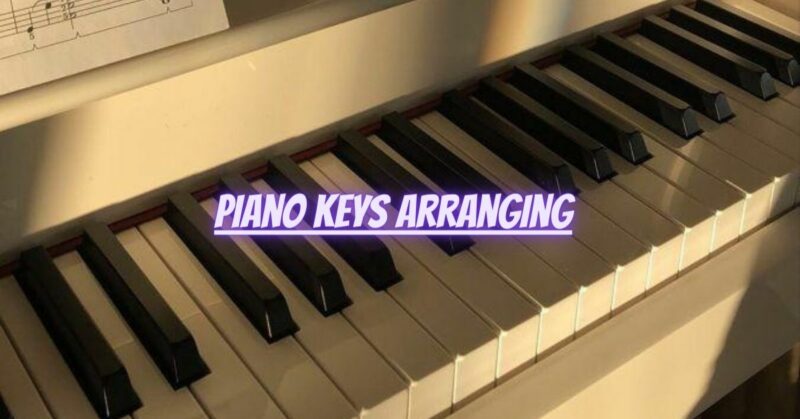
Arranging music is a transformative process that breathes new life into existing compositions or melodies. It involves reimagining and reorchestrating a piece, adding depth and dimension to the original musical idea. Among the many instruments used in arranging, the piano holds a special place due to its versatility and ability to convey multiple musical elements simultaneously. In this article, we will explore the art of piano keys arranging, its significance in musical productions, and how arrangers harness the instrument’s capabilities to create harmonious musical tapestries.
The Role of Piano Keys in Arranging:
Arrangers use piano keys as their primary tool to map out and experiment with musical ideas. The piano’s layout offers an intuitive way to visualize harmonies, chords, and melodies, allowing arrangers to explore various possibilities for their arrangements.
Advantages of Piano Keys in Arranging:
- Harmonic Exploration: The piano’s arrangement capabilities enable musicians to experiment with harmonies, chord progressions, and accompaniment patterns. It helps in finding the most suitable harmonic structure that complements the melody and enhances the overall arrangement.
- Melodic Development: Piano keys allow arrangers to craft intricate melodic lines and counterpoint. They can explore different motifs and melodic variations to enrich the arrangement’s musical palette.
- Rhythmic Precision: The piano’s percussive nature allows arrangers to focus on rhythmic precision and develop complex rhythmic patterns that add depth and groove to the arrangement.
- Expressive Dynamics: With the piano’s touch-sensitive keys, arrangers can incorporate expressive dynamics into their arrangements. They can easily shape the music’s dynamics, adding emotional nuances to the composition.
Arranging Styles and Genres:
Piano keys are prevalent in arranging across various music genres and styles:
- Pop Music Arranging: In pop music, piano keys play a crucial role in creating catchy chord progressions, melodic hooks, and driving rhythms that form the foundation of the arrangement.
- Jazz Arranging: In jazz, piano keys are used to craft intricate harmonies, improvisational lines, and rhythmic grooves that define the genre’s distinctive sound.
- Orchestral Arranging: In orchestral arrangements, the piano is often used to sketch out ideas and harmonies before transcribing them to other instruments.
The Art of Piano Keys Arranging:
- Melodic Embellishments: Arrangers use piano keys to add ornamentations, trills, and other embellishments to enhance the melodic line and give it a unique character.
- Harmonic Transitions: Piano keys facilitate smooth harmonic transitions between sections, making the arrangement flow seamlessly.
- Counterpoint and Voicings: Arrangers use piano keys to experiment with counterpoint and various voicings, creating rich and engaging harmonies.
Notable Arrangers and Their Contributions:
- Billy Strayhorn: A gifted arranger and composer, Strayhorn’s arrangements for Duke Ellington’s band are celebrated for their innovative harmonies and inventive voicings.
- Nelson Riddle: Known for his lush and intricate arrangements, Nelson Riddle’s work with Frank Sinatra and other iconic artists defined the sound of orchestral pop arrangements.
- Gil Evans: A pioneering jazz arranger, Gil Evans’s collaborations with Miles Davis led to groundbreaking jazz recordings that showcased his innovative approach to arranging.
Conclusion:
Piano keys arranging is an art that allows musicians to reimagine and reshape existing compositions into captivating musical experiences. The piano’s versatility, harmonic exploration, and expressive capabilities make it an indispensable tool for arrangers worldwide.
As we celebrate the art of piano keys arranging, we are reminded of its ability to breathe new life into music, offering fresh perspectives and imaginative interpretations. Embrace the enchanting world of piano keys arranging, and with every stroke of the keys, let your creativity soar as you craft harmonious musical tapestries that resonate with audiences and stand the test of time. Happy arranging, and may your piano keys be the gateway to a realm of limitless musical possibilities!