
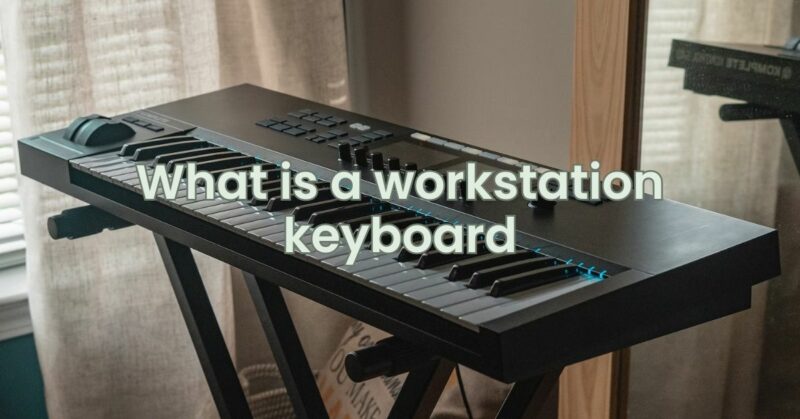
A workstation keyboard is a powerful and multifunctional musical instrument that serves as a one-stop solution for music creation, composition, recording, and performance. Combining the features of a keyboard, synthesizer, and sequencer, a workstation keyboard offers musicians and producers a comprehensive and versatile platform to explore their musical ideas and bring them to life. In this article, we will delve into the world of workstation keyboards, exploring their capabilities, features, and how they empower artists to unlock their musical creativity.
Defining a Workstation Keyboard:
A workstation keyboard is an advanced electronic musical instrument that integrates a range of essential components to facilitate music production and performance. It serves as a digital hub for music creation and often includes the following key elements:
- Keyboard: The workstation keyboard features a set of keys, similar to those on a piano, to play melodies, chords, and various musical parts.
- Sound Library: Workstations come equipped with a vast built-in sound library that includes a diverse range of instrument sounds, such as pianos, strings, synthesizers, drums, brass, and more. These sounds are often high-quality samples, providing realistic and expressive tones.
- Sound Synthesis: Workstations offer sophisticated sound synthesis capabilities, allowing users to create and manipulate their own unique sounds using various synthesis methods, such as subtractive, wavetable, FM, and sample-based synthesis.
- Sequencer: One of the most powerful features of a workstation keyboard is its built-in sequencer. The sequencer allows musicians to record and edit MIDI data, including notes, velocities, and controller information. It also enables audio recording, allowing users to capture vocals and other live performances.
- Effects Processing: Workstations include onboard effects processors, such as reverb, delay, chorus, and EQ, to shape and enhance the sounds produced by the instrument.
- Sampling Capabilities (optional): Some workstations have sampling capabilities, allowing users to record and manipulate their own audio samples, further expanding the instrument’s sonic palette.
The Versatility of Workstation Keyboards:
The versatility of a workstation keyboard lies in its ability to function as a complete music production studio in a single instrument. Musicians and producers can use a workstation to:
- Compose and Arrange: The sequencer allows users to compose and arrange complete songs, layering multiple instrument tracks and creating intricate musical arrangements.
- Create Unique Sounds: With sound synthesis capabilities, musicians can design their own sounds, ranging from classic analog emulations to experimental and futuristic tones.
- Record and Produce: Workstations enable users to record live performances, vocals, and external audio sources, making them ideal for songwriting and music production.
- Live Performance: Workstations often include performance features, such as assignable knobs, sliders, and pads, giving musicians greater control during live performances.
- MIDI Controller: In addition to its onboard sounds, a workstation can function as a MIDI controller, allowing users to control external synthesizers, software instruments, and DAWs.
Conclusion:
A workstation keyboard is a versatile and powerful musical instrument that offers a wealth of creative possibilities for musicians, producers, and composers. With its extensive sound library, synthesis capabilities, built-in sequencer, and effects processing, a workstation provides a comprehensive platform for music creation, recording, and performance. Whether you’re a seasoned professional or an aspiring musician, a workstation keyboard empowers you to unlock your musical creativity and bring your artistic visions to life. Its all-in-one nature makes it a valuable addition to any music studio or performance setup, providing endless opportunities for musical exploration and expression.