
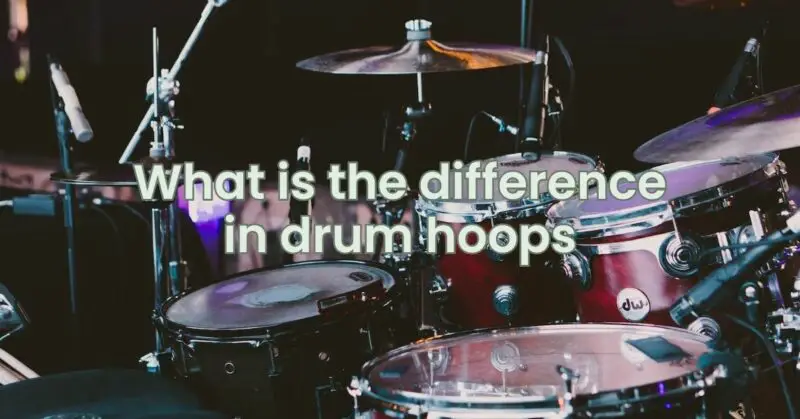
Drum hoops might seem like simple components, but they play a crucial role in shaping the sound and functionality of a drum. Different types of drum hoops are designed to offer varying characteristics, affecting the way the drum resonates, the tuning options available, and even the visual appearance. In this article, we’ll delve into the world of drum hoops, exploring the key differences among them and how they influence your drumming experience.
Types of Drum Hoops
- Triple-Flanged Hoops:
- Triple-flanged hoops are the most common type of drum hoops. They feature three slightly curved flanges on the top and bottom edges.
- These hoops offer versatility in tuning and a balanced sound, making them suitable for various music genres. The flanges allow for a wider tuning range and smooth rimshots.
- Die-Cast Hoops:
- Die-cast hoops are made by pouring molten metal into molds, resulting in a solid and dense hoop.
- These hoops provide a focused and controlled sound with enhanced projection and rimshot consistency. They’re often preferred for rock and metal genres.
- Wood Hoops:
- Wood hoops are typically crafted from hardwoods like maple, oak, or birch. They offer a warm, round sound and a vintage aesthetic.
- Wood hoops are known for their resonance and distinct tonal qualities. They are commonly used on snare drums and in jazz settings.
- Stainless Steel Hoops:
- Stainless steel hoops are durable and produce a bright and cutting sound.
- These hoops add a sharp attack and increased projection to the drum’s sound. They are popular among drummers looking for a focused and powerful presence.
- Flanged Hoops with Inlay:
- These hoops combine the design of triple-flanged hoops with added decorative elements, such as wood, metal, or other materials inlaid into the hoop.
- Inlays can affect both the drum’s aesthetics and its sound, adding unique textures and overtones.
Factors to Consider
- Sound Character: Different hoop types contribute to the drum’s overall sound character. Die-cast hoops offer focused and controlled tones, while wood hoops provide warmth and resonance.
- Tuning Range: Triple-flanged hoops generally offer a wider tuning range due to their flexibility, while die-cast hoops offer a more limited but consistent range.
- Projection and Volume: Die-cast and stainless steel hoops enhance projection and volume, making them suitable for louder musical genres.
- Rimshots and Cross-Sticking: The type of hoop can affect the quality of rimshots and cross-sticking. Die-cast hoops provide consistent rimshots, while wood hoops offer a softer rimshot sound.
- Aesthetics: Drummers often choose hoop types based on visual preferences. Wood hoops add a classic touch, while inlays can offer unique visual appeal.
Conclusion
Drum hoops come in various forms, each contributing its own distinct qualities to the sound, tuning options, and visual aesthetic of a drum. Understanding the differences between hoop types empowers drummers to make informed decisions based on the musical style they play, the sound they want to achieve, and the overall look they desire. Whether you’re seeking the versatile tuning of triple-flanged hoops, the controlled precision of die-cast hoops, or the warmth of wood hoops, the choice of drum hoops can greatly influence the personality and impact of your drumming performance.