
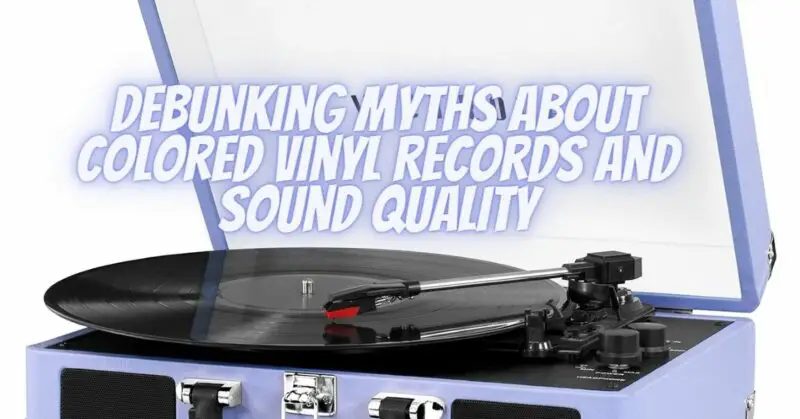
Colored vinyl records have an undeniable visual appeal, adding a touch of uniqueness and creativity to a collection. However, a persistent myth lingers in the audiophile community that colored vinyl records inherently sound worse than their traditional black counterparts. Let’s explore the truth behind this misconception and clarify whether all colored vinyl records sound bad or if the issue is confined to specific colors.
The Myth: Do All Colored Vinyl Records Sound Bad?
The idea that all colored vinyl records sound inferior is not accurate. The color of the vinyl itself does not directly impact sound quality. Instead, factors related to the vinyl pressing process and the quality control measures in place during manufacturing play a more significant role in determining how a colored vinyl record will sound.
Pressing Process and Sound Quality:
The pressing process for vinyl records involves creating a metal stamper that is used to press the grooves into the vinyl. Colored vinyl records can indeed exhibit variations in sound quality due to differences in the vinyl compound used for coloring. Some colored vinyl formulations might be more prone to introducing surface noise, distortion, or other sonic imperfections. However, advancements in manufacturing technology have improved the consistency of colored vinyl pressings, minimizing these potential issues.
Quality Control and Manufacturing:
The key to a high-quality vinyl pressing, regardless of color, lies in rigorous quality control during manufacturing. Reputable pressing plants prioritize quality assurance and conduct tests to ensure that each batch of records meets certain standards. This process involves checking for proper groove depth, centricity, flatness, and other factors that directly impact sound quality.
Color-Specific Concerns:
While the color of the vinyl itself is not a determinant of sound quality, some collectors and audiophiles have noted that extremely opaque or heavily pigmented vinyl colors may carry a higher risk of containing more impurities or additives that could potentially affect sound. Translucent or clear colored vinyl is often considered less likely to introduce sonic issues, as the colorant has a smaller impact on the vinyl compound’s properties.
Choosing High-Quality Pressings:
When seeking colored vinyl records that offer optimal sound quality, consider the following steps:
- Research and Reputation: Opt for releases from established labels and pressing plants known for their commitment to quality control.
- Transparent Colors: Translucent or clear colored vinyl is often a safer choice in terms of sound quality.
- Label Information: Look for information provided by the label or pressing plant about the vinyl compound used and any quality control measures in place.
- Reviews and Feedback: Research collector forums and reviews to gain insights into the sound quality of specific colored vinyl pressings.
In Conclusion:
The notion that all colored vinyl records sound bad is an oversimplification. While certain factors related to the vinyl formulation and manufacturing process can influence sound quality, many colored vinyl pressings today offer excellent audio fidelity. By choosing reputable releases, prioritizing transparent colors, and conducting research, collectors can enjoy the visual allure of colored vinyl without compromising their listening experience.