
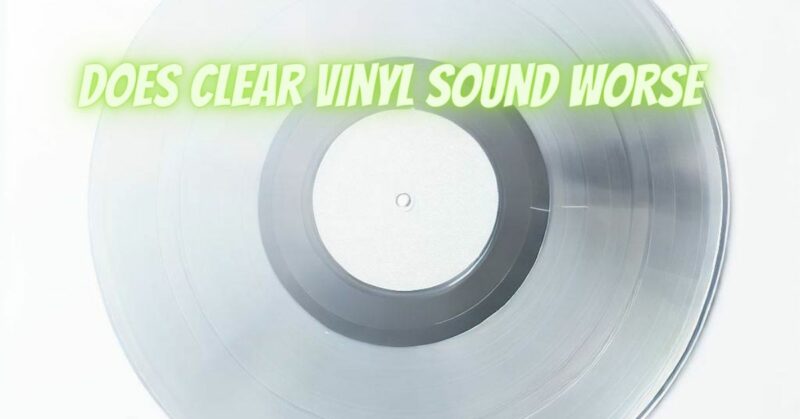
The vinyl record format has witnessed a resurgence in popularity, attracting music enthusiasts and audiophiles alike. As vinyl enthusiasts explore the world of records, they encounter various vinyl variants, including clear vinyl records. Some have questioned whether the transparency of clear vinyl impacts sound quality. In this article, we will investigate the science of vinyl production and determine whether clear vinyl records truly sound worse.
The Vinyl Manufacturing Process:
To understand the impact of transparency on sound quality, it’s essential to delve into the vinyl manufacturing process. Vinyl records are primarily made from PVC (polyvinyl chloride) pellets, which are a clear and colorless material. When creating clear vinyl, no additional pigments or dyes are added to the PVC pellets. The result is a transparent record that retains the inherent characteristics of the vinyl material.
Factors That Influence Sound Quality:
The key factors that determine the sound quality of a vinyl record are not related to its transparency but rather include:
- Pressing Quality: The manufacturing process and quality control measures during pressing play a pivotal role in sound quality. Well-pressed vinyl records, whether clear or black, can provide excellent audio fidelity.
- Mastering: The mastering process, where the master lacquer is created from which records are pressed, significantly influences sound quality. The expertise of the mastering engineer and the care taken during mastering are paramount.
- Playback Equipment: The quality of your turntable, tonearm, cartridge, and speakers greatly affects the sound you hear. A high-quality playback system can reveal the full potential of any vinyl record.
- Record Condition: The condition of the vinyl record, including cleanliness and the absence of scratches or wear, is essential for preserving sound quality.
Transparency and Sound Quality:
The transparency of clear vinyl records does not inherently impact sound quality. The material properties of clear vinyl are nearly identical to standard black vinyl. Both materials are capable of producing high-quality audio when used in well-pressed records and played on a suitable playback system.
Historical Considerations:
In the early days of vinyl production, some clear vinyl records exhibited variations in sound quality due to differences in quality control standards and manufacturing techniques. However, modern advancements in vinyl pressing technology have largely mitigated these concerns.
Collectibility and Aesthetics:
Clear vinyl records are often produced in limited quantities or as special editions, making them highly collectible among vinyl enthusiasts. Collectors appreciate the visual appeal of clear vinyl, as it allows them to see the grooves and inner workings of the record.
In conclusion, the transparency of clear vinyl does not inherently impact sound quality. Sound quality is primarily determined by factors such as pressing quality, mastering, playback equipment, and the condition of the record. Clear vinyl records can offer the same high-quality audio experience as their standard black counterparts when produced and handled correctly.
While clear vinyl records may be cherished for their aesthetics, collectibility, and visual appeal, audiophiles can enjoy them without concerns about compromised sound quality. The choice between clear and black vinyl ultimately comes down to personal preference, visual appeal, and the desire for a unique and transparent addition to one’s vinyl collection. The beauty of vinyl records lies in the analog sound and immersive experience they provide, regardless of their transparency.