
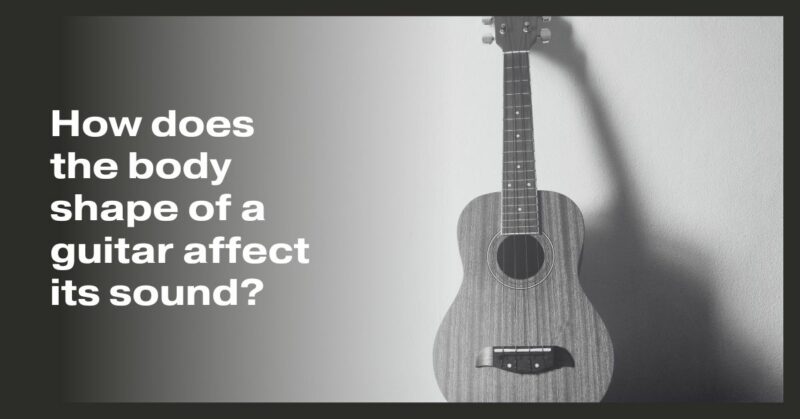
The guitar, an instrument that has evolved over centuries, boasts a wide variety of body shapes. Each of these shapes not only contributes to the instrument’s visual aesthetics but also plays a pivotal role in shaping its sound. In this article, we will explore how the body shape of a guitar influences its tone, resonance, and overall sonic characteristics.
The Role of the Guitar Body:
The body of a guitar serves as a resonating chamber, amplifying the vibrations produced by the strings. This amplification process is fundamental to the guitar’s ability to produce sound. The size, shape, and design of the body impact how it resonates and projects sound waves.
Common Guitar Body Shapes:
- Dreadnought: The dreadnought is one of the most iconic and widely recognized guitar body shapes. It features a large, broad body with a relatively square shoulder design. Dreadnoughts are known for their robust, balanced tone, pronounced bass response, and ample projection. They are particularly favored for folk, bluegrass, and country music.
- Grand Auditorium: Grand Auditorium guitars are characterized by a balanced body shape, narrower waist, and curvier upper bout. These guitars offer a versatile tonal spectrum with emphasis on both treble and bass frequencies. They excel in a wide range of musical styles, making them popular among singer-songwriters and fingerstyle players.
- Parlor: Parlor guitars have smaller, more compact bodies, making them comfortable to play and travel with. Despite their diminutive size, they produce a unique, intimate tone with a strong midrange presence. Parlor guitars are often associated with blues and vintage acoustic styles.
- Jumbo: Jumbo guitars feature oversized bodies with a broad waist and lower bout. Their increased volume and bass response make them well-suited for loud, powerful playing styles, such as strumming and flatpicking. They are popular in country, rock, and gospel music.
- Classical: Classical guitars, also known as nylon-string or Spanish guitars, have a distinct body shape characterized by a smaller upper bout and a narrower waist. The wide, flat soundboard and nylon strings produce warm, mellow tones ideal for classical, flamenco, and fingerstyle playing.
How Body Shape Influences Sound:
- Resonance: The size and shape of the guitar body determine the volume of air it can move, impacting the instrument’s resonance. Larger bodies tend to produce more volume and bass resonance, while smaller bodies favor midrange and treble frequencies.
- Tone Balance: Different body shapes emphasize different tonal qualities. For instance, dreadnoughts offer a balanced spectrum with strong bass, making them ideal for accompanying vocalists. Grand Auditoriums, with their balanced mids and highs, are versatile for solo and ensemble playing.
- Projection: The body shape influences the guitar’s ability to project sound. Larger bodies, like jumbos, excel at projecting volume, making them suitable for stage performances. Smaller bodies may be better for intimate settings.
- Sustain and Decay: Body shape can also affect sustain and decay. Larger bodies often yield longer sustain, while smaller bodies may have quicker note decay.
Conclusion: Finding Your Sound
The body shape of a guitar is a crucial factor in defining its sound. As a guitarist, understanding how different body shapes influence tone, resonance, and projection can help you choose the instrument that best suits your playing style and musical preferences. Ultimately, the choice of body shape should align with your artistic expression, ensuring that the guitar becomes an extension of your musical identity. Whether it’s the deep resonance of a dreadnought, the balanced tones of a grand auditorium, or the intimate warmth of a parlor guitar, each body shape offers a unique voice in the world of music.