
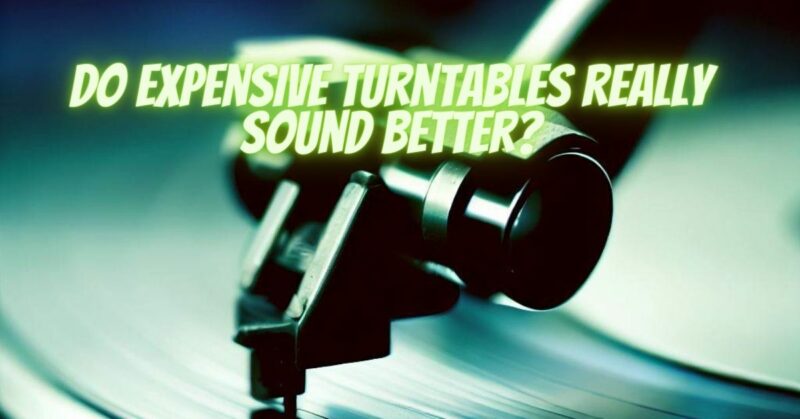
The world of audio equipment offers a wide range of turntables, from budget-friendly models to high-priced, premium options. One common assumption is that spending more on a turntable will result in significantly improved sound quality. In this article, we will explore the factors that influence sound quality in turntables, examine the benefits of higher-priced models, and discuss whether they genuinely deliver superior audio experiences.
The Components That Influence Sound Quality
Several key components in a turntable contribute to sound quality. Understanding these elements is essential for evaluating the potential impact of a higher-priced turntable:
- Cartridge: The cartridge houses the stylus (needle) and converts the grooves on the record into an electrical signal. High-quality cartridges are known for their precision, tracking ability, and ability to capture fine details in the music.
- Tonearm: The tonearm holds the cartridge and stylus. A well-designed tonearm can minimize tracking errors and resonance, contributing to cleaner sound reproduction.
- Plinth: The plinth is the base of the turntable. High-priced turntables often use heavy, dense materials for plinths to reduce vibrations and resonance, leading to improved sound quality.
- Motor and Drive System: A high-quality motor and drive system ensure consistent and accurate platter rotation, reducing speed fluctuations and wow and flutter.
- Isolation: Premium turntables often include isolation features to minimize vibrations from external sources, such as footsteps or loudspeakers, which can affect sound quality.
Benefits of Higher-Priced Turntables:
- Improved Components: High-priced turntables typically feature superior components, such as precision tonearms, high-end cartridges, and better motor systems, resulting in improved sound quality.
- Reduced Resonance: Premium turntables often employ advanced materials and construction techniques to minimize vibrations and resonance, allowing for cleaner, more detailed sound.
- Customization and Upgradability: Many high-end turntables offer customization options, allowing users to fine-tune the setup to their preferences. This flexibility can lead to improved sound quality tailored to individual tastes.
- Exceptional Build Quality: Expensive turntables are known for their meticulous craftsmanship and attention to detail, ensuring the longevity and reliability of the equipment.
- Smoother Playback: Higher-priced turntables tend to provide smoother, more consistent playback, resulting in better tracking and reduced distortion.
Factors to Consider:
- Budget: Determine your budget based on your priorities and expectations for sound quality. A high-priced turntable may not be necessary for everyone.
- Listening Environment: Consider your listening space and the acoustic conditions. A premium turntable may be more beneficial in a well-treated listening room.
- Compatibility: Ensure the turntable integrates seamlessly with your existing audio system and components.
- Maintenance: Be prepared for the upkeep and maintenance that may be required for a high-end turntable to preserve its performance.
While higher-priced turntables often deliver improved sound quality due to superior components and construction, the decision to invest in one should be based on individual priorities and budget. A well-chosen turntable that aligns with your musical preferences can provide a highly satisfying listening experience, whether it’s budget-friendly or high-end. Ultimately, the pursuit of audio excellence is a journey that balances personal preferences, budget constraints, and the desire for sonic perfection.