
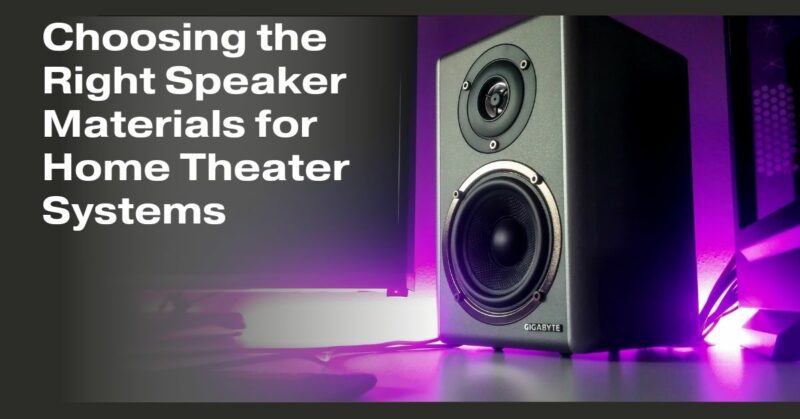
Creating an immersive and cinematic experience in your home theater relies on several factors, and one of the most critical is the choice of speaker materials. The materials used in speaker construction can significantly impact audio quality, clarity, and overall performance. In this guide, we’ll explore the various speaker materials commonly used in home theater systems to help you make an informed choice.
1. Cone Materials
The speaker’s cones are responsible for reproducing different frequency ranges. Here are some common cone materials and their characteristics:
- Paper Cones: Paper cones are known for their natural and warm sound. They are commonly used in mid-range drivers and woofers. Paper cones can provide a balanced audio experience with a pleasing tonal quality.
- Polypropylene Cones: Polypropylene is a lightweight and rigid material often used in speaker cones. It offers good durability and can produce accurate mid-range and bass frequencies.
- Kevlar Cones: Kevlar is a robust and lightweight material. Speakers with Kevlar cones often strike a balance between clarity and warmth, making them suitable for mid-range and bass drivers.
- Aluminum Cones: Aluminum cones are stiff and lightweight, making them ideal for reproducing high frequencies with precision. They are commonly used in tweeters.
2. Dome Materials (Tweeters)
Tweeters handle high-frequency sounds, and their dome materials can impact clarity and detail:
- Silk Dome Tweeters: Silk dome tweeters are known for their smooth and refined high-frequency response. They provide a warm and pleasant sound, making them a popular choice in home theater systems.
- Metal Dome Tweeters: Metal dome tweeters, often made from materials like aluminum or titanium, offer excellent precision and clarity in high-frequency reproduction. They can enhance the detail and accuracy of audio.
3. Cabinet Materials
The speaker’s cabinet plays a role in sound quality and resonance control. Common cabinet materials include:
- Medium Density Fiberboard (MDF): MDF cabinets are rigid and heavy, reducing cabinet-induced coloration. They contribute to a cleaner and more transparent sound.
- Wood Cabinets: Some high-end speakers use hardwood cabinets like oak, cherry, or walnut. While these materials can add warmth to the sound, they may introduce subtle resonances. Proper cabinet construction and bracing are essential to mitigate these effects.
4. Horn Materials
Horn-loaded speakers are known for their efficiency and directivity. The material used for the horn can impact sound dispersion:
- Plastic or Composite Horns: These materials are often used in horn-loaded speakers. They offer durability and can help control sound dispersion for better coverage in home theater setups.
5. Surround Materials
The surround material connects the speaker cone to the frame and can influence the speaker’s excursion and flexibility:
- Rubber Surrounds: Rubber surrounds are known for their durability and longevity. They provide flexibility to the speaker cone, contributing to precise and controlled sound.
- Foam Surrounds: Foam surrounds are cost-effective and can offer good performance. However, they may deteriorate over time.
Choosing the Right Speaker Materials
Selecting the right speaker materials for your home theater system depends on your preferences and room acoustics. Consider the following factors:
- Room Size and Acoustics: Larger rooms may benefit from speakers with greater power handling and dispersion control.
- Listening Preferences: Different materials can produce various sonic characteristics, such as warmth, clarity, or neutrality. Choose materials that align with your audio preferences.
- Budget: High-end materials and construction can impact the cost of speakers. Determine your budget and explore options within that range.
- Speaker Placement: Consider where you’ll place your speakers and how they’ll interact with your room’s acoustics. Some materials may be better suited for specific placements.
- Compatibility: Ensure that the materials used in your speakers are compatible with the other components of your home theater system, including amplifiers and receivers.
Ultimately, the right speaker materials for your home theater system should deliver the audio quality and performance you desire, immersing you in a cinematic audio experience from the comfort of your home.