
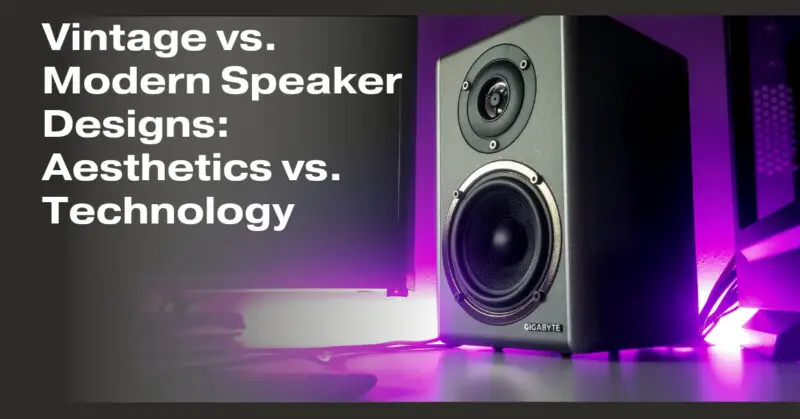
When it comes to speakers, the choice between vintage and modern designs often boils down to a trade-off between aesthetics and technology. Vintage speakers are celebrated for their timeless looks and warm sound, while modern speakers offer cutting-edge technology and performance. In this article, we’ll explore the differences between vintage and modern speaker designs, helping you decide which suits your preferences and needs.
Vintage Speaker Designs: Aesthetics and Nostalgia
- Timeless Aesthetics: Vintage speakers often feature classic designs, real wood veneers, and retro grilles that can complement a variety of decor styles. Their visual appeal adds a touch of nostalgia and charm to any room.
- Warm Sound: Vintage speakers are cherished for their warm and analog sound signatures. They often have a characteristically rich and mellow tone that many audiophiles find pleasing, particularly for vinyl records and classic audio sources.
- Collector’s Items: Some vintage speakers, such as those from renowned brands like Klipsch, JBL, and Altec Lansing, have become collector’s items, appreciated for their historical significance and craftsmanship.
- Simplicity: Vintage speakers are typically straightforward in design and function. They lack the complex digital features of modern speakers, making them easy to operate and maintain.
- Customization: Vintage speakers can be upgraded and customized by audiophiles, allowing enthusiasts to fine-tune the sound to their liking or restore vintage units to their original glory.
Modern Speaker Designs: Technology and Performance
- Advanced Technology: Modern speakers incorporate the latest advancements in driver technology, materials, and signal processing. They often feature high-quality tweeters, woofers, and crossovers designed for accuracy and precision.
- High Resolution and Clarity: Modern speakers are known for their ability to reproduce audio with exceptional clarity and detail. They excel at reproducing high-resolution audio formats, making them a top choice for audiophiles seeking pristine sound quality.
- Wireless Connectivity: Many modern speakers offer wireless connectivity via Bluetooth, Wi-Fi, or other protocols, enabling convenient streaming from smartphones, tablets, and computers.
- Smart Features: Some modern speakers come equipped with smart features like voice assistants (e.g., Amazon Alexa or Google Assistant), room calibration technology, and app-controlled EQ settings for a personalized audio experience.
- Compact and Space-Saving: Modern speakers are often designed to be more compact and space-efficient than their vintage counterparts. This makes them suitable for contemporary living spaces with limited room for large speakers.
- Durability and Longevity: Modern speakers benefit from improved manufacturing techniques and materials, resulting in better durability and longer lifespans.
Choosing Between Vintage and Modern Speakers:
Ultimately, the choice between vintage and modern speakers depends on your priorities:
- Vintage speakers are ideal if you appreciate classic aesthetics, seek a warm and analog sound, and have a passion for collecting or restoring vintage audio equipment.
- Modern speakers are the go-to choice for those who prioritize cutting-edge technology, high-resolution audio, wireless connectivity, and smart features.
Some audiophiles even opt for a blend of both worlds, using modern speakers for their primary audio setup while incorporating vintage speakers for a touch of nostalgia and character. Whichever route you choose, both vintage and modern speakers have their unique appeal, making it a matter of personal preference and the listening experience you desire.