
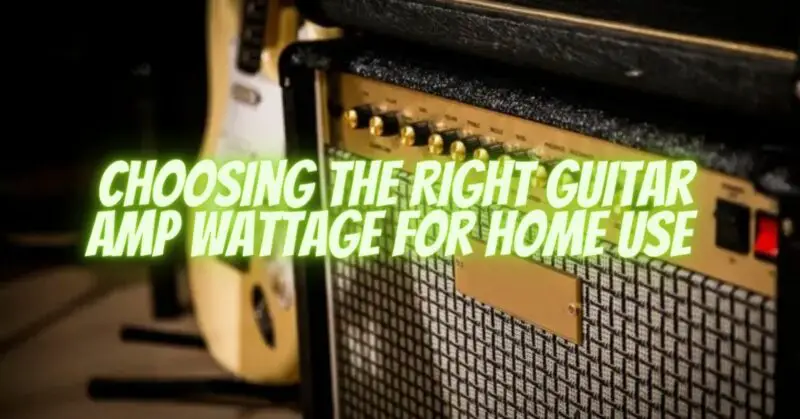
When it comes to playing the electric guitar at home, one of the most critical decisions you’ll make is selecting the appropriate guitar amp wattage. The wattage of your amplifier has a significant impact on the tone, volume, and overall playing experience. In this article, we’ll delve into the factors you should consider when choosing a guitar amp wattage for home use and provide some valuable insights to help you make an informed decision.
- Understanding Wattage
Firstly, let’s clarify what “wattage” means in the context of guitar amplifiers. Wattage refers to the power output of the amplifier and determines how loud it can get. Generally, guitar amps come in a wide range of wattages, from small practice amps of 1-10 watts to high-powered stage amps of 50 watts or more.
- Home Use Requirements
For home use, you don’t need a massive amplifier with high wattage. In most cases, a lower wattage amp will suffice. Here’s why:
a. Volume Control: Lower wattage amps allow you to crank up the volume without disturbing your neighbors or family members. A 1-10-watt amp can provide plenty of volume for home practice without causing noise complaints.
b. Tone at Lower Volumes: Many high-powered amps sound best when played at high volumes to achieve their full tonal potential. Lower wattage amps often sound great even at lower volumes, making them ideal for home use where you might need to keep the noise down.
c. Portability: Smaller wattage amps are generally more compact and easier to move around. This can be especially advantageous for musicians who want to practice in various rooms or take their amp to different locations.
- Types of Amps for Home Use
For home use, you have several types of amplifiers to choose from, each with its own wattage range and characteristics:
a. Practice Amps (1-10 watts): These amps are designed for bedroom or living room practice. They are lightweight, compact, and easy to use. They typically have headphone jacks for silent practice and sound good at lower volumes.
b. Combo Amps (15-30 watts): Combo amps are versatile and can be used for both practice and small gigs. They strike a balance between size, power, and portability. Many guitarists find them perfect for home use due to their flexibility.
c. Modeling Amps (Variable wattage): Modeling amps often come with adjustable wattage settings, allowing you to switch between high and low power output. This feature is excellent for adapting to different playing environments, making them suitable for home use.
d. Tube Amps (5-20 watts): Tube amps are known for their warm, vintage sound. Lower wattage tube amps can produce beautiful tube saturation and harmonic distortion even at lower volumes, making them great for home use.
- Consider Your Musical Style
Your choice of amp wattage should also align with your preferred musical style. If you play clean and mellow genres like jazz or acoustic-based music, a lower wattage amp may be perfect. However, if you’re into high-gain rock or metal, you may need a slightly higher wattage to achieve the desired distortion without excessive volume.
- Additional Features
Lastly, don’t forget to consider the features that matter to you. Some amps come with built-in effects, multiple channels, or Bluetooth connectivity for added versatility and convenience. Evaluate what features enhance your playing experience and choose an amp that meets your needs.
Conclusion
Selecting the right guitar amp wattage for home use is all about striking a balance between volume, tone, and versatility. While higher wattage amps are fantastic for stage performances, a lower wattage amp is often the best choice for quiet and enjoyable practice sessions at home. Consider your musical style, preferences, and any additional features you desire when making your selection. Ultimately, the perfect amp for your home use is the one that complements your playing style and brings joy to your musical journey.