
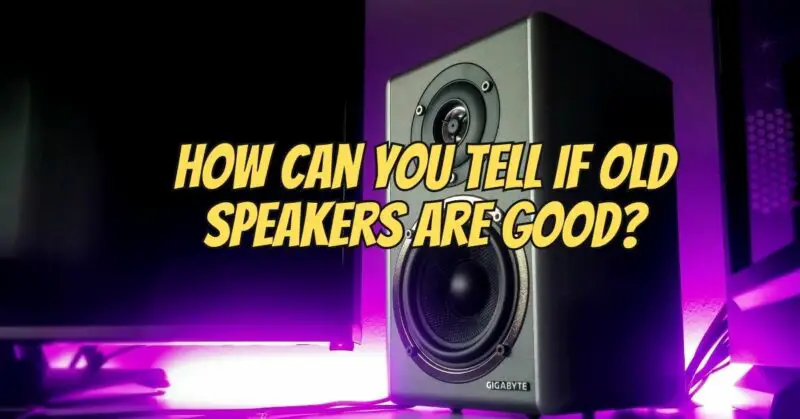
Evaluating the quality and condition of old speakers requires a careful inspection and, in some cases, listening tests. Here are several steps and criteria to consider when determining if old speakers are in good condition and worth keeping:
- Visual Inspection:
- Cabinet Condition: Examine the speaker cabinets for signs of physical damage, such as scratches, dents, or water damage. Ensure that the cabinets are intact and free from major cosmetic issues.
- Grilles: Check the condition of any speaker grilles or covers. Look for holes, tears, or damage that may affect the appearance or sound quality.
- Speaker Components:
- Cone Condition: Inspect the speaker cones for tears, cracks, or other damage. Damaged cones can significantly impact sound quality.
- Surrounds and Suspension: Examine the surrounds (the flexible material around the cone) and suspension (the parts that hold the voice coil in place) for signs of wear, dry rot, or damage. Damaged surrounds and suspensions can affect speaker movement and sound reproduction.
- Voice Coil: Ensure that the voice coil is properly aligned and not rubbing against the magnet structure or the pole piece. Voice coil rubbing can cause distortion and damage over time.
- Connectors and Wiring:
- Check the speaker terminals and wiring for corrosion or loose connections. Clean or replace corroded connectors, and ensure that all connections are secure.
- Listening Test:
- If possible, connect the speakers to a suitable amplifier and audio source for a listening test. Pay attention to the following:
- Clarity: Listen for clarity and detail in the sound. Distortion, rattling, or buzzing noises may indicate problems.
- Balance: Ensure that the speakers produce a balanced sound, with no significant variations in volume between drivers (e.g., tweeters and woofers).
- Frequency Response: Evaluate the frequency response of the speakers. Listen for any significant peaks, dips, or irregularities in the sound across different frequencies.
- Distortion: Play music with varying dynamics and check for distortion, especially at higher volumes.
- Bass Response: Assess the speakers’ ability to reproduce low frequencies. Ensure that the bass is tight and controlled.
- High Frequencies: Listen for clear and smooth high-frequency reproduction from tweeters.
- If possible, connect the speakers to a suitable amplifier and audio source for a listening test. Pay attention to the following:
- History and Documentation:
- If available, review any documentation or history related to the speakers. Information about the speakers’ specifications, maintenance, and previous ownership can provide valuable insights.
- Brand and Model:
- Research the brand and model of the speakers. Some older speaker models from reputable manufacturers are known for their quality and longevity.
- Age and Storage: Consider the age of the speakers and how they have been stored. Speakers that have been kept in a controlled environment (e.g., indoors, away from extreme temperatures and humidity) are more likely to remain in good condition.
- DIY Repairs: Check for any previous DIY repairs or modifications that may have been made to the speakers. Poorly executed repairs can affect performance.
- Price and Value: Assess whether the cost of any necessary repairs or refurbishments is justified by the value and quality of the speakers. Consider the speakers’ sentimental or collector’s value as well.
Ultimately, the decision to keep or invest in old speakers will depend on their overall condition, your listening preferences, and whether any necessary repairs or maintenance can restore them to satisfactory performance. If you’re unsure about the condition or quality of the speakers, consulting with a professional audio technician or speaker specialist can provide valuable insights and recommendations.