
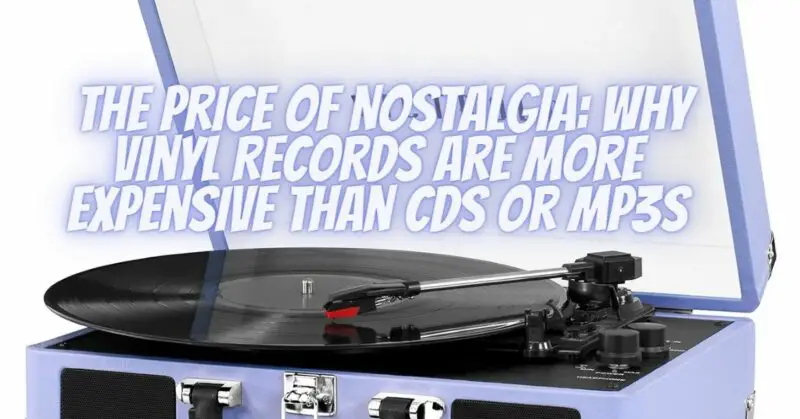
In the age of digital music and streaming services, vinyl records have staged a remarkable comeback, capturing the hearts of music enthusiasts and collectors worldwide. While vinyl offers a unique analog listening experience, it often comes with a higher price tag compared to its digital counterparts, such as CDs or MP3s. In this article, we will explore the reasons behind the higher cost of vinyl records.
1. Production Costs:
Vinyl records are physical products that require a meticulous and labor-intensive production process. Unlike digital formats, which involve minimal manufacturing costs, vinyl records require the following:
- Mastering: Each vinyl release must be carefully mastered for the format, which involves creating a physical master disc that will be used for pressing.
- Vinyl Pressing: Vinyl records are made by pressing vinyl pellets into discs using hydraulic machines. Each record must be individually manufactured, and the process is time-consuming.
- Packaging: Vinyl records often include elaborate packaging, such as gatefold covers, lyric sheets, and artwork. These elements add to production costs.
2. Limited Production Facilities:
Compared to the heyday of vinyl records, there are far fewer pressing plants in operation today. The limited capacity of these facilities can lead to increased production costs due to higher demand for their services.
3. Vinyl Resurgence and Collector’s Market:
The resurgence of vinyl records has driven up demand, especially for new and reissued albums. Collectors and enthusiasts are willing to pay a premium for vinyl records, which can lead to higher prices in the market.
4. Quality Control:
Vinyl records require stringent quality control measures to ensure that each record meets audiophile standards. Records with defects, such as pops, clicks, or warps, are rejected, leading to higher manufacturing costs.
5. Limited Pressings and Special Editions:
Many vinyl releases are produced in limited quantities, such as special editions, colored vinyl, or collector’s editions. These releases cater to niche markets and collectors, often commanding higher prices.
6. Artistic Value:
Vinyl records are often considered as much art as music. The tactile experience of handling a vinyl record, the album artwork, and the physical presence of the record contribute to its perceived artistic value, justifying a higher price point for collectors and enthusiasts.
7. Audiophile Appeal:
Many vinyl enthusiasts are drawn to the superior sound quality offered by vinyl records. Audiophile-grade pressings with meticulous mastering and high-quality materials are often priced higher to cater to this discerning market.
8. Packaging and Extras:
Vinyl records often come with bonus materials, such as lyric sheets, posters, or download codes for digital versions. These extras add to the overall cost of the vinyl package.
9. Limited Availability:
Some vinyl releases are difficult to find, especially older or rare albums. Scarcity and demand can drive up prices significantly in the secondary market.
Conclusion:
Vinyl records hold a special place in the hearts of music enthusiasts, offering a unique and immersive listening experience. While they may be more expensive than CDs or MP3s, the price reflects the craftsmanship, production costs, and collector’s appeal associated with vinyl records. For those who appreciate the tangible and artistic aspects of music, the investment in vinyl can be a rewarding one, providing a connection to music that goes beyond digital convenience.