
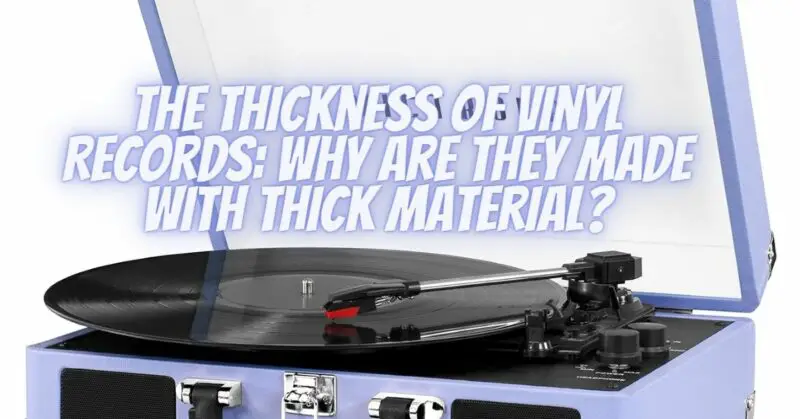
Vinyl records have been a beloved music format for decades, known for their unique analog sound. One striking characteristic of vinyl records is their thickness. In this article, we will delve into the reasons why vinyl records are made with thick material and the impact it has on the listening experience.
1. Durability and Longevity:
- One of the primary reasons vinyl records are made with thick material is durability.
- Thicker vinyl records are more robust and less susceptible to warping or damage from handling.
- This durability ensures that records can withstand years of use, making them a long-lasting medium for music storage and playback.
2. Enhanced Sound Quality:
- The thickness of vinyl records can have a positive effect on sound quality.
- Thicker records have deeper grooves, allowing for more detailed and accurate sound reproduction.
- The added mass of thicker vinyl can also help stabilize the record during playback, reducing vibrations that can negatively impact sound.
3. Resistance to Warping:
- Thin vinyl records are more prone to warping, which occurs when the record’s shape becomes distorted due to temperature or pressure changes.
- Thick vinyl records are less likely to warp, ensuring a consistent and distortion-free listening experience.
4. Reduction in Surface Noise:
- Thicker records often have less surface noise or crackling during playback.
- The increased thickness provides a smoother and more stable surface for the stylus (needle) to track, reducing the likelihood of surface noise.
5. Improved Bass Response:
- The thickness of vinyl records can enhance bass response, providing a richer and more substantial low-end sound.
- Thicker grooves allow for greater movement of the stylus, resulting in better tracking of low-frequency information.
6. Better Handling and Stability:
- The thickness of vinyl records makes them easier to handle, especially during playback.
- Thick records are less likely to flex or wobble on the turntable, which can lead to skips and playback issues.
7. Aesthetic Appeal:
- The thickness of vinyl records also contributes to their visual appeal.
- Many collectors appreciate the substantial feel and weight of thick records, making them a more tactile and satisfying format to own.
8. Compatibility with Older Turntables:
- Older turntables, particularly those from the mid-20th century, were designed with thicker records in mind.
- Playing thin vinyl records on these older turntables can lead to tracking and stability issues.
Conclusion
The thickness of vinyl records serves multiple purposes, from enhancing durability and sound quality to reducing warping and surface noise. While thinner vinyl records do exist, they are typically reserved for specific purposes, such as picture discs or limited editions. For the majority of vinyl releases, the use of thick material remains a fundamental characteristic that contributes to the enduring popularity and appeal of this analog music format. Whether you are a seasoned vinyl enthusiast or new to the world of records, the thickness of vinyl records plays a vital role in delivering the authentic and captivating listening experience that vinyl is known for.