
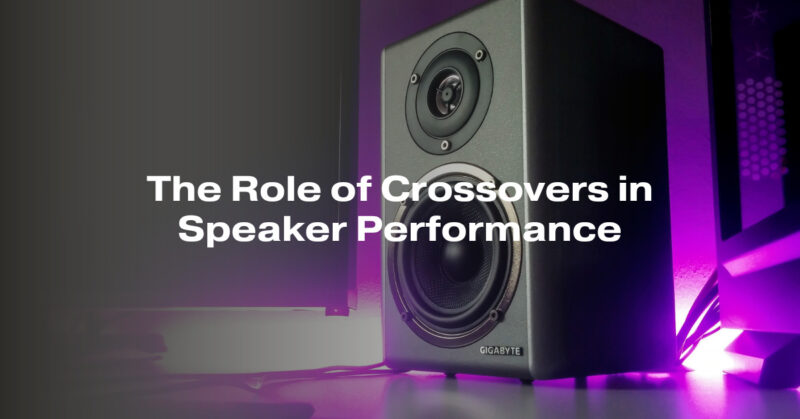
Crossovers are a fundamental component of any multi-driver speaker system, playing a crucial role in ensuring accurate audio reproduction and optimal speaker performance. While often overlooked by casual listeners, understanding the function and importance of crossovers is essential for audiophiles, audio engineers, and anyone seeking high-quality sound. In this comprehensive guide, we’ll delve into the world of crossovers, exploring their role in speaker design, how they impact sound quality, and why they are indispensable for achieving a well-balanced audio experience.
Table of Contents:
- What Are Crossovers?
- Defining crossovers in the context of speaker systems.
- The historical development of crossover networks.
- Why Crossovers Are Necessary
- Exploring the challenges of reproducing a full audio spectrum.
- How multiple drivers work together in a speaker.
- The Basic Function of Crossovers
- Dividing the audio frequency spectrum.
- Directing specific frequency ranges to dedicated drivers (woofers, tweeters, midrange).
- Ensuring each driver operates within its optimal frequency range.
- Types of Crossovers
- Passive vs. active crossovers.
- First-order, second-order, and higher-order crossovers.
- The benefits and drawbacks of different crossover types.
- Crossover Components
- Inductors, capacitors, and resistors.
- How crossover components affect speaker performance.
- High-quality vs. budget components.
- Crossover Design Considerations
- The importance of matching crossovers to specific speaker drivers.
- Time alignment and phase coherence in crossover design.
- Designing crossovers for different speaker configurations (2-way, 3-way, etc.).
- Crossover Slopes and Roll-Off Rates
- Understanding crossover slope characteristics.
- How steep roll-off rates impact speaker performance.
- Achieving seamless driver integration.
- Crossovers and Sound Quality
- How crossovers influence sound clarity and imaging.
- Reducing distortion and driver stress with proper crossover design.
- The role of crossovers in achieving a flat frequency response.
- Bi-Wiring and Bi-Amping with Crossovers
- Bi-wiring and its impact on speaker performance.
- Bi-amping and its advantages for audiophiles.
- Implications for crossover design in bi-wire and bi-amp setups.
- Crossover Adjustment and Tuning
- The importance of fine-tuning crossovers.
- Using crossover adjustments to optimize speaker performance.
- Tools and techniques for crossover tuning.
- Crossover Myths and Misconceptions
- Debunking common misconceptions about crossovers.
- Separating fact from fiction in crossover-related beliefs.
- Future Trends in Crossover Technology
- Advancements in crossover design and implementation.
- The role of digital signal processing (DSP) in modern crossovers.
- Conclusion
- Summarizing the critical role of crossovers in speaker performance.
- The impact of crossover design on sound quality and the listening experience.
- Empowering audiophiles and audio enthusiasts to make informed choices when selecting or designing speakers.
This guide aims to provide a comprehensive understanding of crossovers, shedding light on their vital role in speaker performance and sound quality. Whether you’re an audiophile seeking the ultimate listening experience, an audio engineer designing custom speakers, or simply a curious enthusiast, mastering the art of crossovers will enhance your appreciation of audio reproduction and enable you to make informed decisions in the world of speakers and audio systems.