
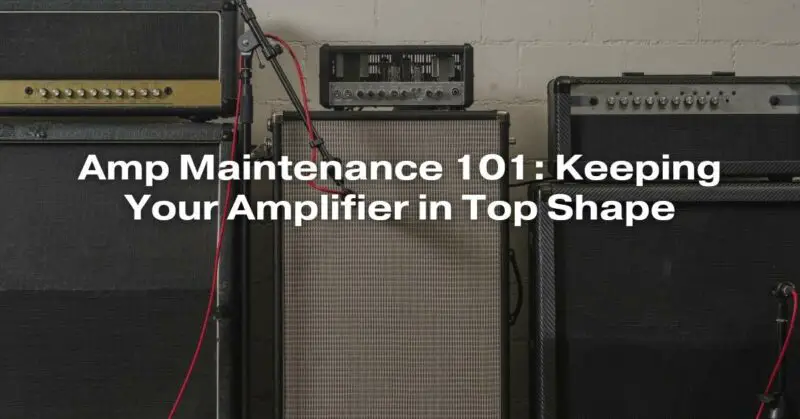
For musicians, a high-quality amplifier is not just a piece of equipment; it’s an essential tool that can make or break a performance. Whether you’re a guitarist, bassist, keyboardist, or a DJ, taking care of your amplifier is crucial to ensure it consistently delivers the best sound possible. In this guide, we’ll explore the basics of amplifier maintenance to help you keep your equipment in top shape.
Understanding Your Amplifier
Before diving into maintenance tips, it’s essential to understand the basic components of your amplifier. Amplifiers consist of various parts, including:
- Tubes or Transistors: Amplifiers can use vacuum tubes or solid-state transistors to amplify the signal. Knowing which type your amp uses is crucial for maintenance.
- Speakers: Amplifiers are often paired with one or more speakers, which are essential for projecting sound.
- Circuitry: The internal circuitry includes capacitors, resistors, and other electronic components that shape the sound.
- Controls: Amplifiers typically have knobs and switches for adjusting volume, tone, and other settings.
Maintenance Tips
Now that we have a basic understanding of amplifiers, let’s explore some maintenance tips to keep your amplifier in top shape:
1. Regular Cleaning
Dust and dirt can accumulate on the exterior and interior of your amplifier, affecting its performance and longevity. Use a soft, dry cloth to wipe down the amp’s exterior regularly. For the interior, if you’re comfortable doing so, you can open the amplifier (only if you’re experienced with electronics) and carefully remove dust using compressed air. If you’re not experienced, it’s best to have a professional technician perform this task.
2. Check and Replace Tubes (If Applicable)
Tube amplifiers require special attention. Tubes wear out over time and need to be replaced periodically. If you notice a drop in sound quality, inconsistent volume, or excessive noise, it might be time to replace the tubes. Consult your amplifier’s manual for guidance on tube replacement, or seek help from a qualified technician.
3. Inspect Cables and Connections
Loose or damaged cables and connections can introduce noise and affect your amplifier’s performance. Regularly inspect all cables, jacks, and connectors. Replace any damaged or frayed cables to ensure a secure and noise-free connection.
4. Keep Your Amplifier Ventilated
Amplifiers generate heat, especially when used at high volumes. Ensure that your amplifier has proper ventilation to prevent overheating. Keep it in a well-ventilated area and avoid covering the ventilation slots. Adequate airflow will prolong the life of your amplifier.
5. Transport and Storage
If you gig frequently, invest in a sturdy case or bag to transport your amplifier safely. When not in use, store your amp in a cool, dry place to protect it from humidity and temperature fluctuations.
6. Avoid Overloading
Pushing your amplifier to its limits for extended periods can lead to overheating and damage. Be mindful of the amp’s wattage and avoid exceeding its recommended power levels. If you need more volume, consider miking your amp through the PA system.
7. Perform Routine Maintenance
Consider a periodic check-up by a professional technician, even if your amplifier appears to be working fine. They can identify and address potential issues before they become major problems.
8. Use a Surge Protector
Power surges and spikes can damage your amplifier’s delicate circuitry. Invest in a high-quality surge protector to safeguard your equipment from electrical fluctuations.
9. Follow Manufacturer’s Recommendations
Always refer to your amplifier’s user manual for specific maintenance instructions provided by the manufacturer. Following their recommendations will help ensure that you don’t void any warranties or unintentionally damage your amplifier.
Conclusion
Your amplifier is a critical component of your musical setup, and proper maintenance is essential for keeping it in top shape. By following these maintenance tips and treating your amplifier with care, you can enjoy years of reliable and high-quality sound. Remember that when in doubt, it’s best to consult with a professional technician who specializes in amplifier repair and maintenance to ensure your gear stays in peak condition. With a well-maintained amplifier, you can continue to create and perform music at your best.