
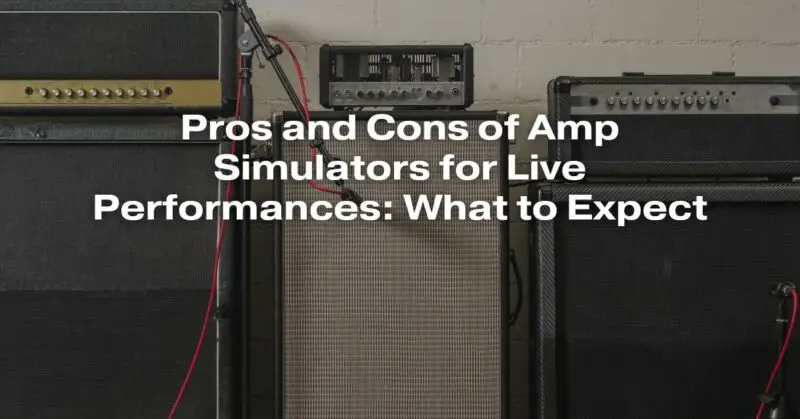
In the world of music, live performances have always been a crucial aspect of an artist’s career. Whether you’re a guitarist, bassist, or keyboard player, the choice of your amplification system can significantly impact your live sound. In recent years, amp simulators have gained popularity as a viable alternative to traditional amplifiers. These digital devices aim to replicate the sound and feel of classic and modern amplifiers while offering convenience and versatility. However, like any technology, amp simulators come with their own set of advantages and disadvantages. In this article, we’ll explore the pros and cons of amp simulators for live performances and what you can expect when using them.
Pros of Amp Simulators:
- Portability and Convenience: One of the most significant advantages of amp simulators is their portability. Traditional tube amplifiers can be heavy and bulky, making them challenging to transport, especially on tour. Amp simulators, on the other hand, are compact and lightweight, making them ideal for musicians who need to travel frequently.
- Versatility: Amp simulators offer an extensive range of amp models, effects, and tonal possibilities in a single unit. This versatility allows musicians to experiment with different sounds and styles without needing multiple amplifiers and effects pedals. This flexibility can be especially valuable for bands with limited stage space.
- Consistency: Amp simulators provide consistent sound quality regardless of the venue or location. Traditional amplifiers can sound different from one gig to another due to variations in acoustics and power sources. With an amp simulator, you can ensure that your tone remains consistent throughout your performances.
- Direct Sound Recording: Amp simulators often have direct output options, allowing you to connect them directly to a mixing console or recording interface. This feature simplifies the recording process and eliminates the need for microphones, reducing stage clutter and potential sound issues.
- Cost-Effective: While high-quality amp simulators can be an initial investment, they can save musicians money in the long run. Traditional amplifiers require maintenance, tube replacements, and occasional repairs, which can add up over time. Amp simulators are generally more cost-effective in terms of maintenance.
Cons of Amp Simulators:
- Lack of Authenticity: Despite their advancements, amp simulators may not fully replicate the organic and tactile feel of playing through a real amplifier. Some musicians argue that the subtle nuances and dynamics of tube amplifiers are challenging to recreate digitally.
- Latency and Processing Power: Amp simulators rely on digital processing, which can introduce latency, especially if you’re running other effects or plugins simultaneously. High levels of latency can affect your playing experience, making it feel less responsive.
- Dependence on Technology: Amp simulators are electronic devices, and like all technology, they can malfunction or become obsolete over time. Reliability can be a concern, and musicians must be prepared for technical glitches during live performances.
- Learning Curve: Using amp simulators effectively can require a learning curve. Musicians need to navigate menus, tweak parameters, and understand the technology to get the best results. This can be time-consuming, especially for those accustomed to traditional amplifiers.
- Live Sound Engineer Challenges: Some live sound engineers may have limited experience with amp simulators, which could lead to challenges in achieving the desired sound. Effective communication between musicians and engineers is crucial to ensure a seamless performance.
In conclusion, amp simulators offer numerous advantages for live performances, such as portability, versatility, and consistency. However, they also come with some drawbacks, including potential authenticity issues and technical concerns. The decision to use amp simulators or traditional amplifiers ultimately depends on your specific needs and preferences as a musician. Many artists choose to integrate both into their setups, combining the convenience of amp simulators with the character of traditional amplifiers to create a unique and reliable live sound experience. Regardless of your choice, it’s essential to thoroughly test and prepare your gear before hitting the stage to ensure a successful live performance.