
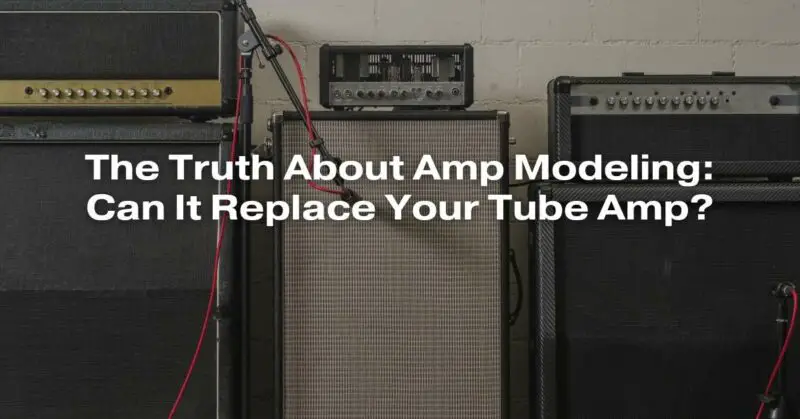
For decades, guitarists and musicians have sworn by the warm, organic sound of tube amplifiers. These iconic pieces of equipment have been the backbone of countless legendary performances and recordings. However, recent advances in technology have given rise to a new player in the game – amp modeling. Amp modeling technology has made significant strides, and many players are now wondering if it can truly replace their beloved tube amps. In this article, we’ll delve into the world of amp modeling, exploring its capabilities, limitations, and whether it can indeed replace your tube amp.
Understanding Amp Modeling
Amp modeling, also known as digital or virtual amp emulation, is a technology that seeks to recreate the sound and characteristics of traditional tube amplifiers using digital processing. This is achieved through a combination of software and hardware, which aims to capture the essence of different amp models, including vintage classics like the Fender Deluxe Reverb and the Marshall Plexi.
Amp modeling units are typically found in various forms, including:
- Dedicated Modeling Amps: These are amplifiers that incorporate amp modeling technology within the amp itself, often allowing you to switch between various amp models and tweak their settings.
- Multi-Effects Processors: These are standalone units designed to provide a wide range of effects and amp modeling options. They are versatile and can often be integrated into existing amplifier setups.
- Digital Audio Workstation (DAW) Plugins: Musicians can also access amp modeling through software plugins within recording software. This allows for a high degree of control during the recording and mixing process.
Advantages of Amp Modeling
- Versatility: One of the most significant advantages of amp modeling is its versatility. With a single piece of equipment, you can emulate the sounds of multiple classic amplifiers, cabinets, and even effects pedals. This versatility makes it an excellent choice for musicians who require a wide range of sounds for different genres and styles.
- Portability: Tube amps are notorious for their weight and size. In contrast, amp modeling units are often lightweight and compact, making them ideal for gigging musicians who need to transport their gear frequently.
- Consistency: Tube amps can be finicky and require regular maintenance. Amp modeling units offer consistency in sound and performance, with no worries about tubes needing replacement or components aging.
- Recording Flexibility: Amp modeling is a powerful tool in the studio. Musicians and producers can experiment with various amp and mic combinations, finding the perfect tone for a particular track. This flexibility can save both time and money during the recording process.
- Cost-Efficiency: High-quality tube amplifiers can be expensive. Amp modeling offers an affordable way to access a wide range of amp tones without breaking the bank.
Limitations of Amp Modeling
While amp modeling has come a long way, it still has its limitations, and some purists argue that it can never fully replace the experience of playing through a tube amp. Here are some of the limitations:
- Feel and Dynamics: Tube amps are prized for their responsive feel and dynamic range. They react to a player’s touch and pick attack in a way that amp modeling struggles to replicate convincingly.
- Tonal Nuances: While amp modeling can capture the broad characteristics of different amplifiers, it may not capture the subtleties and nuances that tube amp enthusiasts cherish. This includes the harmonic richness and natural compression that tube amps provide.
- Latency: Depending on the quality of the modeling unit and the processing power of your setup, there can be a slight but noticeable latency when playing through amp modeling. This delay can be a deal-breaker for some players, especially in live performance situations.
- Authenticity: Some players argue that amp modeling lacks the authentic “vibe” of a real tube amp. There’s a certain mystique and aura that surrounds vintage tube amps that is challenging to replicate.
Can Amp Modeling Replace Your Tube Amp?
The answer to whether amp modeling can replace your tube amp depends on your specific needs, preferences, and the context in which you’re playing. Here are some scenarios where amp modeling may or may not be a suitable replacement:
1. Home Practice and Recording: For many guitarists, especially those in shared living spaces, amp modeling can be a game-changer. It allows for silent practice through headphones and offers a wide range of tones for recording without disturbing neighbors or family members.
2. Gigging Musicians: Amp modeling is a viable option for gigging musicians, especially those who value portability and the ability to switch between different amp sounds seamlessly. However, it’s crucial to invest in a high-quality amp modeling unit to ensure reliability and minimize latency issues.
3. Studio Use: Amp modeling is a powerful tool in the recording studio, where experimentation and tone sculpting are essential. It can save time and resources by offering a diverse range of amp tones without needing multiple physical amplifiers.
4. Tube Amp Purists: If you’re a guitarist who values the tactile response, dynamics, and tonal subtleties of a tube amp, amp modeling may not be a satisfying replacement. Tube amp purists are likely to stick with their beloved analog gear.
5. Combination Approach: Some players choose to combine the best of both worlds by using a tube amp for their core tone and integrating amp modeling for effects and additional tonal options. This hybrid approach can provide the best of both worlds.
Conclusion
In the debate between amp modeling and tube amplifiers, there is no definitive winner. Both technologies have their strengths and weaknesses, and the choice ultimately comes down to personal preference and specific requirements. Amp modeling has undoubtedly made impressive strides and has become a valuable tool for musicians, whether for practice, recording, or live performance. However, for those who cherish the authenticity and character of tube amps, there will always be a place for them in the world of music. In the end, the “truth” about amp modeling is that it’s a versatile and powerful tool, but it may never fully replace the cherished tradition of tube amplification.