
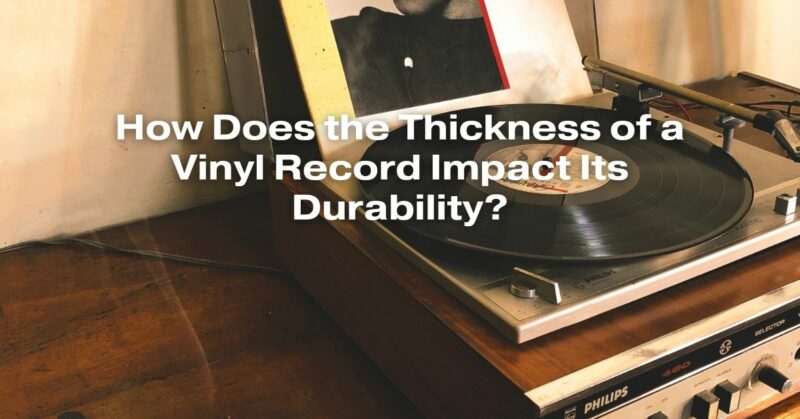
Vinyl records have witnessed a resurgence in popularity despite the digital age’s dominance. Audiophiles and music enthusiasts appreciate the warmth and authenticity that vinyl offers. However, not all vinyl records are created equal. One significant factor that impacts their longevity and sound quality is their thickness. In this article, we will delve into the intricate relationship between the thickness of a vinyl record and its durability.
Understanding Vinyl Record Thickness
Vinyl records come in different thicknesses, typically measured in mils (thousandths of an inch). The most common thicknesses are 120g, 140g, and 180g. These measurements represent the weight of one square meter of vinyl. A 180g vinyl record is thicker and heavier than a 120g record, which impacts how the needle interacts with the grooves during playback.
Impact on Sound Quality
The thickness of a vinyl record significantly influences its sound quality. Thicker records provide a deeper groove for the needle to travel through, allowing for more intricate and nuanced sound reproduction. The increased depth of grooves in thicker records minimizes the risk of distortion, resulting in a cleaner, more faithful playback of the recorded audio. Audiophiles often prefer thicker vinyl records due to their superior sound quality.
Durability and Longevity
Durability is a crucial aspect of vinyl records, especially for collectors. Thicker records are inherently more durable than their thinner counterparts. Their increased thickness makes them less susceptible to warping, bending, and surface damage. Thin records, such as 120g vinyl, are more prone to warping under adverse conditions like heat or improper storage. Thicker records, such as 180g vinyl, have a higher resistance to warping, ensuring that they remain flat and playable over time.
Additionally, the grooves on thicker records tend to wear out more slowly compared to thin records. The stylus exerts less pressure on the grooves of a thick record, reducing wear and tear during playback. This means that a well-maintained thicker vinyl record can provide a superior listening experience for a more extended period.
Collector’s Perspective
For vinyl collectors, the thickness of a record can significantly impact its value. Thicker records are often considered more valuable due to their enhanced durability and superior sound quality. Collectors are willing to pay a premium for well-preserved, thick vinyl records, especially for rare or limited-edition releases. The thickness of a record, along with its condition, rarity, and historical significance, plays a pivotal role in determining its market value among collectors.
Conclusion
In the world of vinyl records, thickness matters. Thicker records not only provide superior sound quality but also offer enhanced durability and longevity. For audiophiles, music enthusiasts, and collectors alike, investing in thicker vinyl records ensures a high-quality listening experience that stands the test of time. As the vinyl revival continues, understanding the impact of thickness on a vinyl record’s durability becomes essential for both enthusiasts and collectors, ensuring that the charm of analog music remains alive for generations to come.