
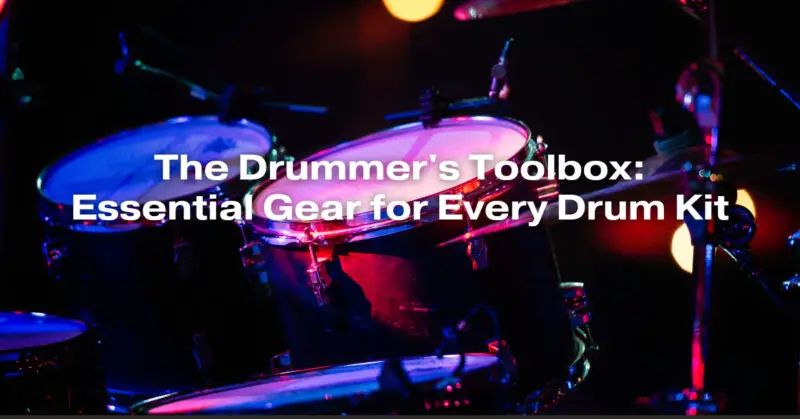
Just as a carpenter relies on their toolbox to craft works of art, a drummer’s arsenal of gear is essential for creating the perfect rhythm. Whether you’re a beginner setting up your first drum kit or an experienced drummer looking to enhance your setup, “The Drummer’s Toolbox” is your comprehensive guide to the essential gear that every drum kit should include. From sticks and pedals to hardware and accessories, we’ll explore the must-have items that will elevate your drumming experience.
1. Drumsticks
- Sizes and Types: Understand the various sizes and types of drumsticks, such as 5A, 5B, and specialty sticks for different styles.
- Material: Explore the difference between wood and synthetic drumsticks and how they affect your playing.
- Tip Shapes: Learn how different tip shapes, like acorn, barrel, and nylon tips, produce distinct sounds.
2. Drumheads
- Batter vs. Resonant: Discover the roles of batter heads (top) and resonant heads (bottom) and how their selection impacts your drum’s sound.
- Material and Ply: Explore different drumhead materials (e.g., coated, clear) and ply configurations (e.g., single-ply, double-ply).
- Tuning: Understand the importance of tuning your drumheads to achieve the desired pitch and tone.
3. Drum Pedals
- Single vs. Double: Compare single and double bass drum pedals and their applications in various musical styles.
- Chain vs. Direct Drive: Learn about different pedal drive mechanisms and their feel and responsiveness.
- Adjustability: Explore the importance of pedal adjustments, including spring tension and beater angle.
4. Hardware
- Cymbal Stands: Understand the various types of cymbal stands, such as straight, boom, and hi-hat stands.
- Snare Drum Stand: Learn about snare drum stands and their adjustability for positioning your snare drum.
- Throne (Drum Stool): Choose the right drum throne for comfort and posture during long drumming sessions.
5. Cymbals
- Ride Cymbal: Explore ride cymbals and their unique sound characteristics for various playing styles.
- Crash Cymbals: Learn about crash cymbals, their sizes, and how they add accents and dynamics to your beats.
- Hi-Hats: Understand hi-hat cymbals and their role in creating the core rhythm of your drumming.
6. Accessories
- Drum Key: The essential tool for tuning and adjusting drumheads and hardware.
- Dampening Materials: Explore options like drum dampeners, moon gels, and cymbal felts for controlling resonance.
- Carrying Cases: Protect your drums and cymbals with cases or bags for safe transport and storage.
7. Drum Rug
- Non-Slip Base: Choose a drum rug with a non-slip base to keep your drum kit stable during performances.
- Portability: Consider the rug’s size and portability for gigging and practice sessions.
8. Metronome
- Tempo Control: Use a metronome to maintain precise timing and improve your sense of rhythm.
- Practice Aids: Explore metronomes with additional features like built-in rhythm patterns and programmable settings.
9. Ear Protection
- Earplugs: Protect your hearing during loud performances and rehearsals with musician-grade earplugs.
- In-Ear Monitors: Consider in-ear monitors for clear sound and customization of your monitor mix.
10. Maintenance Tools
- Drumhead Oils and Cleaners: Keep your drumheads in top condition with specialized oils and cleaners.
- Drum Key Holder: Prevent the loss of your drum key by attaching it to a holder on your drum kit.
Conclusion
“The Drummer’s Toolbox: Essential Gear for Every Drum Kit” equips you with the knowledge and tools necessary to optimize your drumming experience. Whether you’re fine-tuning your existing setup or assembling your first drum kit, having the right gear is crucial for achieving your desired sound and performance comfort. As you embark on your rhythmic journey, remember that your drumming gear is not just equipment—it’s an extension of your musical expression and creativity. So, invest in quality gear, maintain it with care, and let your drumming speak volumes in every beat and rhythm you create.