
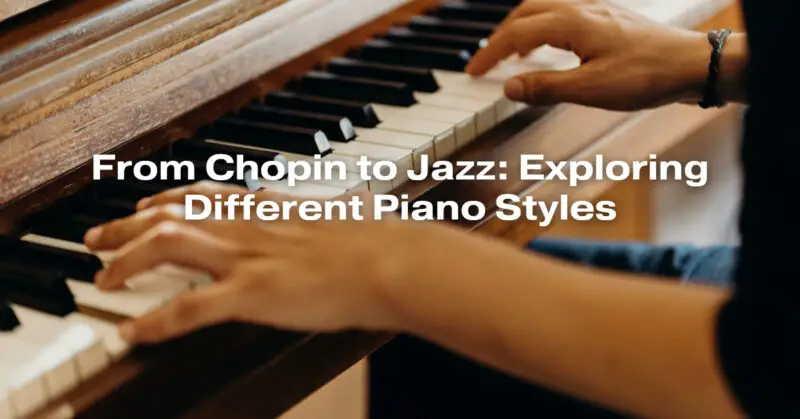
The piano is a versatile instrument that has been a central figure in a wide range of musical styles throughout history. From the classical compositions of Chopin to the improvisational brilliance of jazz legends, the piano has continually evolved to adapt to different genres. “From Chopin to Jazz: Exploring Different Piano Styles” takes you on a captivating journey through the diverse world of piano music, offering insights into the unique characteristics of each style.
Chapter 1: The Classical Elegance
- Chopin’s Romanticism: Delve into the passionate and emotive compositions of Frédéric Chopin, characterized by intricate melodies and delicate phrasing.
- Mozart’s Classical Precision: Explore the classical era with Mozart, where precision, balance, and form are paramount.
Chapter 2: The Power of Beethoven
- Beethoven’s Expressiveness: Uncover the dynamic and dramatic piano works of Ludwig van Beethoven, exemplifying powerful expression and innovation.
Chapter 3: The Romantic Era
- Liszt’s Virtuosity: Experience the virtuosic piano compositions of Franz Liszt, known for their technical demands and sweeping emotional landscapes.
- Rachmaninoff’s Richness: Delight in Sergei Rachmaninoff’s lush harmonies and rich textures that define the late Romantic era.
Chapter 4: The World of Jazz
- Jazz Piano Pioneers: Explore the origins of jazz piano with legends like Duke Ellington, Fats Waller, and Jelly Roll Morton, known for their improvisational prowess.
- The Swing Era: Swing into the swing era with Benny Goodman and Count Basie, where pianists played a pivotal role in shaping the big band sound.
Chapter 5: Jazz Evolution
- Bebop Brilliance: Dive into the bebop revolution led by pianists like Thelonious Monk and Bud Powell, characterized by intricate melodies and rapid chord changes.
- Modal and Cool Jazz: Explore the modal jazz of Miles Davis and the cool jazz of Dave Brubeck, where pianists ventured into innovative harmonic landscapes.
Chapter 6: Contemporary Eclecticism
- Contemporary Classical: Discover modern classical composers like Philip Glass and Ludovico Einaudi, known for their minimalist and emotionally evocative compositions.
- Contemporary Jazz Fusion: Experience the fusion of jazz with various genres, including fusion pioneers like Chick Corea and Herbie Hancock.
Chapter 7: Finding Your Style
- Cross-Genre Exploration: Encourage the exploration of different piano styles to find your unique musical voice, blending elements from classical, jazz, and beyond.
- Creating Fusion: Embrace the fusion of styles to create your own compositions, blending classical elegance with jazz improvisation or exploring entirely new musical territories.
Conclusion
“From Chopin to Jazz: Exploring Different Piano Styles” invites you to embark on a musical odyssey through the diverse and enchanting world of piano music. Whether you are drawn to the expressive beauty of classical compositions or the spontaneous brilliance of jazz improvisation, the piano offers an endless array of styles to explore. As you navigate these musical landscapes, you will not only expand your repertoire but also deepen your appreciation for the rich tapestry of piano styles that have shaped the course of music history. So, take a seat at the piano and let your fingers dance across the keys as you journey through the captivating world of piano music.