
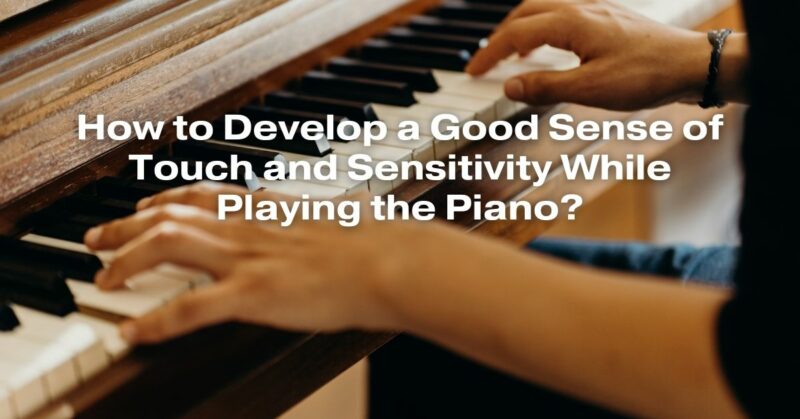
A good sense of touch and sensitivity is essential for expressive piano playing. It allows you to control the dynamics of your playing, from soft and delicate to loud and powerful. It also allows you to create different textures and moods in your music.
There are a few things you can do to develop a good sense of touch and sensitivity while playing the piano:
- Use the weight of your arm, not just your fingers. When you press a key, don’t just use your fingers to push it down. Use the weight of your arm to help you generate more power and control. To do this, try to relax your shoulders and arms and let the weight of your arm fall into the key.
- Experiment with different key pressures. Try playing the same note with different amounts of pressure. Notice how the sound changes. You should be able to produce a wide range of dynamics, from very soft to very loud.
- Pay attention to the tactile feedback from the keys. Notice how the keys feel when you press them down. Are they light and responsive? Or are they heavy and sluggish? This feedback can help you to gauge how much pressure you are using and to adjust your playing accordingly.
- Practice playing different types of music. Different types of music require different types of touch. For example, classical music often requires a more delicate touch, while jazz and blues often require a more forceful touch. By practicing different types of music, you will learn to develop a more versatile touch.
Here are some specific exercises that you can do to improve your touch and sensitivity:
- Play the same note with different key pressures. Start by playing the note softly. Then gradually increase the pressure until the note is as loud as you can play it. Then gradually decrease the pressure until the note is inaudible. Repeat this exercise with different notes and different tempos.
- Play a simple melody with different dynamics. Start by playing the melody softly. Then gradually increase the dynamics until the melody is as loud as you can play it. Then gradually decrease the dynamics until the melody is inaudible. Pay attention to how the mood of the melody changes as the dynamics change.
- Play different types of arpeggios. Arpeggios are broken chords that are played one note at a time. They are a great way to practice controlling the dynamics of your playing. Try playing different types of arpeggios with different dynamics. Pay attention to how the sound of the arpeggios changes as the dynamics change.
- Play different types of scales. Scales are a great way to practice playing evenly and with good control. Try playing different types of scales with different dynamics. Pay attention to how the sound of the scales changes as the dynamics change.
It is also important to listen carefully to your playing. Pay attention to the dynamics, texture, and mood of your music. Make adjustments to your playing as needed to achieve the desired effect.
Developing a good sense of touch and sensitivity takes time and practice. But with regular practice, you will be able to develop a more expressive and nuanced piano playing style.
Here are some additional tips for developing a good sense of touch and sensitivity while playing the piano:
- Warm up before you practice. This will help to relax your hands and arms and make them more responsive.
- Take breaks when you need them. If you start to feel tired or your hands start to hurt, take a break. Don’t push yourself too hard, or you could risk developing an injury.
- Be patient and persistent. It takes time and practice to develop a good sense of touch and sensitivity. Don’t get discouraged if you don’t see results immediately. Just keep practicing and you will eventually reach your goals.
With a little effort and dedication, you can develop a good sense of touch and sensitivity while playing the piano. This will allow you to express yourself more fully through your music and to create a more beautiful and engaging sound.