
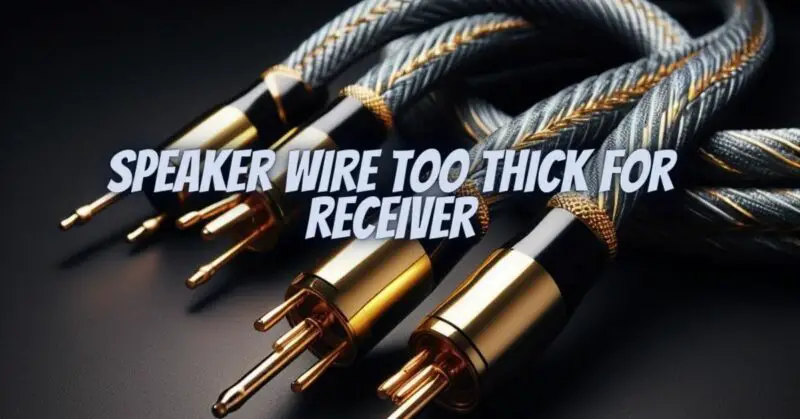
When setting up an audio system, choosing the appropriate speaker wire gauge is essential to ensure optimal performance. However, there may be instances where you find yourself with speaker wire that is thicker than what your receiver or amplifier can accommodate. In this comprehensive article, we will explore the potential issues that can arise when using speaker wire that is too thick for your receiver, along with practical solutions to address this challenge.
Understanding Speaker Wire Gauge
Speaker wire gauge, measured using the American Wire Gauge (AWG) system, indicates the thickness of the wire. Lower AWG numbers represent thicker wire. The choice of speaker wire gauge is crucial because it affects electrical resistance, current-carrying capacity, and signal transmission.
Potential Issues of Using Thick Speaker Wire
Using speaker wire that is thicker than what your receiver or amplifier can accommodate can lead to several issues:
- Connector Compatibility: Many receivers and amplifiers are designed to accept specific wire gauges or connectors. Using extremely thick wire may not fit into the binding posts or connectors provided, making it challenging to establish a secure connection.
- Overcrowding: Thick wire can take up more space within the receiver’s or amplifier’s terminals, potentially leading to overcrowding. This can hinder your ability to connect all your speakers or cause unnecessary strain on the connectors.
- Connection Difficulty: Extremely thick wire may be challenging to insert into the terminals, resulting in frustration and potential damage to the wire or the receiver’s connectors.
- Compatibility with Banana Plugs: Some people prefer using banana plugs to connect speaker wires for convenience and improved connectivity. Excessively thick wire may not fit into standard banana plugs, limiting your options for connection.
Solutions to Address Thick Speaker Wire
If you find yourself with speaker wire that is thicker than what your receiver or amplifier can accommodate, here are several solutions to consider:
- Trim the Wire: One straightforward solution is to trim the excess insulation and conductor from the speaker wire, exposing a shorter length of wire that fits comfortably into the receiver’s terminals.
- Use Pin Connectors: Instead of using bare wire ends, consider using pin connectors that can be attached to the wire. These connectors are designed to fit into binding posts and can accommodate various wire sizes.
- Spade Connectors: Spade connectors feature a flat, fork-like shape that can be crimped or soldered onto the ends of your speaker wire. They provide a secure and reliable connection and can accommodate thicker wires.
- Speaker Wire Adapters: If you have multiple speakers with thick wire and limited receiver compatibility, you can use speaker wire adapters that allow you to connect multiple wires to a single binding post. These adapters often come with multiple binding posts to accommodate thicker wire.
- Upgrade Binding Posts: Some receivers and amplifiers allow you to upgrade the binding posts to ones with a larger diameter, which can accommodate thicker wire. Check your equipment’s compatibility and options for upgrading binding posts.
- Consult Manufacturer Guidelines: Review your receiver or amplifier’s user manual or contact the manufacturer for specific recommendations regarding wire gauge compatibility.
- Consider Wire Reduction: If all else fails and you have a particularly thick wire that cannot be adapted or accommodated, you may consider replacing it with a more suitable gauge of speaker wire.
While using speaker wire that is too thick for your receiver or amplifier can present challenges, there are practical solutions available to address this issue. The key is to ensure a secure and reliable connection while maintaining optimal audio performance. By trimming, using appropriate connectors, or considering equipment upgrades, you can successfully adapt your speaker wire to work with your receiver or amplifier, allowing you to enjoy your audio system without compromising on connectivity or audio quality. Always consult your equipment’s user manual and manufacturer guidelines for specific recommendations and compatibility information to make informed decisions about your speaker wire setup.