
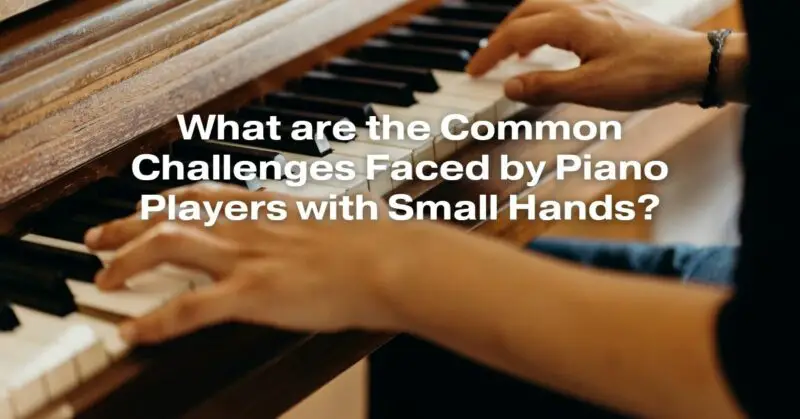
Many people with small hands are hesitant to learn to play the piano, believing that they will be at a disadvantage. However, there are many successful pianists with small hands, and it is possible to learn to play the piano with any size hand. However, it is important to be aware of the challenges that small-handed pianists face and to develop strategies for overcoming them.
Challenges with Reaching Octaves
One of the most common challenges for small-handed pianists is reaching octaves. Octaves are intervals of eight notes, and they are often used in piano music. Small-handed pianists may not be able to stretch their hands wide enough to reach octaves comfortably.
Challenges with Playing Large Chords
Another challenge for small-handed pianists is playing large chords. Chords are groups of three or more notes played simultaneously. Small-handed pianists may not be able to reach all of the notes in a large chord at the same time.
Challenges with Avoiding Fatigue
Small-handed pianists are also at an increased risk of fatigue. This is because they have to stretch their hands further to reach certain notes. Small-handed pianists need to be careful to take breaks often and to avoid overplaying.
Strategies for Small-Handed Pianists
Despite the challenges, there are many things that small-handed pianists can do to succeed. Here are a few tips:
- Choose the right repertoire. Not all piano music is created equal. Some pieces are more difficult for small-handed pianists to play than others. When choosing repertoire, it is important to consider the hand span required and the complexity of the chords.
- Use good technique. Proper piano technique is essential for all pianists, but it is especially important for small-handed pianists. Good technique will help you to play more efficiently and avoid fatigue.
- Be patient. Learning to play the piano takes time and practice. Small-handed pianists may need to practice longer than pianists with larger hands in order to master certain pieces.
Here are some additional tips for small-handed pianists:
- Use your other hand. If you cannot reach a note with one hand, try using your other hand. This is a common technique used by small-handed pianists.
- Arpeggiate chords. Arpeggiating a chord means playing the notes of the chord one at a time instead of all at once. This can be a helpful way to play large chords or chords that are difficult to reach.
- Use a smaller piano. If you are a child or if you have very small hands, you may want to consider using a smaller piano. There are many pianos available that are specifically designed for children or small adults.
Conclusion
Having small hands does not mean that you cannot learn to play the piano. With proper technique and repertoire selection, small-handed pianists can achieve success. If you are a small-handed pianist, be patient and persistent. With practice, you will be able to master any piece of music.