
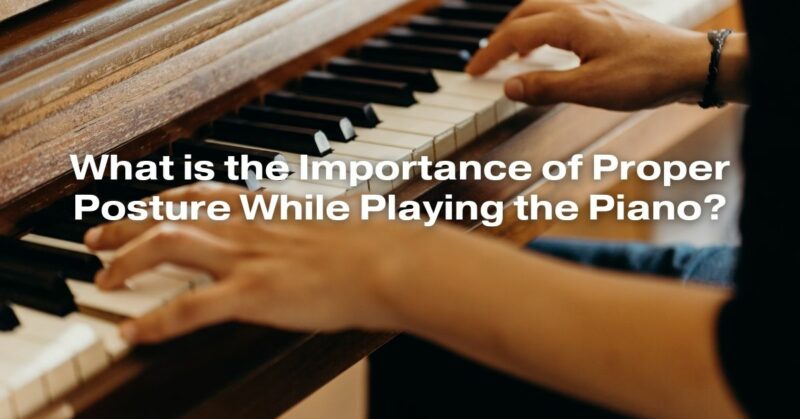
Playing the piano is a delightful and rewarding pursuit that requires not only talent and practice but also proper technique and posture. The importance of maintaining good posture while playing the piano cannot be overstated. It not only enhances your performance but also contributes to your overall well-being. In this article, we will explore why proper posture is crucial for pianists and how it can make a significant difference in your playing and long-term health.
- Improved Performance
One of the most immediate benefits of maintaining proper posture while playing the piano is an improvement in your performance. Proper posture allows for better control of your hands and fingers, leading to increased accuracy and precision when playing the keys. This control is essential for executing complex passages, dynamics, and articulations with ease.
A well-aligned body position also facilitates fluid movement across the keyboard, allowing pianists to transition between notes and chords effortlessly. When your posture is correct, you are more likely to maintain a consistent tempo and rhythm throughout your performance, enhancing the overall musicality of your playing.
- Reduced Risk of Injury
Piano playing, like any other instrument, can put strain on your body if you don’t maintain proper posture. Incorrect posture can lead to various musculoskeletal problems, including back pain, neck strain, and wrist injuries. These issues can significantly hinder your ability to play the piano comfortably and can even force you to take extended breaks from playing to recover.
Proper posture minimizes the risk of injury by promoting a more natural alignment of your spine, shoulders, arms, and wrists. When you sit or stand correctly at the piano, your body is less likely to experience undue stress and tension, which can lead to chronic pain or acute injuries.
- Enhanced Comfort and Endurance
Long practice sessions and performances are a regular part of a pianist’s life. Maintaining proper posture ensures that you remain comfortable during extended periods at the keyboard. When your body is properly aligned, you are less likely to experience discomfort or fatigue, allowing you to practice and perform for longer durations without strain.
Proper posture also contributes to better breathing and circulation. Adequate oxygen flow to the muscles and brain is essential for sustaining focus and endurance during demanding pieces. By sitting or standing correctly, you can optimize your oxygen intake and maintain mental clarity throughout your playing.
- Improved Technique Development
Establishing good posture from the beginning of your piano journey can significantly impact your technique development. When you play with proper alignment, you reinforce correct muscle memory and movement patterns. This, in turn, makes it easier to develop advanced piano techniques such as scales, arpeggios, and finger independence exercises.
Proper posture also enables better hand and finger positioning, making it easier to navigate the keyboard and execute challenging fingerings. As your technique improves, you’ll find it much more manageable to tackle complex compositions and express yourself more fully through your music.
- Aesthetic Appeal
Proper posture while playing the piano not only benefits your playing but also contributes to your overall stage presence. Whether you’re performing for an audience or simply playing for yourself, maintaining an upright and confident posture enhances your visual appeal as a pianist.
Audiences are naturally drawn to performers who exude confidence and professionalism. A well-aligned posture communicates a sense of mastery and control over the instrument, leaving a lasting impression on your listeners.
Conclusion
In the world of piano playing, proper posture is a foundational element that cannot be ignored. It not only improves your performance but also safeguards your physical well-being and promotes long-term musical development. Developing good posture habits early in your piano journey is essential, and even experienced pianists can benefit from periodic posture checks.
Remember that proper posture goes beyond just sitting or standing up straight; it involves the alignment of your entire body, from your head to your fingertips. By prioritizing and maintaining proper posture, you can unlock your full potential as a pianist and enjoy a more comfortable, rewarding, and injury-free musical journey.