
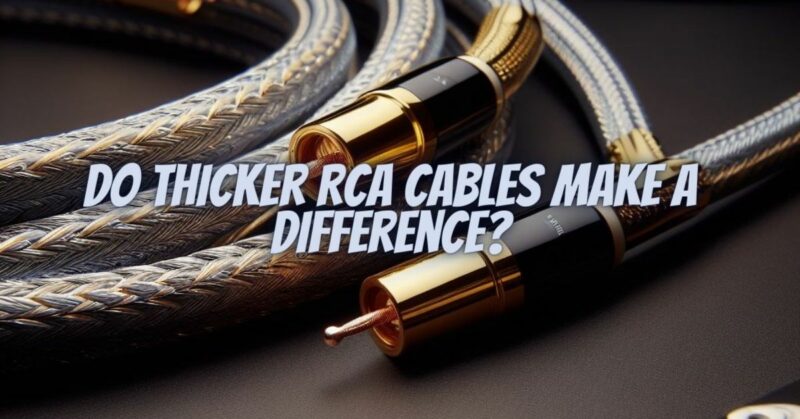
In the world of audio equipment and accessories, the choice of cables can be a source of confusion and debate. One common question that arises is whether thicker RCA cables make a significant difference in audio quality. This article aims to provide a comprehensive guide to help you understand the factors influencing RCA cable thickness, how it may impact audio quality, and whether investing in thicker RCA cables is justified.
Understanding RCA Cables
RCA cables, short for Radio Corporation of America, are widely used connectors for transmitting analog audio and video signals. They are recognizable by their distinctive color-coded plugs, typically red and white for audio, and yellow for composite video. RCA cables are common in home audio setups, connecting various components like CD players, turntables, amplifiers, and speakers.
Factors That Affect RCA Cable Thickness
- Conductor Gauge:
- The gauge or thickness of the cable conductors is a crucial factor in determining cable thickness. Lower gauge numbers represent thicker conductors. Thicker conductors typically have a lower resistance, which can affect the cable’s ability to transmit signals without significant loss.
- Shielding:
- Effective shielding is essential to protect against electromagnetic interference (EMI) and radio-frequency interference (RFI). Thicker cables often have more room for advanced shielding, which can enhance their performance in noisy environments.
- Insulation and Dielectric:
- The type and thickness of insulation and dielectric materials used in the cable can also contribute to its overall thickness. High-quality cables may feature thicker and more advanced insulating materials.
Do Thicker RCA Cables Make a Difference?
- Signal Loss:
- Thicker RCA cables typically have lower resistance due to their thicker conductors. This can result in less signal loss over longer cable runs, making them advantageous for applications requiring extended cable lengths. In shorter cable runs, the difference in signal loss between thicker and thinner cables is often negligible.
- Interference Reduction:
- Thicker RCA cables may offer better shielding and reduced susceptibility to electromagnetic and radio-frequency interference. This can be particularly beneficial in environments with high electronic interference, where thicker cables can provide a more stable and noise-free signal.
- Audio Quality:
- Thicker RCA cables may contribute to improved audio quality, particularly in situations where signal loss and interference are significant concerns. Audiophiles and critical listeners may appreciate the subtle improvements in clarity and detail that thicker cables can provide, especially in high-fidelity audio setups.
- Budget Considerations:
- When deciding whether to invest in thicker RCA cables, it’s essential to consider your specific needs and budget. Thicker cables can offer advantages in certain scenarios but may not be necessary for all setups, particularly in more casual audio configurations or those with budget constraints.
In conclusion, the impact of thicker RCA cables on audio quality depends on various factors, including the length of the cable run, the presence of interference, and the overall quality of your audio equipment. Thicker cables can make a difference in scenarios where signal loss and interference are significant concerns, and they may contribute to improved audio quality, particularly in high-fidelity audio setups.
However, for shorter cable runs and less demanding audio setups, the difference in audio quality between thicker and thinner RCA cables may not be noticeable. When making a decision, it’s crucial to assess your specific requirements and budget constraints. Thicker RCA cables can be a valuable investment in situations where they address specific audio quality or interference issues, but they may not be necessary for all users. Ultimately, the choice should align with your goals for achieving the best audio experience within your unique circumstances.