
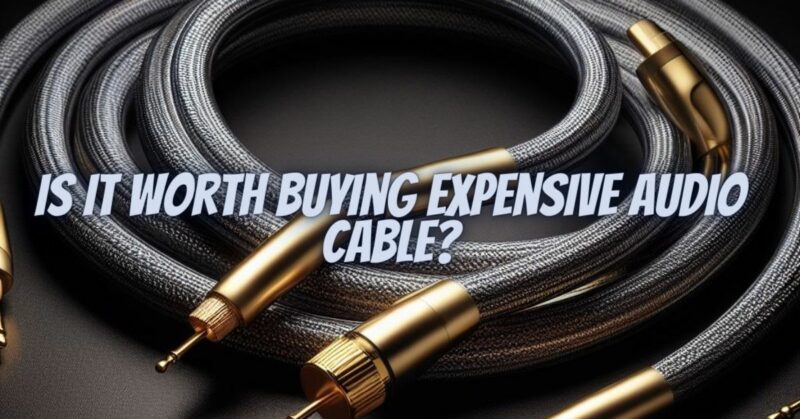
The world of audio equipment is a realm filled with choices, and few items stir up as much debate as audio cables. Specifically, the question of whether it’s worth buying expensive audio cables is a perennial topic of discussion among audiophiles and music enthusiasts. In this comprehensive article, we will explore the intricacies of audio cables, dissect the factors influencing audio quality, and examine whether investing in costly audio cables is justified.
Understanding Audio Cables
Audio cables are the silent heroes in the world of audio, connecting various components such as amplifiers, sources (CD players, turntables, streaming devices), and speakers. They come in various types, including RCA, XLR, and speaker cables, each designed for specific purposes.
Factors That Influence Audio Quality
Before we delve into the debate, it’s essential to understand the myriad factors that influence audio quality:
- Source Quality: The quality of your audio source, whether it’s the recording itself or the digital file format, plays a significant role in determining audio quality. A poorly recorded track won’t magically sound better with expensive cables.
- Amplification and Speakers: Your amplifier and speakers are critical components in the audio chain. High-quality speakers, amplifiers, and proper room acoustics have a more substantial impact on sound quality than cables.
- Listening Environment: The room where you listen to music or watch movies can significantly affect audio quality. Variables like room size, acoustic treatment, and speaker placement have a profound influence on your listening experience.
- Personal Preferences: Audio quality is inherently subjective. What sounds good to one person may not be the same for another. Your individual preferences, including the type of music you enjoy and your listening habits, play a crucial role in your perception of audio quality.
- Cable Quality: While cable quality does matter, its influence on audio quality is often overstated. Let’s explore this in more depth.
Do You Need Expensive Audio Cables for Good Audio Quality?
- Signal Loss: One of the primary considerations with audio cables is signal loss. Over long cable runs, low-quality cables can result in signal degradation, leading to a loss of high-frequency detail. However, for most home audio setups with reasonable cable lengths, signal loss due to cable quality is negligible.
- Interference: High-quality cables often feature superior shielding, reducing the potential for interference from electromagnetic sources. This is particularly important in environments with numerous electronic devices. However, in a well-controlled listening space, interference may not be a significant concern.
- Resistance: Lower-quality cables may have higher electrical resistance, which can lead to a slight loss of power over longer cable runs. This can affect your amplifier’s ability to drive your speakers efficiently, but it’s generally not a noticeable issue in typical setups.
- Audiophile Considerations: Audiophiles who have invested in high-end audio equipment and demand the utmost fidelity may discern subtle improvements in audio quality with premium cables. However, these improvements are often incremental and may not justify the high cost of these cables for the average listener.
In conclusion, whether it’s worth buying expensive audio cables largely depends on the specific context of your audio setup and your personal preferences. While high-quality audio cables can make a difference in certain scenarios, such as in high-end audiophile systems or professional studios, the average listener with a typical home audio setup is unlikely to experience a significant improvement in audio quality by investing in expensive cables.
Instead of fixating on cables, consider other factors that have a more substantial impact on audio quality, such as the quality of your source material, your speakers, amplifier, and the listening environment. A balanced approach that prioritizes these elements over costly cables is likely to provide a more satisfying and cost-effective audio experience. Ultimately, audio quality is a complex interplay of various factors, and cables are just one piece of the puzzle. While high-quality cables can certainly complement a high-end setup, they are not a magical solution to achieving audio nirvana and may not be worth the investment for everyone.