
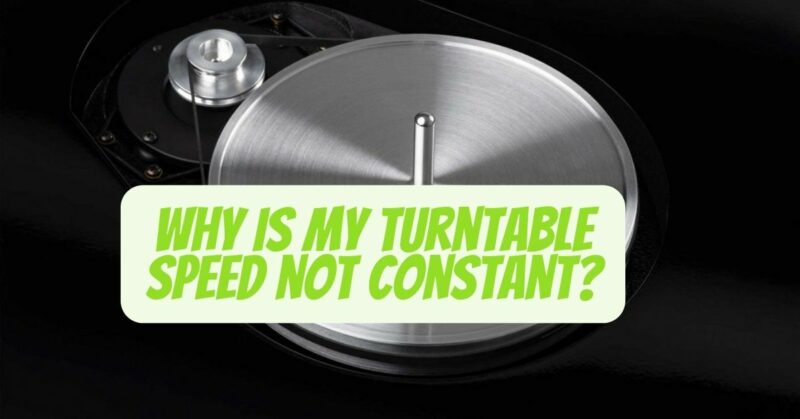
For vinyl enthusiasts, a consistent and stable turntable speed is crucial to enjoying the best audio quality from their records. However, there are instances when turntables exhibit speed variations or inconsistencies that can be frustrating and disruptive to the listening experience. In this article, we’ll explore some common reasons why your turntable’s speed may not be constant and provide insights on how to address these issues.
1. Belt-Drive Turntables:
Many turntables use a belt-drive system, where a rubber belt connects the motor to the turntable’s platter. Over time, these belts can become worn or loose, leading to speed irregularities. Inspect the belt for signs of wear, cracks, or looseness. If necessary, replace the belt to restore proper tension and consistent speed.
2. Direct-Drive Turntables:
Direct-drive turntables are generally less susceptible to speed variations compared to belt-drive models. However, even direct-drive turntables can experience speed issues due to motor problems or electronic components. If you suspect an issue with the motor or electronics, it’s best to consult a professional technician for diagnosis and repair.
3. Dust and Debris:
Dust, dirt, and debris can accumulate on the turntable’s motor and platter, affecting the rotation speed. Clean your turntable regularly, paying close attention to the motor and belt or direct-drive components. Make sure the platter and drive system are free from any contaminants that may impede smooth operation.
4. Lubrication:
Turntables require proper lubrication of moving parts to maintain consistent speed. Over time, lubricants can dry up or become contaminated. Refer to your turntable’s manual for guidance on lubrication and follow the manufacturer’s recommendations to ensure smooth operation.
5. Uneven Platter Weight:
If your turntable’s platter is not evenly balanced, it can lead to speed fluctuations. Ensure that the platter is properly seated and balanced on the turntable’s spindle. Any irregularities in weight distribution should be corrected.
6. Tonearm Tracking Force:
Excessive tracking force or improper tonearm adjustment can place additional strain on the turntable’s motor, leading to speed irregularities. Make sure your tonearm is correctly calibrated to the recommended tracking force for your cartridge. If you are unsure, consult your turntable’s manual or seek assistance from a professional.
7. Power Supply Issues:
Inconsistent power supply or voltage fluctuations can impact turntable speed. Ensure that your turntable is connected to a stable power source, free from voltage spikes or drops. Consider using a dedicated power conditioner to regulate power if necessary.
8. Electrical Components:
Electronic components within your turntable, such as capacitors or resistors, may degrade over time, affecting speed stability. If you suspect an issue with these components, consult a qualified technician for inspection and potential replacement.
9. Age and Wear:
As turntables age, components may naturally wear out or deteriorate, leading to speed inconsistencies. Regular maintenance and occasional component replacement may be necessary to keep your turntable in optimal working condition.
In conclusion, a turntable’s speed not being constant can be attributed to various factors, including belt wear, motor issues, debris accumulation, lubrication, tonearm adjustment, power supply problems, electrical components, and the age of the turntable. Regular maintenance and proper care are essential for ensuring consistent speed and preserving the sound quality of your vinyl records. If you encounter persistent speed issues that you cannot resolve, it’s advisable to seek professional assistance to diagnose and address the problem effectively.