
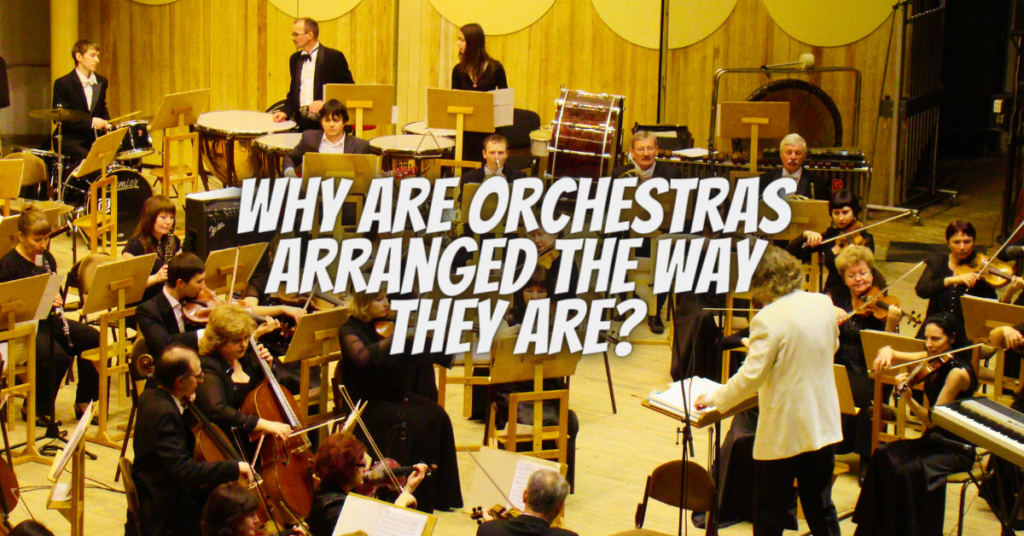
Orchestras, with their majestic blend of instruments and musicians, represent the pinnacle of musical collaboration. The arrangement of an orchestra might seem like an intricate puzzle, but every instrument’s placement is deliberate and purposeful. In this article, we delve into the historical, acoustic, and artistic reasons behind the arrangement of orchestras, unraveling the secrets that make them harmoniously resplendent.
1. Historical Evolution:
The arrangement of orchestras has evolved over the centuries. During the Baroque period, orchestras were smaller and the arrangement was less standardized. However, with the emergence of the Classical period, orchestras began to take on a more structured form. Composers like Mozart and Haydn popularized the classical orchestra layout, which eventually became the norm.
2. Acoustic Considerations:
The arrangement of instruments in an orchestra is influenced by acoustic principles. String instruments, such as violins, violas, cellos, and double basses, are typically placed at the front because their sound is relatively softer. Woodwind instruments, like flutes, clarinets, oboes, and bassoons, are placed behind the strings due to their ability to project sound effectively. Brass instruments, including trumpets, trombones, and French horns, are placed at the back due to their powerful and projecting nature. Percussion instruments are placed strategically, often at the rear, as they can be quite loud and are used selectively in orchestral compositions.
3. Visual and Conductor-Audience Interaction:
The arrangement also caters to visual and conductor-audience interaction. String players at the front are visible to the audience, enhancing the visual aspect of the performance. The conductor, positioned at the center and elevated, can maintain eye contact with all sections, ensuring cohesive communication and synchronization during the performance.
4. Traditional and Cultural Factors:
Certain traditions and cultural practices influence orchestra arrangements. For example, Western orchestras typically have the first violin section on the conductor’s left, whereas, in some Eastern orchestras, the first violin section is on the right. These variations, although subtle, reflect historical and cultural differences in orchestral traditions.
5. Artistic Expression and Balance:
The arrangement of instruments allows composers to explore diverse textures and tones. By strategically placing instruments, composers can achieve a delicate balance between melody, harmony, and rhythm. This balance is essential for creating the desired emotional impact and ensuring that no instrument overwhelms the others, resulting in a harmonious performance.
Conclusion
The arrangement of orchestras is a meticulous craft that marries historical traditions, acoustic principles, visual aesthetics, and artistic expression. The careful placement of instruments ensures that each section’s unique timbre and volume are utilized effectively, creating a symphonic masterpiece. As orchestras continue to evolve and adapt to new compositions and genres, the arrangement remains a testament to the intricate artistry and collaborative spirit that define these magnificent musical ensembles, captivating audiences with their enchanting melodies and harmonious symphonies.