
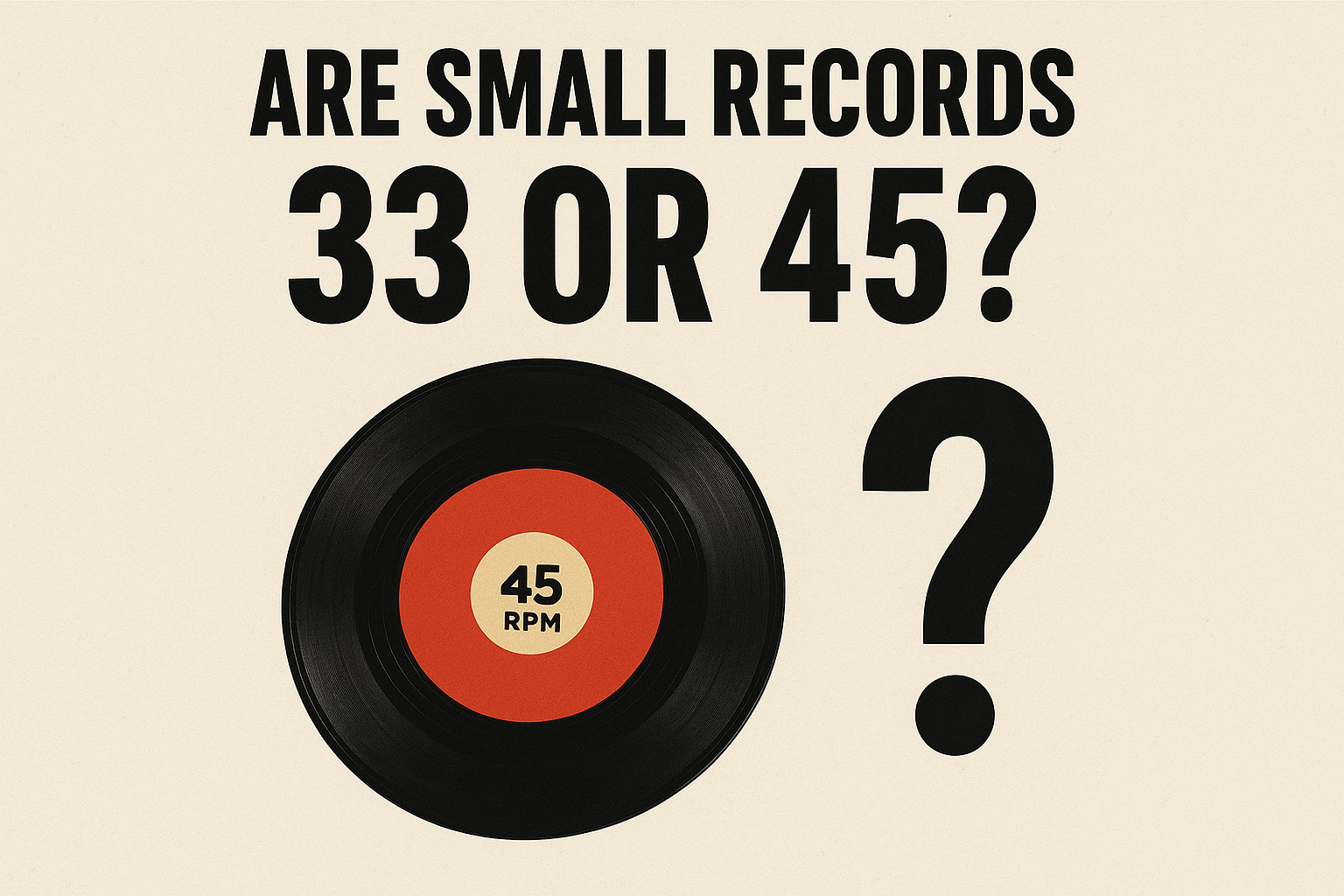
If you’ve ever picked up a 7-inch vinyl record and wondered whether it should be played at 33 RPM or 45 RPM, you’re not alone. Even experienced collectors sometimes second-guess themselves—because unlike 12-inch LPs, small records don’t always follow one rule.
The truth is:
Most small records are 45 RPM… but not all of them.
And playing them at the wrong speed can affect pitch, timing, and overall sound quality.
Here’s the simple explanation you’ve been looking for.
What Are “Small Records”?
When people talk about “small records,” they’re usually referring to the 7-inch vinyl format, also known as:
- 7-inch singles
- 45s
- EP records
- Jukebox records
This size has been popular since the 1950s for singles and short releases.
So… Are 7-Inch Records 33 or 45?
✔️ Most 7-inch records are 45 RPM
This is the standard for:
- Classic singles
- Jukebox releases
- Most modern 7-inch pressings
Why 45 RPM?
Higher speed = better high-frequency performance and cleaner sound on shorter tracks.
But Some 7-Inch Records Are 33 RPM
Not all small records follow the 45 rule.
7-inch records that use 33 RPM include:
- EPs with 3–4 songs per side
- Special editions or limited runs
- Indie releases trying to squeeze in extra playtime
- Some spoken word, demos, or budget records
When a label wants more minutes on a 7-inch, they often choose 33 RPM.
How to Tell the Speed (Without Guessing)
Here are the best ways to know for sure:
1. Look at the label
Most records print the RPM directly on the center label — 33⅓ or 45.
2. Check the sleeve
Many jackets list the speed on the back or near the tracklist.
3. Consider the number of songs
- One song per side? → Usually 45 RPM
- Two or more songs per side? → Often 33 RPM
4. If there’s no info… use your ears
If the vocals sound too deep, slow, or low-pitched, you’re playing a 45 at 33.
If they sound squeaky or high-pitched, you’re playing a 33 at 45.
Why Does Speed Matter?
Playing a record at the wrong RPM causes:
❌ Wrong pitch
❌ Wrong tempo
❌ Distortion
❌ Poor timing
❌ Loss of clarity
You’re not damaging the record — but you’re definitely not hearing the music correctly.
Helpful Rule of Thumb
Here’s the 5-second solution:
🔸 7-inch with 1–2 songs → 45 RPM
🔸 7-inch with multiple songs → 33 RPM
It’s that simple.
Why Small Records Use Two Different Speeds
The reason goes back to the physics of vinyl:
45 RPM advantages:
- Better clarity
- Improved high-frequency response
- Louder cuts
- Ideal for short songs and singles
33 RPM advantages:
- Longer playtime
- More practical for EPs
- Cost-efficient for small, indie releases
Different needs = different speeds.
Final Thoughts
So, are small records 33 or 45?
Both — but mostly 45.
The best way to always know is to check the label, look for track count, or simply listen for pitch changes.
Small records may be tiny, but they pack big sound—and choosing the right speed ensures you’re hearing every groove the way the artist intended.