
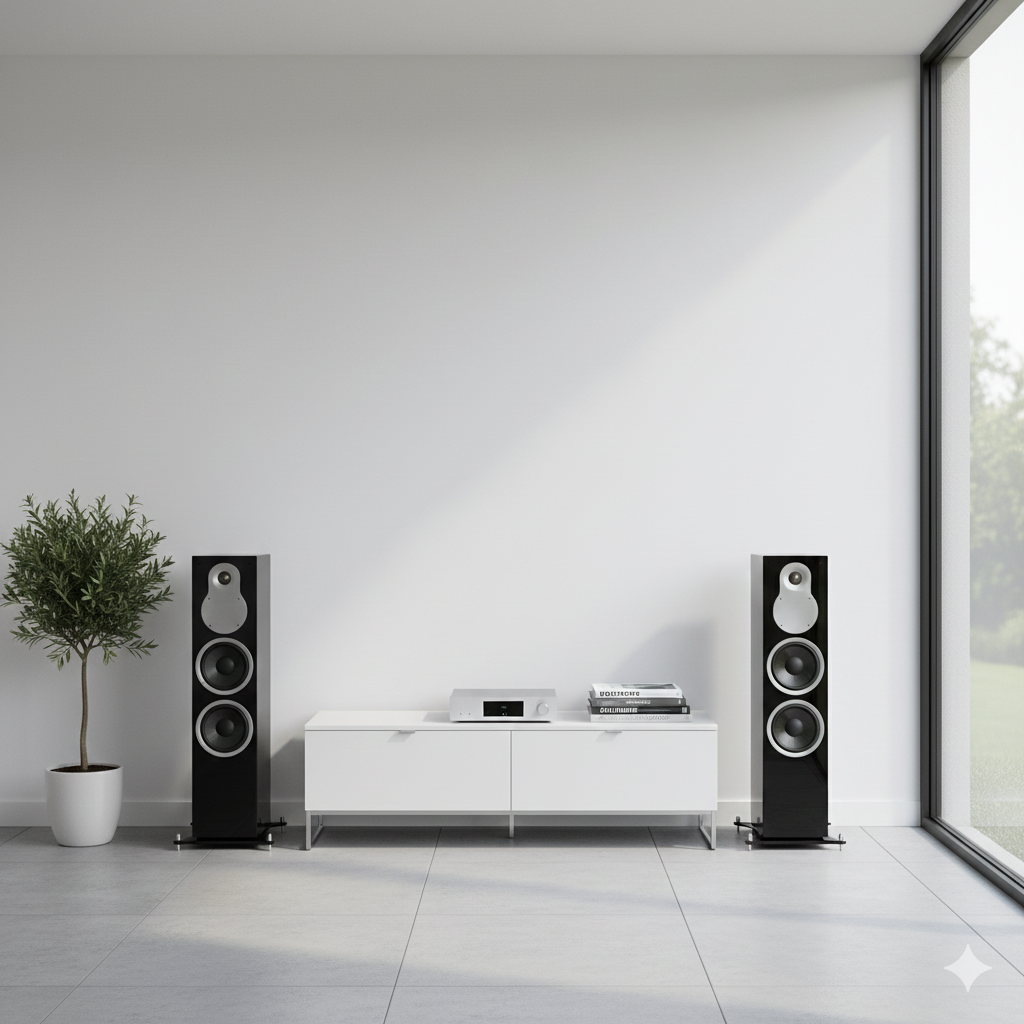
If you’re planning a home audio setup, one of the first questions you’ll face is whether your bookshelf speakers need an amplifier. The short answer is: yes—most bookshelf speakers require an amplifier, but not always. It depends on the type of speakers you have and how you plan to use them.
This guide explains everything you need to know, including when an amp is required, when it isn’t, and how to choose the right one.
1. Do Bookshelf Speakers Need an Amplifier?
Most bookshelf speakers DO need an amplifier.
These are called passive speakers, and they cannot produce sound on their own. They require power from an external amp or receiver.
However, some bookshelf speakers DO NOT need an amp.
These are called powered or active bookshelf speakers, and they include a built-in amplifier inside the speaker cabinet.
2. Passive Bookshelf Speakers: Amplifier Required
Passive speakers are the traditional type used in most home audio setups.
Signs your speakers are passive:
- They connect with speaker wire, not a power cable
- They do not plug into the wall
- They have no volume knob
- They require an amplifier or AV receiver
Why passive speakers need an amplifier:
- The amp supplies electrical power to drive the woofers and tweeters
- The crossover inside the speaker splits frequencies, but still needs external power
- Without an amp, they produce no sound at all
If you have passive speakers, an external amplifier is 100% required.
3. Active & Powered Bookshelf Speakers: No External Amp Needed
Powered speakers contain their own amplifier inside the cabinet.
Signs your speakers are powered:
- They plug into a wall outlet
- They have RCA, AUX, USB, Bluetooth, or optical inputs
- They may have a volume knob or built-in DAC
Examples include:
- Edifier powered speakers
- Audioengine A5+
- KEF LSX / LS50 Wireless
- Klipsch R-51PM
Benefits of active/powered bookshelf speakers:
- No need to buy a separate amp
- Cleaner setup, fewer components
- Often include Bluetooth, EQ, remotes, and digital inputs
- Optimized amp + driver pairing for best performance
For beginners or small rooms, powered speakers are often the simplest and best choice.
4. How to Tell Which Type You Have
Look at the back of your speaker:
If you see only speaker wire terminals → Passive (needs an amp)
If you see power input + RCA/AUX/USB/Optical/Bluetooth → Powered (no amp needed)
This quick check avoids confusion.
5. Why an Amplifier Still Matters (Even If Not Required)
Even if your speakers can play without an external amp, you might still want one for:
- More power
- Cleaner sound
- Better dynamics
- Support for turntables
- HDMI ARC / eARC for TV setups
- Subwoofer integration
Active speakers often outperform cheap amplifiers, but a high-quality external amp paired with good passive speakers usually delivers the best overall sound.
6. How to Choose the Right Amplifier for Bookshelf Speakers
If your speakers are passive, match the amp by:
a) Power Rating
- Aim for 50–150 watts per channel, depending on speaker sensitivity
- Use the manufacturer’s recommended power range
b) Ohm Compatibility
- Most bookshelf speakers are 4, 6, or 8 ohms
- Ensure your amp supports your speaker’s impedance
c) Room Size & Listening Preferences
Small room + nearfield listening → lower power is fine
Large room + loud listening → more power recommended
7. What Happens If You Don’t Use an Amplifier?
If passive speakers do not receive adequate power:
- They won’t produce sound
- They may distort
- The amp may clip
- Drivers may be damaged
Underpowered setups are a major cause of speaker failure.
8. Which Setup Should You Choose?
Choose Powered Speakers if you want:
- Simple plug-and-play setup
- Bluetooth or built-in DAC
- Minimal equipment
- Affordable high-quality sound
Choose Passive Speakers + Amplifier if you want:
- Customizable system
- Upgradeable components
- Higher fidelity potential
- Home theater or stereo expansion
Final Thoughts
Whether you need an amplifier for bookshelf speakers depends entirely on whether your speakers are passive or powered.
Most traditional bookshelf speakers do need an external amplifier, while powered models do not.
If you want simplicity, go powered.
If you want flexibility, upgrades, and true hi-fi performance, choose passive speakers with a good amplifier.
Either way, the right setup ensures your bookshelf speakers perform at their best.