
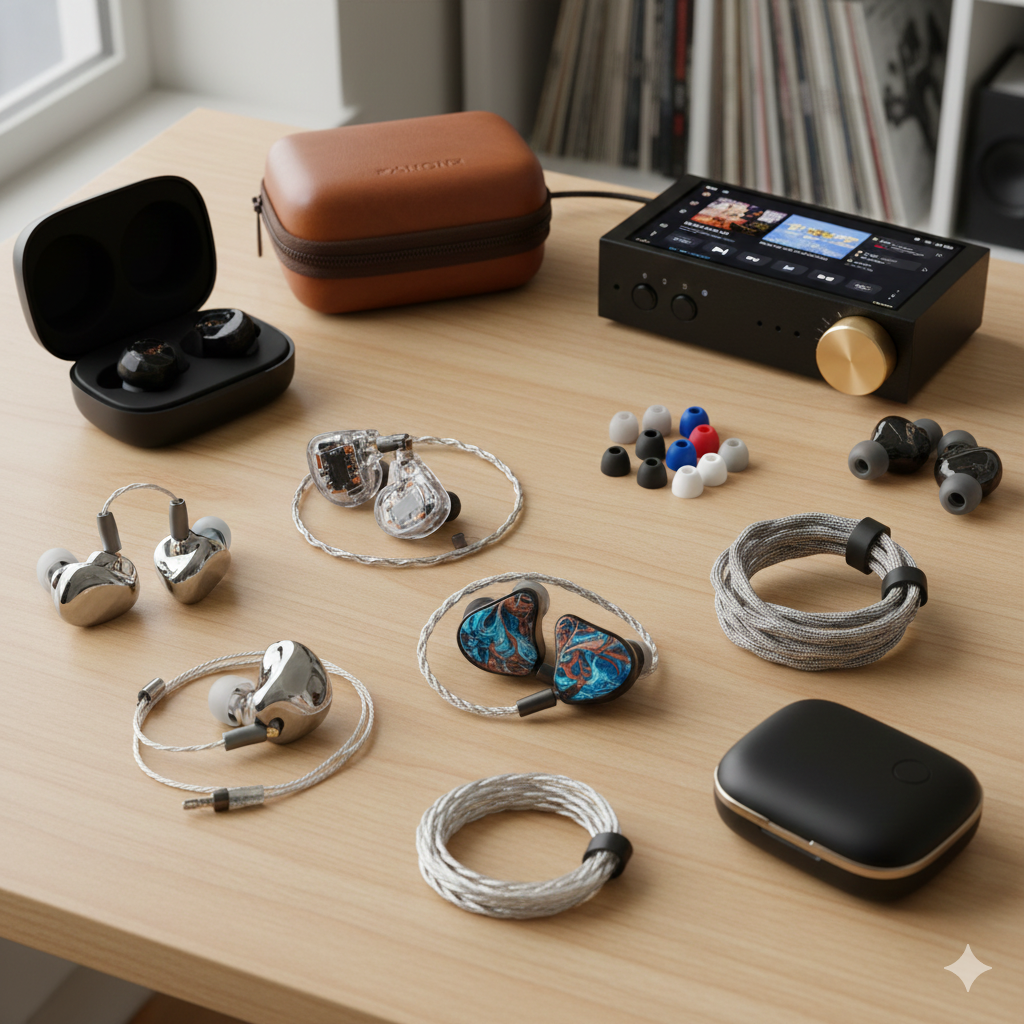
In-ear monitors (IEMs) can deliver incredible sound—but only if they’re properly cared for. Whether you use affordable daily earbuds or expensive audiophile IEMs, their lifespan depends heavily on how you store, clean, and handle them.
This guide shows you the most effective ways to extend the life of your IEMs, prevent failures, and keep them performing like new for years.
1. Store Your IEMs Properly
Improper storage is the #1 reason IEMs fail early.
Best Practices
- Always keep them in a protective case
- Avoid stuffing them in pockets or bags
- Keep them away from keys, coins, and sharp edges
- Store in a cool, dry place to avoid moisture damage
Pro Tip
Use the “over-under” wrap or a loose coil to prevent cable stress and kinks.
2. Clean Ear Tips & Nozzles Regularly
Earwax buildup can block sound, cause imbalance, and even damage drivers.
How to Clean Safely
- Remove ear tips and wash silicone tips with warm water
- Replace foam tips regularly—they wear out faster
- Use a soft brush to gently clean the nozzle mesh
- Never use alcohol on IEM shells unless the manufacturer approves
Avoid moisture entering the nozzle, especially on dynamic-driver IEMs.
3. Replace Cables Before They Fail
Cables wear out long before the IEMs do.
Signs Your Cable Is Wearing
- Crackling when moving the wire
- Stiff or brittle sheath
- Loose 2-pin or MMCX connectors
Extend Cable Life by:
- Avoid bending sharply around the ear hooks
- Not yanking the cable to remove the IEM
- Storing with a loose coil
Using detachable cables makes replacements easy and cheap.
4. Keep Moisture and Sweat Away
Moisture can corrode drivers, filters, and internal wiring.
What to Avoid
- Using IEMs during heavy workouts (unless they are IP-rated)
- Leaving them in humid environments (e.g., bathrooms)
- Wearing them right after a shower
Solutions
- Use silica gel packs in your storage case
- Use a portable IEM dry box if you live in humid regions
5. Insert and Remove IEMs Properly
Incorrect handling can damage connectors or cause driver flex.
Proper Technique
- Hold the shell, not the cable
- Insert slowly to avoid pressure-related popping
- Avoid twisting MMCX connectors
- Do not force 2-pin cables if tight—push gently and evenly
6. Use the Right Tips for Your Ears
Bad fit means:
- More pressure on the nozzle
- Frequent reseating
- Faster wear on connectors and tips
Use tips that seal well without requiring force.
7. Protect Against Cable Tension
Cable tension is a silent killer of IEMs.
Avoid
- Wearing IEMs while sleeping
- Pulling the cable sharply
- Letting cables dangle while the device is in your pocket
A shirt clip or cable guide can drastically reduce strain.
8. Avoid Excessive Volume
High volume doesn’t just damage your hearing—it stresses the drivers.
Why?
- Constant high SPL can loosen diaphragms
- Amps may clip, sending harmful distortion
- Overdriving BA or EST drivers can shorten their lifespan
Keep volume at comfortable levels to preserve both your ears and your gear.
9. Use a Clean, Stable Source
Dirty 3.5mm jacks, unstable amps, or noisy dongles can cause:
- Crackling
- Power spikes
- Distorted signals
These can damage sensitive drivers.
Quick Tips
- Clean jacks regularly
- Use good-quality dongles/DACs
- Avoid adapters that fit loosely
10. Perform Regular Maintenance
To keep your IEMs in top condition:
- Replace tips every 1–3 months
- Replace cables every 6–18 months (usage dependent)
- Clean mesh filters weekly
- Inspect connectors monthly for looseness or oxidation
Conclusion: How Long Should IEMs Last?
With proper care, most IEMs should last:
- Budget IEMs: 1–2 years
- Mid-tier models: 2–4 years
- Premium IEMs: 5+ years
Many audiophile IEMs can last a decade if maintained correctly.