
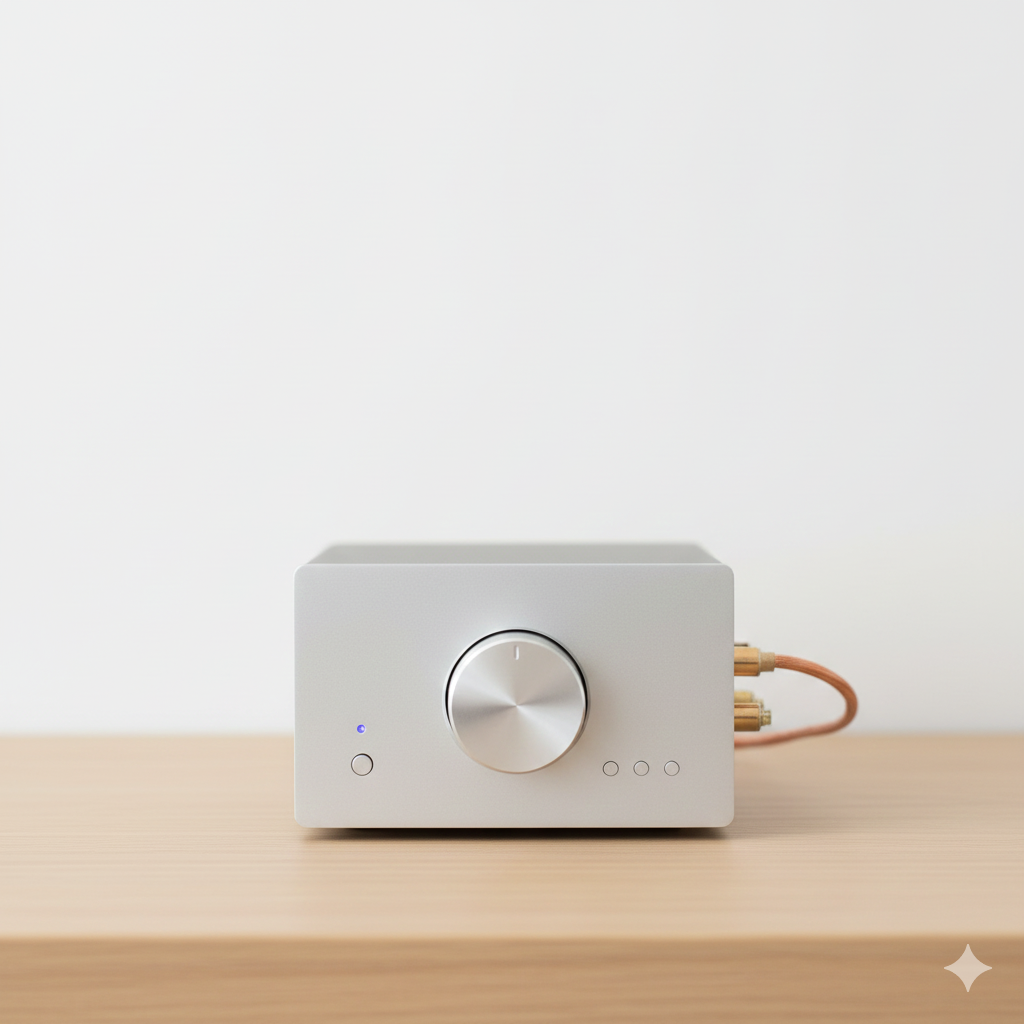
If you’ve ever shopped for audio equipment—whether for home speakers, studio monitors, or guitar amplifiers—you’ve probably asked the classic question:
“Is a 100-watt amp twice as loud as a 50-watt amp?”
The straightforward answer:
No. A 100-watt amplifier is not twice as loud as a 50-watt amplifier.
In fact, the difference is much smaller than most people expect.
This featured guide explains why, how audio loudness works, and what wattage really means for your listening experience.
🔊 Why 100 Watts Is NOT Twice as Loud
Human hearing works on a logarithmic scale, not a linear one.
This means:
- To sound twice as loud, you need around 10× the power, not 2×.
So to double the perceived loudness of a 50-watt amp, you would need about 500 watts, not 100.
📈 How Much Louder Is 100W Compared to 50W?
The increase from 50W → 100W gives you:
➡ Only about 3 dB louder
A 3 dB increase is noticeable but far from “twice as loud.”
What 3 dB sounds like:
- A small but clear volume bump
- Slightly stronger punch
- A little extra headroom
But not a dramatic change in loudness.
🎧 Why People Think More Watts = Huge Volume
Wattage does matter, but not in the way most assume.
Higher wattage amps give you:
✔ More headroom
Less distortion at high volume.
✔ Better control of speakers
Especially large woofers or inefficient speakers.
✔ Cleaner, more dynamic sound
At the same volume level, more power = less strain.
In other words, wattage is more about quality at high volume, not how loud the amp can get.
🔍 Real Factors That Affect Loudness More Than Wattage
Amp wattage is only one part of the equation. Two things matter far more:
1. Speaker Sensitivity (dB rating)
A speaker with higher sensitivity (e.g., 92 dB) can sound much louder than one at 86 dB—even with the same amplifier.
A 6 dB difference in speaker sensitivity is like quadrupling amplifier power.
2. Listening Distance
Loudness drops the farther you are from the speakers.
Small rooms need less power; large rooms need more.
3. Type of Amplifier
Some amps handle peaks better than others:
- Class A has high-quality output but low efficiency
- Class AB delivers clean power
- Class D provides huge wattage efficiently
Different designs affect real-world loudness and sound quality.
🧪 Quick Example
Let’s compare:
| Amp | Wattage | Approx. Loudness Change |
|---|---|---|
| 50W | — | Baseline |
| 100W | +3 dB | Slightly louder |
| 500W | +10 dB | About twice as loud |
This shows how massive power increases are required to double perceived loudness.
⚡ So, Is 100W Better Than 50W?
Yes, but not because it doubles loudness.
A 100W amp gives you:
- Cleaner audio at high volume
- More dynamic peaks
- Better control over demanding speakers
- More headroom before distortion
But the actual loudness difference is modest.
✔ Final Verdict
A 100-watt amplifier is NOT twice as loud as a 50-watt amplifier.
- Loudness doubles at 10× power, not 2×.
- 50W → 100W gives only 3 dB, a subtle increase.
- Most loudness differences come from speaker sensitivity, not wattage.
- Higher wattage mainly improves sound quality, headroom, and control at higher volumes.
So while a 100W amp is better in many ways, don’t expect a dramatic jump in loudness over a 50W model.