
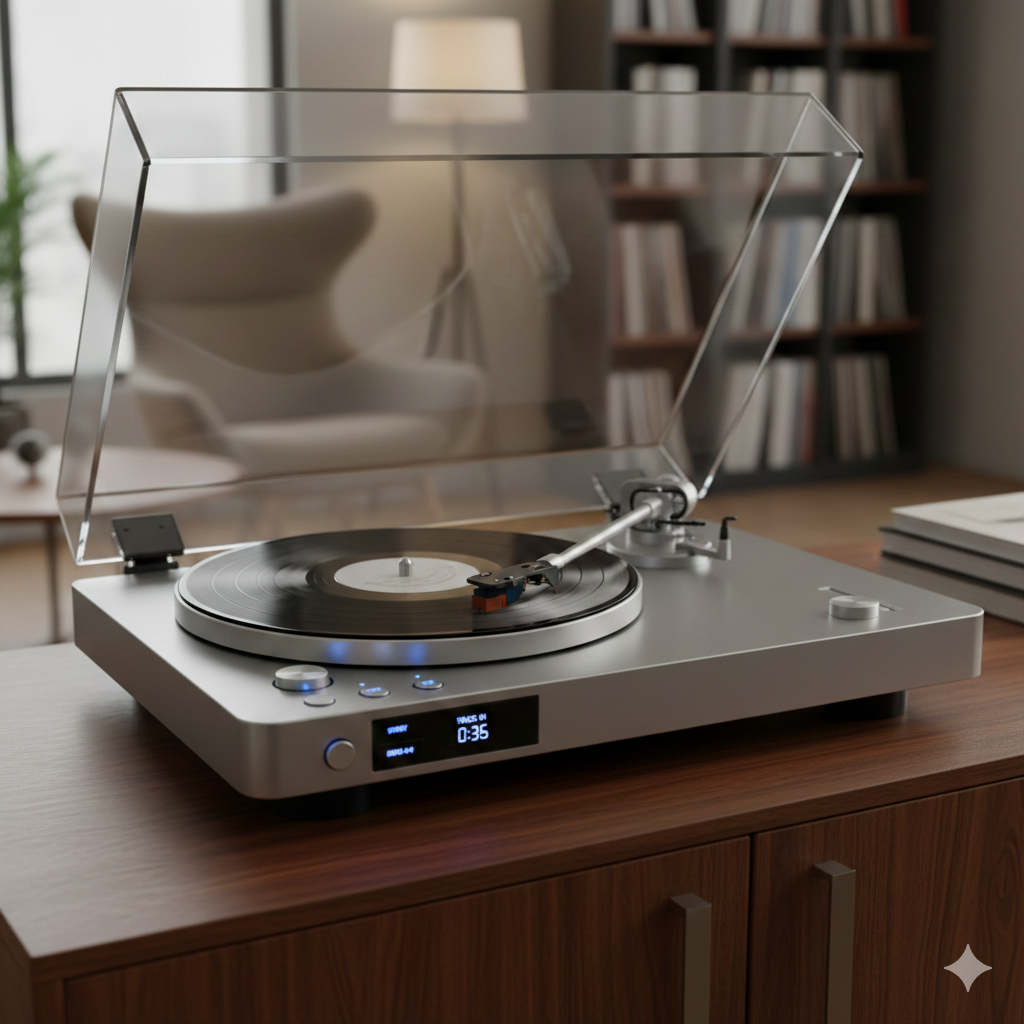
In the world of vinyl playback, turntables come in several styles—manual, semi-automatic, and automatic. Among them, the automatic turntable stands out for its convenience and ease of use. But what exactly makes a turntable “automatic,” and how does it compare to other types?
This article breaks down the meaning, mechanics, benefits, and limitations of automatic turntables so you can decide if one fits your listening style.
🎛️ What Does an Automatic Turntable Mean?
An automatic turntable is a record player that performs key playback functions without requiring manual interaction. This typically includes:
- Moving the tonearm onto the record
- Lowering the stylus at the correct position
- Lifting the tonearm at the end of playback
- Returning it to the resting arm
- Stopping the platter automatically
In other words, you can press a button, sit back, and the turntable handles the rest.
🕹️ How Automatic Turntables Work
Automatic turntables rely on a system of:
- Mechanical linkages
- Sensors
- Cams and levers
- Motor-driven actuators
These mechanisms coordinate arm movement and detect the end of a record. When activated:
- You press Start.
- The turntable lifts the tonearm.
- Moves it precisely to the lead-in groove.
- Gently lowers the stylus.
- At the end of the record, it lifts the arm again.
- Returns it to the arm rest.
- Shuts off the motor or stops the platter.
This makes playback foolproof—no need to touch the tonearm at all.
🧩 Types of Automatic Turntables
There are three main categories:
1. Fully Automatic
Performs start, play, lift, return, and stop automatically.
Great for:
- Beginners
- Multitaskers
- People worried about stylus wear
2. Semi-Automatic
You manually cue the arm to start, but the turntable:
✔ lifts the arm at the end
✔ returns it
✔ stops the platter
Great for people who want manual control but still want end-of-play protection.
3. Automatic Record Changers
A sub-type of fully automatic turntable that can:
- Hold multiple records
- Drop and play each one in sequence
- Stop after the stack ends
Vintage, nostalgic, but harder on records.
⭐ Advantages of Automatic Turntables
1. Beginner-Friendly
No risk of scratching records due to poor cueing.
2. Protects the Stylus
Automatically lifts the needle at the end, preventing it from skating endlessly in the runout groove.
3. Convenience
Perfect for casual listening, background music, or hands-free playback.
4. Ideal for People with Limited Dexterity
Small children, seniors, or anyone with shaky hands can use them safely.
⚠️ Drawbacks of Automatic Turntables
1. More Mechanical Complexity
More parts mean:
- Higher chance of mechanical failure
- Need for lubrication and maintenance over time
2. Slightly Higher Vibrations or Noise
In some models, the added mechanisms can introduce minor mechanical noise—though modern designs largely minimize this.
3. Limited Upgradeability
Many audiophile-grade tables are manual, so upgrade paths are broader there.
🎧 Is an Automatic Turntable Right for You?
Choose an automatic turntable if you:
✔ Want a stress-free, easy vinyl experience
✔ Prefer push-button playback
✔ Want protection from stylus or record damage
✔ Expect to multitask while listening
Choose a manual turntable if you:
✔ Want maximum sound quality
✔ Prefer a simpler, purist design
✔ Enjoy direct control over cueing
✔ Want more upgrade options
Many vinyl fans own both: an automatic for casual listening, and a manual for serious sessions.
🎵 Final Takeaway
An automatic turntable is simply a record player that cues, plays, and stops automatically—offering the easiest, safest, and most convenient vinyl experience. While manual models appeal to purists, automatics remain the best choice for beginners, busy listeners, and those who value simplicity.