
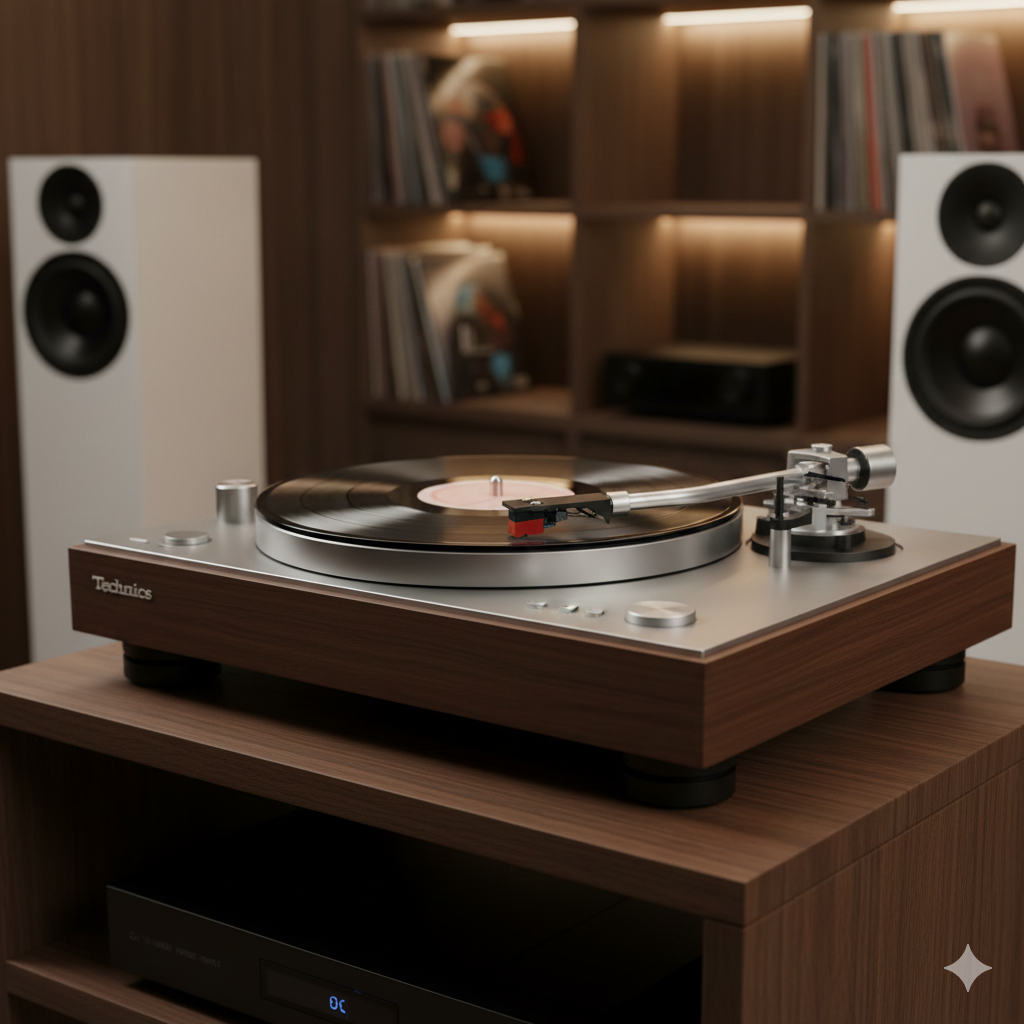
When shopping for a turntable, one of the first choices you’ll face is whether to get a manual, semi-automatic, or fully automatic model. While all three spin your records, the way they handle tonearm movement—and how hands-on you need to be—varies widely.
But what does this really mean for your vinyl experience?
This featured guide breaks down how each system works, the pros and cons, and which one suits your listening style best.
How These Turntables Actually Work
At the heart of the difference is how the tonearm operates:
- Manual turntables: You lift, place, and return the tonearm.
- Semi-automatic turntables: You start the record, the turntable returns the tonearm automatically at the end.
- Fully automatic turntables: The turntable handles everything—from placing the needle to returning it.
Each offers a unique mix of control, convenience, and user experience.
Manual Turntables
What They Are
A manual turntable gives you full control. You physically lift the tonearm, position the stylus onto the lead-in groove, and lift it off when the record ends.
Pros
✔ Maximum Control
Audiophiles love the precise, tactile experience.
✔ Fewer Moving Parts
Less automation often means less mechanical noise and fewer long-term issues.
✔ Typically Better for Sound Quality
Most higher-end hi-fi brands focus on manual designs for purity and simplicity.
Cons
✘ Requires User Attention
If you forget a record is playing, the stylus may continue running in the runout groove.
✘ Not Beginner-Friendly
Newcomers might find cueing the tonearm intimidating.
Semi-Automatic Turntables
What They Are
You start the playback manually, but once the needle reaches the end, the tonearm automatically lifts and returns to its rest.
Pros
✔ Saves Your Stylus
You won’t accidentally let it loop endlessly at the end of a side.
✔ Keeps the Manual Feel
You still get to place the needle yourself.
✔ Good Balance of Convenience & Control
Ideal for relaxed listeners who want both quality and ease.
Cons
✘ More Mechanics Inside
Additional moving parts can sometimes introduce minor noise or maintenance needs (though usually small).
Fully Automatic Turntables
What They Are
With one button press, the turntable:
- Lifts the tonearm
- Moves it over the record
- Gently lowers the stylus
- Raises and returns the arm at the end
Everything is handled mechanically.
Pros
✔ Easiest to Use
Perfect for beginners or casual listeners.
✔ Reduced Risk of Scratching Records
Automation ensures smooth needle placement every time.
✔ Great for Multi-Tasking
Start a record and walk away—no need to monitor the end.
Cons
✘ More Mechanical Components
More automation means more complexity and potential wear.
✘ Sometimes Inferior Tonearms
Budget automatic models may prioritize convenience over audio precision.
✘ Can Feel Less “Hands-On”
Collectors who enjoy the ritual may find it less satisfying.
Which One Is Better for Sound?
Surprisingly, drive type and build quality matter far more than whether a turntable is manual or automatic.
But generally:
- Audiophile-grade turntables are typically manual.
- Affordable models tend to be fully automatic.
This isn’t because automation affects sound, but because brands that target audiophiles focus on manual designs to keep things pure and simple.
Which Should You Choose?
✔ Choose Manual if you:
- Want the best potential audio performance
- Enjoy the hands-on vinyl ritual
- Prefer minimalist, high-quality engineering
- Don’t mind getting up to operate the tonearm
✔ Choose Semi-Automatic if you:
- Want a mix of convenience and control
- Prefer manual start but worry about the stylus at the end
- Want something user-friendly but still hi-fi focused
✔ Choose Fully Automatic if you:
- Want the easiest experience possible
- Are new to vinyl
- Want a family-friendly, safe turntable
- Enjoy “press-and-play” simplicity
Final Thoughts
The real difference between manual and automatic turntables comes down to how involved you want to be.
If you love vinyl for its ritual and purity, a manual turntable feels right at home. If you prefer a hassle-free, modern experience, automation makes listening effortless.
Either way, there’s no wrong choice—just the one that fits your listening style.