
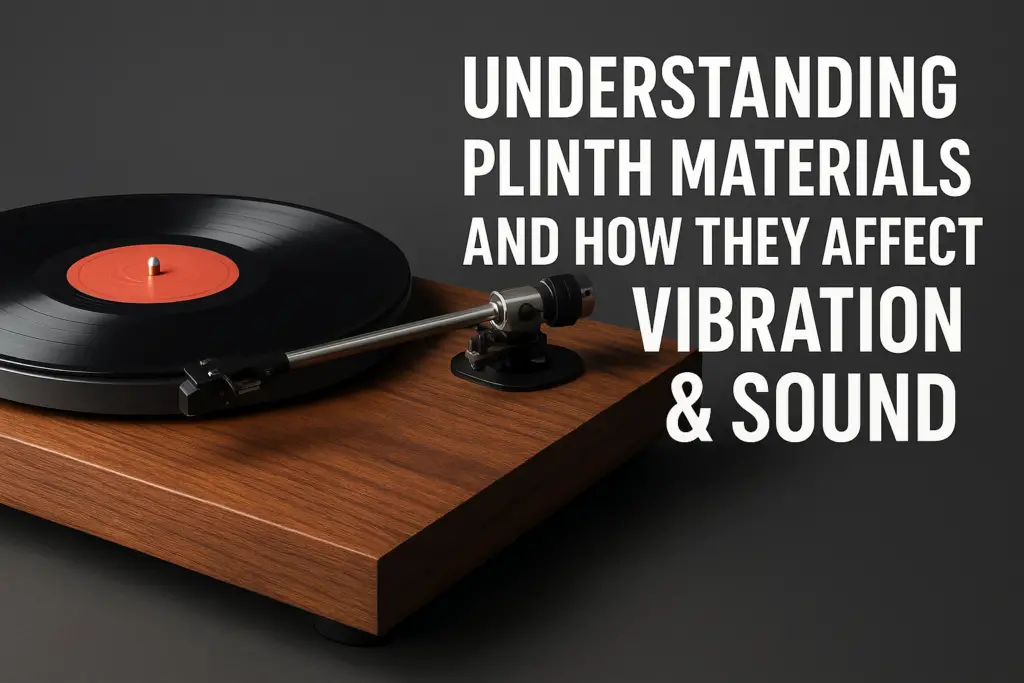
When it comes to turntable performance, much of the spotlight is often placed on cartridges, tonearms, and platters. Yet beneath all of these critical components lies a foundation that quietly shapes the sound of your vinyl playback: the plinth. More than just a base, the plinth plays a crucial role in vibration control, resonance management, and overall sonic character.
In this article, we’ll explore what a plinth does, why its material matters, and how different plinth materials influence vibration and sound quality.
What Is a Turntable Plinth?
The plinth is the structural body of a turntable. It supports the motor, bearing, tonearm, and sometimes the platter assembly. Its primary job is to:
- Provide structural rigidity
- Isolate sensitive components from external vibrations
- Control internal resonances caused by the motor and stylus tracking the groove
Because vinyl playback is a purely mechanical process, even tiny vibrations can affect sound clarity. This is where plinth material becomes critically important.
Why Vibration Control Matters
When a stylus traces the microscopic grooves of a record, it generates vibrations. If those vibrations reflect back into the cartridge or tonearm, they can cause:
- Smearing of detail
- Reduced bass definition
- Loss of soundstage focus
- Audible coloration or “boxy” sound
An effective plinth either absorbs, dissipates, or redirects these vibrations so they don’t interfere with playback.
Common Plinth Materials and Their Sonic Characteristics
1. MDF (Medium-Density Fiberboard)
Characteristics:
- Dense, uniform, non-resonant
- Inexpensive and easy to machine
Sound Profile:
MDF is widely used because it naturally dampens vibrations rather than amplifying them. It offers a neutral, controlled sound, making it popular in entry-level to mid-range turntables.
Best for:
Listeners seeking balanced sound at an accessible price.
2. Solid Wood
Characteristics:
- Organic, visually appealing
- Varies greatly depending on wood type
Sound Profile:
Wood tends to resonate in a more musical way, often adding warmth and richness. However, it can introduce coloration if not carefully engineered.
Best for:
Vintage designs or listeners who enjoy a warmer, more “alive” sound.
3. Plywood / Layered Wood
Characteristics:
- Cross-layered for strength
- Improved resonance control over solid wood
Sound Profile:
Layered wood balances damping and rigidity, delivering a lively yet controlled presentation. It’s commonly used in high-quality DIY and boutique turntables.
Best for:
Audiophiles seeking natural tone without excessive resonance.
4. Acrylic
Characteristics:
- Non-magnetic, rigid, visually striking
- Resonance behavior similar to vinyl
Sound Profile:
Acrylic plinths reduce energy reflection between the record and the plinth. The result is clean transients, strong imaging, and low coloration.
Best for:
Listeners who value clarity and modern aesthetics.
5. Metal (Aluminum, Steel)
Characteristics:
- Extremely rigid
- Poor natural damping unless treated
Sound Profile:
Metal plinths offer speed and precision but can sound bright or analytical if not paired with damping materials.
Best for:
High-precision designs with advanced vibration control.
6. Stone, Slate, or Concrete
Characteristics:
- Extremely heavy and inert
- Excellent vibration suppression
Sound Profile:
These materials produce a dead-quiet background, powerful bass, and exceptional detail retrieval. However, they require careful system matching.
Best for:
High-end systems focused on maximum resolution and stability.
Mass vs. Damping: Two Design Philosophies
Turntable plinths typically follow one of two approaches:
- Mass-Loaded Designs:
Use heavy materials to resist vibration through weight and inertia. - Damped Designs:
Use layered or absorptive materials to dissipate vibration energy.
Neither approach is universally better—the best results depend on system synergy and personal listening preference.
How to Choose the Right Plinth Material
When selecting a turntable or considering an upgrade, ask yourself:
- Do I prefer warmth or absolute neutrality?
- Is my listening environment prone to vibration?
- Does my system already lean bright or warm?
- Am I prioritizing aesthetics as well as sound?
The right plinth complements the rest of your system rather than dominating it.
Final Thoughts
The plinth may not move, spin, or track grooves—but its influence on sound is undeniable. By controlling vibration and resonance, plinth materials shape how faithfully your turntable translates grooves into music.
Understanding these materials helps you make more informed choices, whether you’re buying your first turntable or refining a high-end analog setup. In vinyl playback, even the silent parts matter—and the plinth is where that silence begins.