
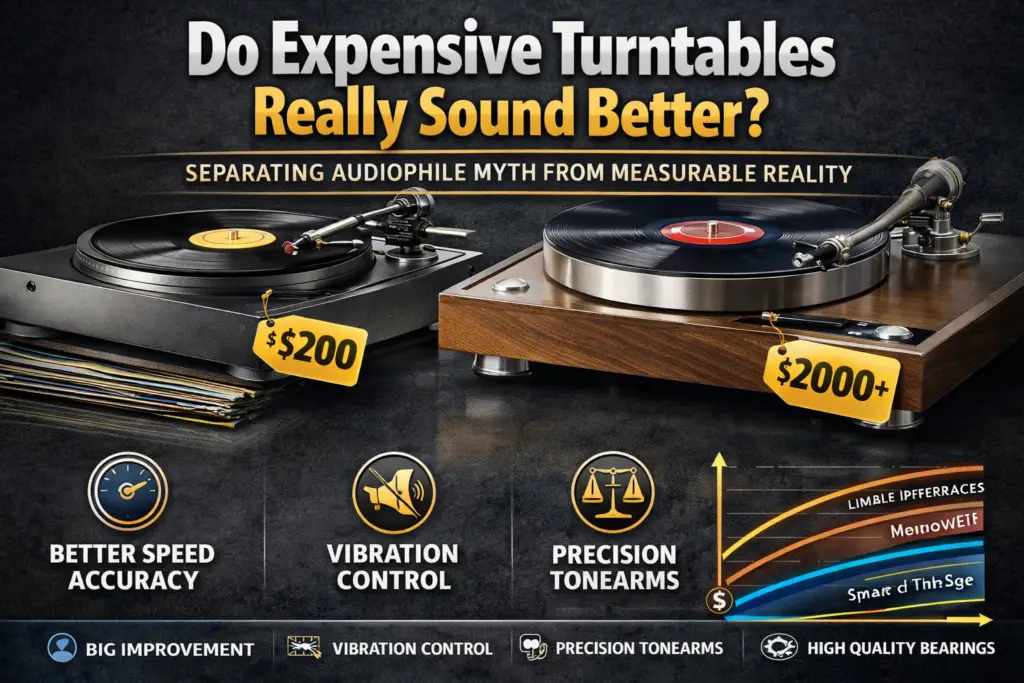
Walk into any hi-fi store or audiophile forum and you’ll hear it sooner or later: “You haven’t really heard vinyl until you’ve listened on a high-end turntable.” But is that true? Do expensive turntables genuinely sound better—or are you mostly paying for prestige, design, and diminishing returns?
Let’s break it down objectively.
🎶 What Actually Affects Turntable Sound Quality?
A turntable’s job is deceptively simple: spin a record at a constant speed and allow the stylus to trace the groove accurately. The challenge is doing this without adding noise, vibration, or speed errors. Price often reflects how well these problems are solved.
Key factors include:
- Speed stability
- Vibration control
- Tonearm precision
- Bearing quality
- Build tolerances
- Upgrade flexibility
💰 Why Expensive Turntables Can Sound Better
1. Superior Speed Accuracy & Stability
High-end turntables use:
- Precision motors
- External power supplies
- Quartz or optical speed control
This reduces:
- Wow & flutter
- Pitch instability
- Timing smearing
The result is cleaner piano notes, steadier vocals, and more realistic rhythm.
2. Better Vibration Isolation
Expensive designs often include:
- Heavy platters (acrylic, aluminum, steel)
- Advanced suspension systems
- Multi-layer plinths
These prevent:
- Footfall noise
- Speaker feedback
- Motor vibration
Less vibration means black backgrounds and clearer low-level detail.
3. High-Precision Tonearms
This is one of the biggest sonic upgrades.
Premium tonearms offer:
- Lower friction bearings
- Better geometry
- More accurate tracking force
- Improved resonance control
Result: lower distortion, wider soundstage, and better channel balance.
4. Higher Quality Bearings
The main bearing supports the platter and is critical to noise performance.
Better bearings mean:
- Less mechanical noise
- Lower rumble
- Smoother rotation
This contributes to cleaner bass and better micro-detail.
5. System Matching & Upgrade Potential
High-end turntables often allow:
- Cartridge upgrades
- Arm swaps
- External power supplies
- Isolation platforms
They scale better as the rest of your system improves.
⚠️ The Law of Diminishing Returns
Here’s the uncomfortable truth:
🔹 The biggest jump in sound quality happens at the entry-to-midrange level.
🔹 Beyond a certain price, improvements become smaller and more subtle.
Example:
- $300 → $800: Huge improvement
- $800 → $2,000: Noticeable
- $2,000 → $10,000: Incremental
At the high end, you’re paying for:
- Extreme precision
- Exotic materials
- Craftsmanship
- Aesthetic design
Not always night-and-day sound differences.
🎧 When Expensive Turntables Don’t Sound Better
A costly turntable won’t help if:
- You’re using a budget cartridge
- Your phono preamp is low quality
- Speakers or headphones are the bottleneck
- Setup is poor (alignment, tracking force, isolation)
In many systems, a better cartridge or phono stage delivers a larger sonic upgrade than a pricier turntable.
🧠 Blind Tests & Real-World Listening
Blind listening tests often show:
- Clear differences between poor and competent turntables
- Much harder distinctions between midrange and high-end models
Experienced listeners in treated rooms are more likely to hear the advantages of expensive designs—casual listeners may not.
📊 Price vs Performance Summary
| Price Range | Sound Improvement | Who It’s For |
|---|---|---|
| Entry-level | Basic, enjoyable | Beginners |
| Midrange | Major leap in clarity & stability | Most listeners |
| High-end | Refinement & realism | Enthusiasts |
| Ultra high-end | Marginal gains | Perfectionists |
🏁 Final Verdict: Is Expensive Worth It?
Yes—but only in the right system and for the right listener.
- Expensive turntables do sound better technically
- The improvements are real but subtle
- Value peaks in the midrange
- Beyond that, passion, precision, and pride of ownership play a big role
💡 If you’re building your first serious vinyl system, prioritize balance:
Turntable → Cartridge → Phono preamp → Speakers → Setup
That’s where the real magic happens.