
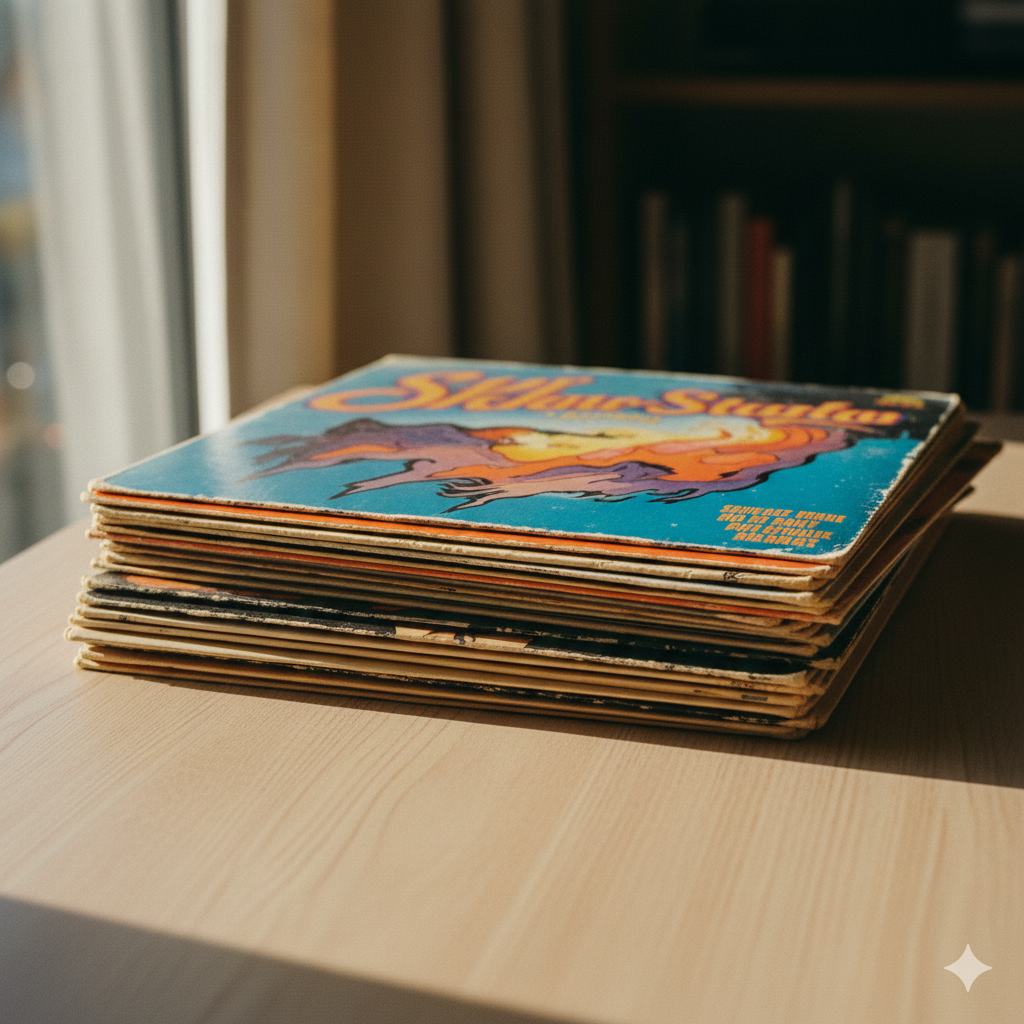
Few things are more frustrating for vinyl collectors than pulling a favorite record from the sleeve—only to see it wobble on the turntable. This leads to a common (and hopeful) question:
Can I fix a warped record?
The honest answer is: sometimes—depending on the type and severity of the warp. This guide explains what causes warps, which ones are fixable, safe methods to try, and when it’s better to stop.
What Is a Warped Record?
A warped record is one that has lost its flat shape due to heat, pressure, or improper storage. Warps affect how the stylus tracks the groove and can cause:
- Audible pitch fluctuations (wow)
- Mistracking or skipping
- Excessive stylus wear
- In extreme cases, unplayable records
Common Types of Record Warps
Understanding the warp type helps determine whether it can be fixed.
1. Edge Warp
- The outer edge lifts up or down
- Most common type
- Often partially fixable
2. Dish Warp
- Record curves upward or downward like a bowl
- One side may play better than the other
- Sometimes fixable
3. Ripple or Wave Warp
- Multiple waves across the surface
- Usually caused by severe heat damage
- Rarely fixable
What Causes Records to Warp?
- Exposure to heat (sunlight, hot rooms, car interiors)
- Tight or uneven pressure during storage
- Stacking records horizontally
- Poor-quality or thin pressings
Once vinyl softens under heat, it can permanently deform.
Safe Methods to Fix Minor Warps
⚠️ Any attempt to fix a warp involves risk. Practice only on non-valuable records.
1. Record Weight or Clamp (For Very Mild Warps)
- Helps flatten edge warps during playback
- Does not permanently fix the warp
- Safe and reversible
Best for slight warps that don’t cause skipping.
2. Controlled Pressure Over Time
Method:
- Place the record between two clean, perfectly flat surfaces (like glass)
- Store vertically in a cool, stable environment
- Leave for several weeks
Effectiveness:
- Low to moderate
- Works only on mild dish or edge warps
3. Vinyl Flat or Professional Flattening Devices
These devices use controlled heat and pressure.
Pros:
- Most reliable DIY option
- Designed specifically for vinyl
Cons:
- Expensive
- Still carries some risk
Best for collectors with many warped records.
Methods You Should NOT Use
Avoid these high-risk techniques:
- ❌ Oven or hair dryer methods
- ❌ Direct sunlight exposure
- ❌ Boiling water or steam
- ❌ Heavy weights without temperature control
These often cause groove damage or permanently ruin records.
Can a Warped Record Still Be Played?
Sometimes, yes.
If:
- The stylus tracks securely
- No audible distortion or wow is present
- The warp doesn’t cause excessive vertical movement
Then playback may be safe—especially with a compliant cartridge and tonearm.
However, severe warps can stress the cantilever and bearings.
When a Record Is Beyond Repair
A record is usually unfixable if:
- It has ripple or heat-wave warping
- Grooves are audibly distorted
- Flattening attempts worsen sound quality
At this point, replacement is safer than further experimentation.
How to Prevent Warped Records
- Store records vertically, never stacked
- Keep away from heat and sunlight
- Avoid tight packing that causes pressure
- Use sturdy shelves and proper inner sleeves
Prevention is far easier than repair.
Final Verdict
So—can you fix a warped record?
- ✔️ Mild warps: sometimes fixable
- ⚠️ Moderate warps: risky, mixed results
- ❌ Severe warps: usually permanent
Approach warp repair carefully. When in doubt, protect your stylus and your records—sometimes accepting imperfection is the wisest choice.