
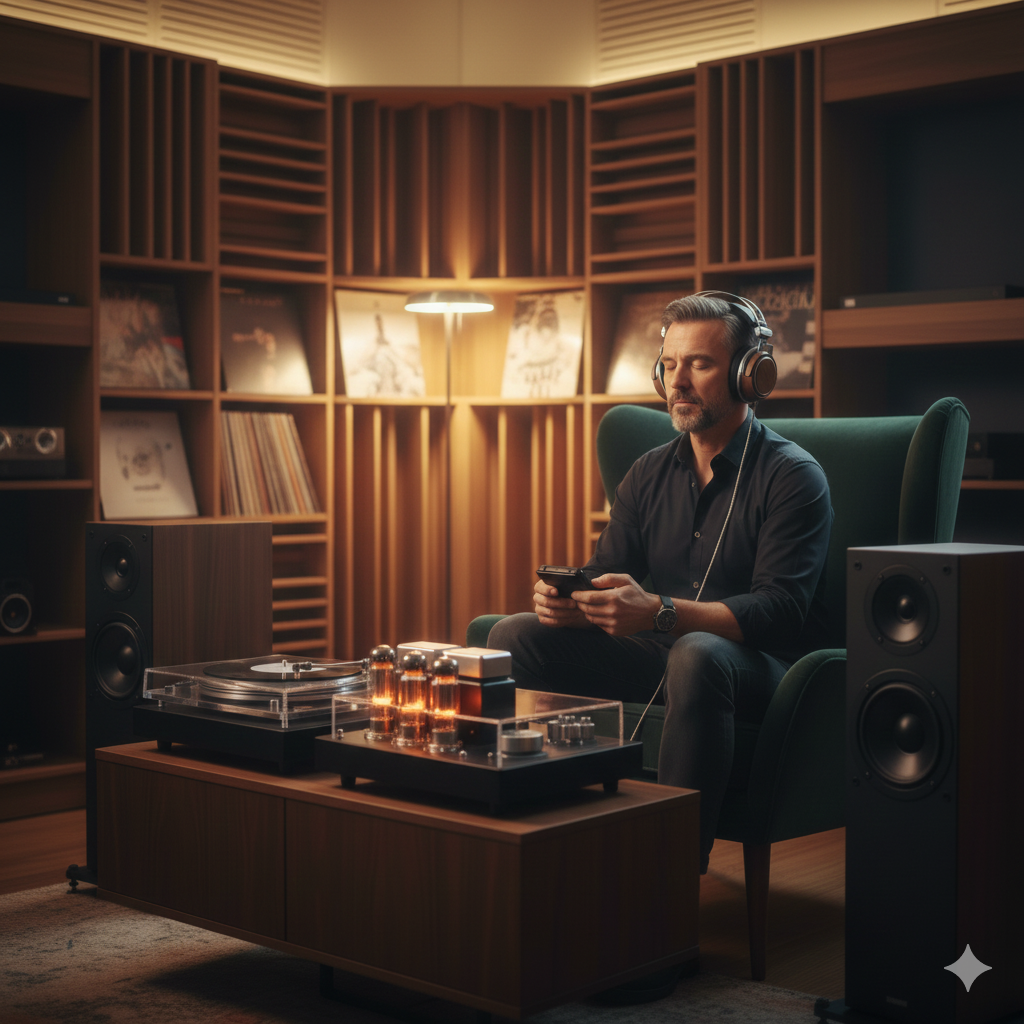
Audiophiles often describe subtle improvements in clarity, soundstage, and realism—but many casual listeners wonder if those differences are actually audible, or simply imagined.
The truth lies somewhere in between.
Who Is a “Casual Listener,” Anyway?
A casual listener is someone who:
- Enjoys music primarily for pleasure, not analysis
- Listens through streaming services, headphones, or basic speakers
- Rarely compares equipment side-by-side
- Focuses more on the song than the sound
This doesn’t mean they have “bad ears”—only that their listening habits and expectations are different.
What Audiophiles Mean by “Differences”
Audiophile discussions often revolve around qualities such as:
- Soundstage – the sense of space and instrument placement
- Imaging – how precisely instruments are positioned
- Micro-detail – subtle textures like breath, reverb, or string decay
- Dynamics – how sound moves from quiet to loud
- Tonal balance – accuracy across bass, mids, and treble
These are real characteristics—but not all of them are equally obvious.
Differences Casual Listeners Can Hear
1. Big Jumps in Quality
Casual listeners almost always notice:
- Distorted vs clean sound
- Tinny speakers vs full-range speakers
- Weak bass vs controlled bass
- Harsh treble vs smooth highs
Upgrading from phone speakers to decent headphones or a proper stereo is immediately noticeable.
2. Volume and Clarity
Clearer sound at lower volumes is something even untrained ears appreciate. Better systems allow music to remain intelligible without being loud.
3. Compression and Artifacts
Many casual listeners can hear:
- Over-compressed MP3s vs lossless files
- Streaming at low bitrate vs high quality
- Harshness from poor DACs or cheap earbuds
They may not describe why, but they know something sounds “off.”
Differences Casual Listeners Often Don’t Notice
1. Subtle Upgrades
Swapping:
- DAC A for DAC B
- One high-end cable for another
- A $2,000 amp for a $4,000 amp
These changes often produce differences that are too subtle to stand out without focused listening.
2. Micro-Details
Minute changes in:
- Instrument separation
- Ambient reverb tails
- Harmonic texture
These require experience, familiarity with reference tracks, and intentional listening.
3. Soundstage Depth
Casual listeners tend to notice left-to-right width before front-to-back depth. Deep soundstage improvements may go unnoticed.
The Role of Listening Experience
Hearing audiophile differences is a learned skill.
Much like wine tasting:
- At first, everything tastes similar
- Over time, patterns emerge
- Vocabulary and awareness develop
Once someone learns what to listen for, differences that were once invisible become obvious—and sometimes impossible to ignore.
Expectation, Bias, and Psychology
Expectation plays a powerful role:
- Knowing gear is expensive can influence perception
- Visual cues can shape what we “hear”
- Blind tests often reduce perceived differences
This doesn’t mean audiophile impressions are fake—it means the brain is part of the listening chain.
Room, Gear, and Music Matter More Than Ears
Even trained listeners struggle to hear differences if:
- The room has poor acoustics
- Speakers are poorly positioned
- Music is poorly recorded
- The system is mismatched
In a bad environment, even the best ears can’t save the sound.
So… Can Casual Listeners Hear Audiophile Differences?
Yes—but selectively.
- Large improvements are obvious to almost everyone
- Small refinements require experience, attention, and context
- Enjoyment does not require audiophile-level perception
Many casual listeners may not articulate the difference—but they still prefer the better sound.
Final Takeaway
You don’t need golden ears to enjoy better audio.
Audiophile differences are real, but:
- Not all of them are equally audible
- Not all of them matter to everyone
- Not all of them improve musical enjoyment
If a system makes you want to listen longer, louder, and more often—it’s doing its job 🎶