
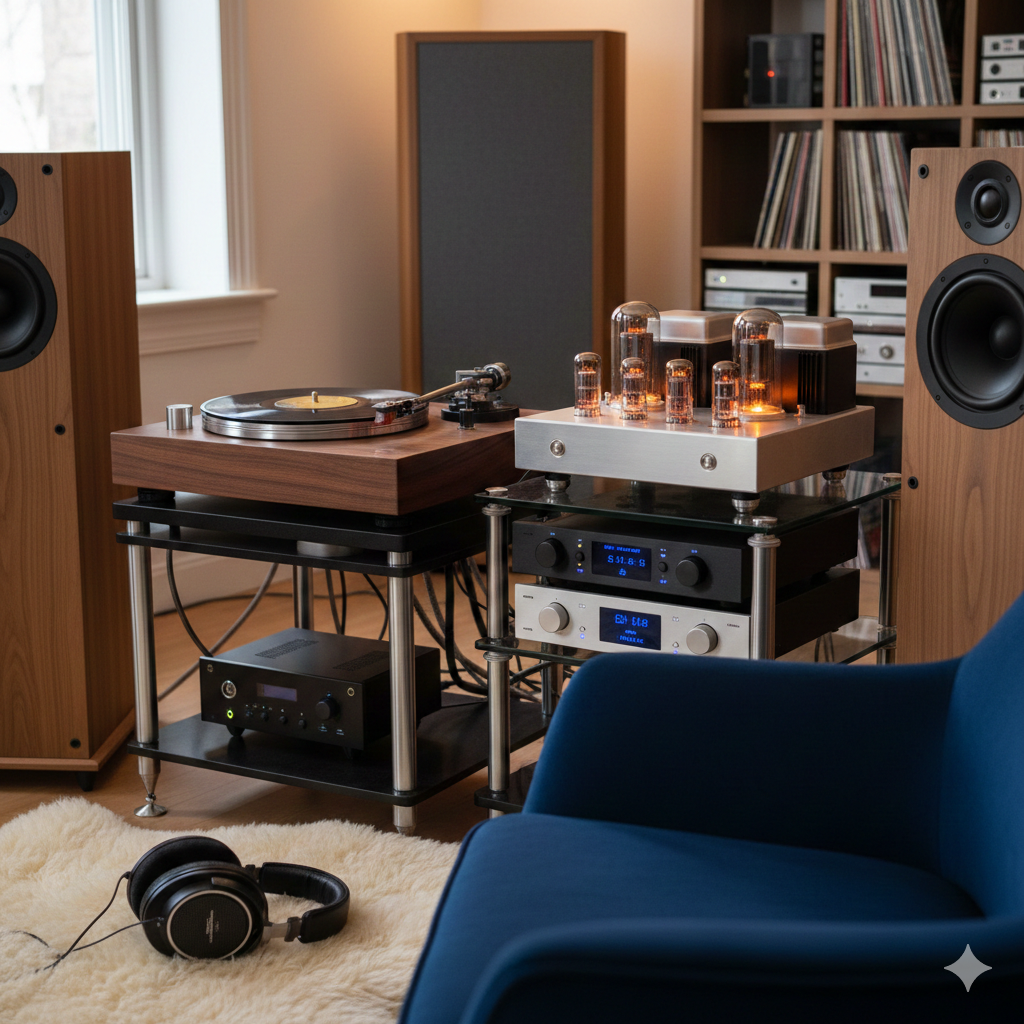
High-resolution audio promises more detail, greater realism, and a listening experience closer to the original recording. Streaming services promote it. DACs advertise it. Audiophiles debate it endlessly.
But the real question remains:
Is high-resolution audio actually worth it—or is it mostly hype?
The honest answer lies somewhere between science, system quality, and how you listen.
What Is High-Resolution Audio, Really?
High-resolution audio generally refers to digital files that exceed CD quality:
- CD quality: 16-bit / 44.1 kHz
- High-resolution: 24-bit / 88.2 kHz, 96 kHz, 192 kHz (and beyond)
In theory, higher bit depth allows:
- Greater dynamic range
- Lower noise floor
Higher sample rates allow:
- Better filtering
- More accurate waveform reconstruction
On paper, high-resolution audio is superior.
The Big Question: Can Humans Hear the Difference?
Under Ideal Conditions—Sometimes
In controlled listening tests:
- Differences between 16/44.1 and high-res are often subtle
- Many listeners cannot reliably identify them
- Trained listeners sometimes can—but not always
This doesn’t mean high-res is meaningless—but it does mean it’s not a guaranteed upgrade.
Why High-Resolution Audio Can Sound Better
1. Better Masters Matter More Than Bit Depth
Many high-resolution releases use:
- Newer
- Less compressed
- Better-quality masters
When people hear an improvement, they’re often hearing a better master, not the higher resolution itself.
📌 A well-mastered CD can sound better than a poorly mastered 24-bit file.
2. Modern DACs Handle High-Res Gracefully
Even if you can’t directly hear higher sample rates:
- Modern DACs benefit from gentler filtering
- Artifacts are pushed further out of the audible range
- Playback can sound smoother and more natural
The improvement is subtle—but real in good systems.
3. High-Res Encourages Better Listening Habits
High-resolution audio often goes hand-in-hand with:
- Higher-quality gear
- Careful system setup
- Focused listening
Sometimes the upgrade is less about numbers—and more about intention.
When High-Resolution Audio Isn’t Worth It
1. Your System Can’t Reveal It
If you’re listening on:
- Entry-level speakers or headphones
- Noisy environments
- Poorly set-up systems
You’re unlikely to hear a meaningful difference.
2. The Recording Quality Is the Limiting Factor
No resolution can fix:
- Bad recordings
- Heavy compression
- Poor mixes
High-res doesn’t create detail—it only preserves what’s already there.
3. Expectations Outrun Reality
High-resolution audio is often marketed as:
“Night-and-day better”
In reality, improvements are:
- Subtle
- Context-dependent
- Sometimes psychological
If you expect a dramatic transformation, you’ll likely be disappointed.
High-Resolution vs CD vs Streaming
CD Quality (16/44.1)
- Still excellent
- Capable of stunning sound
- Often indistinguishable from high-res in blind tests
High-Resolution
- Potential for refinement
- More headroom for great mastering
- Best appreciated on resolving systems
Lossy Streaming
- Convenient
- Improving rapidly
- Still the weakest link for critical listening
So… Is High-Resolution Audio Worth It?
✔ Yes, if:
- You have a resolving system
- You listen attentively
- The mastering is excellent
- You enjoy chasing small refinements
✖ Probably not, if:
- You listen casually
- Your room or speakers are limiting factors
- You expect dramatic improvements
- You’d benefit more from better speakers or placement
What Matters More Than High-Resolution
If you’re deciding where to invest:
- Speakers or headphones
- Room acoustics
- Mastering quality
- Source setup
- Then resolution
High-resolution audio is the icing—not the cake.
Final Verdict
High-resolution audio isn’t a myth—but it’s not a miracle either.
When everything else is right, it can add:
- Subtle realism
- Smoother presentation
- A sense of ease and space
But great music, well mastered, played on a balanced system will always matter more than file size or sample rate.
🎶 In the end, the best resolution is the one that keeps you listening longer—not checking the specs.