
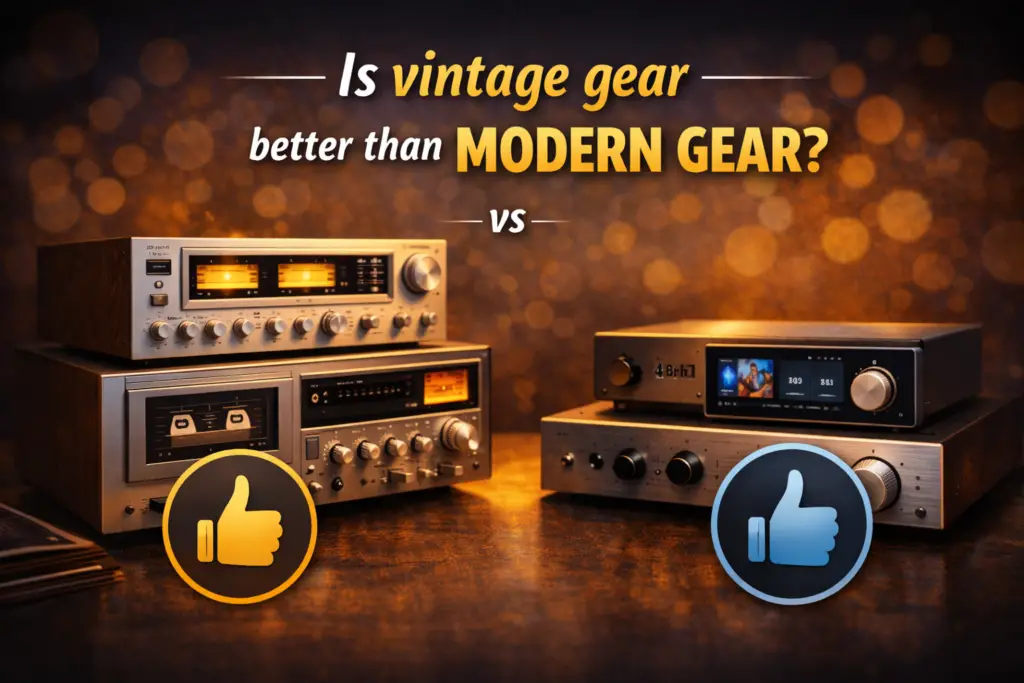
The Short Answer
Vintage gear isn’t inherently better than modern gear—and modern gear isn’t automatically superior either.
Each has strengths, weaknesses, and ideal use cases. What matters most is how the gear is designed, maintained, and matched to your system—not the era it comes from.
Why Vintage Gear Still Has a Loyal Following
1. Sound Character and “Warmth”
Many vintage components—especially amplifiers and receivers from the 1970s and early 1980s—are known for:
- Rich midrange
- Smooth, forgiving treble
- Full, weighty sound
This character often comes from:
- Discrete analog circuits
- Simpler signal paths
- Design choices that favored musicality over measurements
For vinyl and classic recordings, this sound can feel natural and engaging.
2. Build Quality and Serviceability
Vintage gear was often:
- Built with metal chassis
- Designed for repair, not replacement
- Made with large, over-engineered power supplies
Many classic units are still working 40–50 years later—and can often be restored to near-new performance.
3. Value for Money (If You Know What You’re Doing)
A well-maintained vintage amplifier can sometimes outperform modern budget gear at the same price—especially in terms of:
- Power delivery
- Tonal richness
- Long-term durability
However, this advantage comes with caveats.
The Downsides of Vintage Gear
1. Maintenance Is Not Optional
Most vintage equipment needs:
- Capacitor replacement
- Cleaning of switches and pots
- Possible transistor or diode servicing
Without proper restoration, vintage gear can sound worse—not better—than modern alternatives.
2. Lack of Modern Features
Vintage gear rarely includes:
- Remote control
- Digital inputs
- Streaming capabilities
- Headphone optimization
For listeners who rely on digital sources, this can be a deal-breaker.
3. Inconsistent Performance
Two identical vintage units may sound very different depending on:
- Age
- Storage conditions
- Quality of previous repairs
Buying vintage always involves some risk.
Why Modern Gear Has a Strong Advantage
1. Technical Accuracy
Modern audio gear benefits from:
- Advanced circuit design
- Precision manufacturing
- Better measurements (lower noise, lower distortion)
This results in:
- Cleaner backgrounds
- More detail retrieval
- Better channel matching
If transparency and accuracy matter to you, modern gear excels.
2. Convenience and Integration
Modern systems often include:
- Built-in DACs
- Bluetooth and Wi-Fi
- Streaming services
- Compact, efficient designs
For everyday listening, modern gear fits seamlessly into contemporary lifestyles.
3. Consistency and Reliability
Modern gear offers:
- Warranties
- Predictable performance
- Plug-and-play usability
You know what you’re getting—and you won’t need a technician on day one.
The Sound Difference: Myth vs Reality
Many listeners describe vintage gear as “warmer” and modern gear as “sterile.” But in reality:
- Some vintage gear measures poorly but sounds pleasing
- Some modern gear is extremely neutral but may reveal bad recordings
- Design philosophy matters more than age
There is excellent vintage gear and mediocre modern gear—and vice versa.
Where Vintage Often Shines
Vintage gear is especially appealing for:
- Vinyl-focused systems
- Jazz, rock, soul, and acoustic music
- Listeners who enjoy a relaxed, analog sound
- Hobbyists who enjoy restoration and tweaking
Where Modern Gear Excels
Modern gear is ideal for:
- Digital streaming
- High-resolution audio
- Small spaces and desktop setups
- Listeners who value accuracy, convenience, and reliability
The Best of Both Worlds: Hybrid Systems
Many audiophiles combine:
- Vintage amplifiers or turntables
- Modern DACs, streamers, or speakers
This approach delivers:
- Vintage character
- Modern clarity and convenience
In practice, hybrid systems often outperform “all-vintage” or “all-modern” setups.
Final Verdict
Vintage gear isn’t better by default—and modern gear isn’t soulless by nature.
Vintage offers:
- Character
- Craftsmanship
- Musical warmth
Modern offers:
- Accuracy
- Reliability
- Convenience
The best choice depends on:
- Your listening habits
- Your music sources
- Your tolerance for maintenance
- Your sonic preferences
🎶 In the end, the best gear isn’t defined by age—it’s defined by how deeply it connects you to the music.