Andrie H

Why Do Digital Recordings Not Sound as Good as Analog Recordings?

Why Do Digital Recordings Not Sound as Good as Analog Recordings?

Understanding the Myth, the Science, and the Audiophile Experience The debate between analog vs. digital audio has been ongoing for decades. Many listeners swear that vinyl or tape simply “sounds better,” describing digital formats as sterile, thin, or unnatural. But is this perception rooted in science, psychology, or something else entirely? To understand why digital

Why Do Digital Recordings Not Sound as Good as Analog Recordings? Read More »
Here's Why Cartridge Matching is the Most Critical Upgrade in Analog Audio

Here’s Why Cartridge Matching is the Most Critical Upgrade in Analog Audio

In the world of analog audio, enthusiasts often chase upgrades—better platters, heavier tonearms, thicker mats, isolated motor drives, and precision bearings. Yet amid all this fine-tuning, one upgrade consistently stands above the rest in terms of impact on sound quality: cartridge matching. If you’re searching for the most meaningful improvement to your turntable’s performance, understanding

Here’s Why Cartridge Matching is the Most Critical Upgrade in Analog Audio Read More »

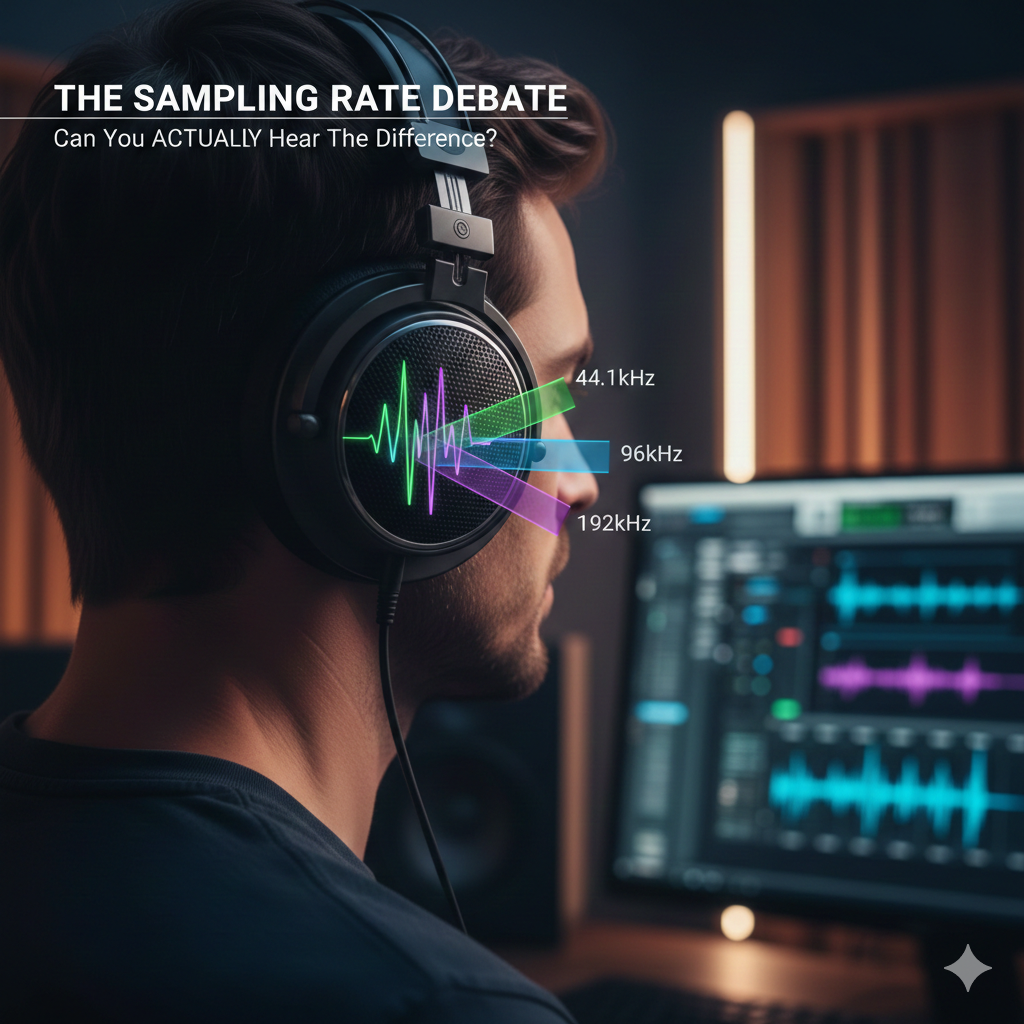
Can You Hear the Difference Between 44.1kHz, 96kHz, and 192kHz Audio?

Can You Hear the Difference Between 44.1kHz, 96kHz, and 192kHz Audio?

The debate over high-resolution audio—specifically, whether higher sampling rates like 96kHz and 192kHz actually sound better than the long-standing CD standard of 44.1kHz—is one of the most persistent and polarizing topics in the audiophile world. While the higher numbers look better on paper, the question of audibility for the average listener is complex and involves

Can You Hear the Difference Between 44.1kHz, 96kHz, and 192kHz Audio? Read More »

Does Higher kHz Mean Better Quality? The Truth Behind Audio Sample Rates

Does Higher kHz Mean Better Quality? The Truth Behind Audio Sample Rates

In the world of digital audio, you’ll often see sample rates measured in kilohertz (kHz). Numbers like 44.1 kHz, 48 kHz, 96 kHz, and 192 kHz are commonly used in streaming platforms, DAC specifications, and high-resolution downloads. But there’s a question nearly every audiophile eventually asks: Does higher kHz actually mean better sound quality? The

Does Higher kHz Mean Better Quality? The Truth Behind Audio Sample Rates Read More »

What Is the Best kHz for High-Quality Audio? The Audiophile Guide

What Is the Best kHz for High-Quality Audio? The Audiophile Guide

When it comes to digital audio, few topics spark more confusion—and debate—than sample rate, often expressed in kilohertz (kHz). Whether you’re streaming music, using a high-end DAC, or diving into hi-res audio formats, you’ve probably seen numbers like 44.1 kHz, 48 kHz, 96 kHz, and 192 kHz. But what do these numbers really mean? And

What Is the Best kHz for High-Quality Audio? The Audiophile Guide Read More »

What Is the Best Sample Rate for Audiophiles? The Ultimate Guide

What Is the Best Sample Rate for Audiophiles? The Ultimate Guide

In the audiophile world, few debates spark as much discussion as sample rate. Whether you’re streaming hi-res music, playing vinyl rips, or running a high-end DAC, you’ve likely encountered numbers like 44.1 kHz, 48 kHz, 96 kHz, or even 192 kHz. But what do these sample rates really mean—and more importantly: Which one gives you

What Is the Best Sample Rate for Audiophiles? The Ultimate Guide Read More »

Is 44.1 kHz or 48 kHz Better? A Definitive Guide for Audiophiles

Is 44.1 kHz or 48 kHz Better? A Definitive Guide for Audiophiles

For decades, audiophiles have debated one of digital audio’s most persistent questions: Is 44.1 kHz or 48 kHz the better sample rate? While the difference sounds minor on paper—a mere 3,900 cycles per second—the real answer involves history, engineering, psychoacoustics, and how our gear processes audio. Let’s break it down with clarity and precision. Why

Is 44.1 kHz or 48 kHz Better? A Definitive Guide for Audiophiles Read More »