
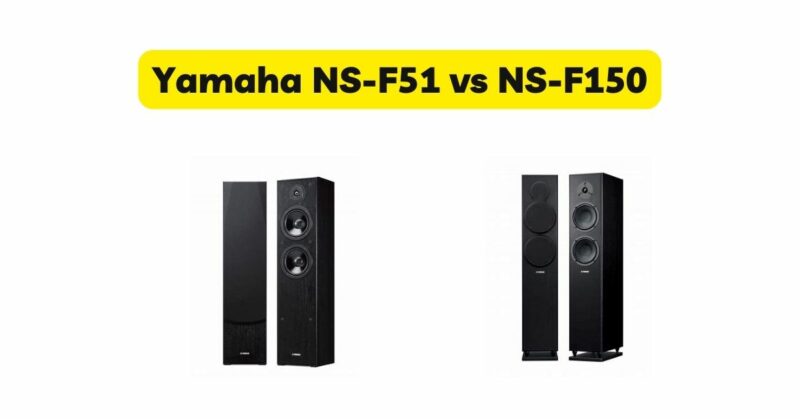
When it comes to home audio systems, Yamaha has established a reputation for delivering high-quality sound and reliable performance. In this article, we will compare two popular floor-standing speakers from Yamaha: the NS-F51 and the NS-F150. Both speakers belong to Yamaha’s NS-F series and are designed to provide immersive audio experiences for music and home theater enthusiasts. By examining their design, sound quality, power handling, connectivity options, and overall performance, we aim to help you make an informed decision when choosing between these two models.
Design: The design of a floor-standing speaker not only affects its aesthetic appeal but also its performance and placement options in your home. The Yamaha NS-F51 features a sleek and modern design with a slim profile, allowing it to blend well with different room decors. It stands at approximately 37 inches tall and is available in a black finish. The NS-F150, on the other hand, has a more substantial build with a taller and wider cabinet. It measures approximately 39 inches in height and is also available in a black finish. Both speakers exude a sense of elegance and are well-crafted, showcasing Yamaha’s attention to detail and build quality.
Sound Quality: When it comes to sound quality, both the NS-F51 and NS-F150 excel in their respective ways. The NS-F51 features a two-way, three-speaker configuration, including dual 6.5-inch woofers and a 1-inch tweeter. This setup allows for accurate and detailed reproduction of audio across different frequencies. The NS-F150, on the other hand, boasts a three-way, four-speaker configuration. It features dual 6.5-inch woofers, a 4-inch midrange driver, and a 1-inch tweeter. This configuration offers enhanced clarity, separation, and a wider frequency response. In terms of soundstage and imaging, both speakers provide immersive experiences, creating a spacious and lifelike audio environment.
Power Handling and Sensitivity: The power handling and sensitivity of a speaker determine its ability to handle higher volumes and deliver dynamic sound. The NS-F51 has a power handling capacity of up to 240 watts, making it suitable for medium to large-sized rooms. It also has a sensitivity rating of 89 dB, which means it can produce sound efficiently with relatively low power input. The NS-F150, on the other hand, has a higher power handling capacity of up to 240 watts, allowing it to handle more demanding audio requirements. It also has a slightly higher sensitivity rating of 90 dB, making it slightly more efficient in converting power into sound. Both speakers can deliver robust and impactful sound, but the NS-F150 has a slight advantage in terms of power handling.
Connectivity and Compatibility: In terms of connectivity options, both the NS-F51 and NS-F150 offer versatility to accommodate various audio sources. They feature dual gold-plated binding post terminals, allowing you to connect them to your amplifier or receiver using speaker wire. This ensures a secure and reliable connection. Additionally, they are compatible with a wide range of audio equipment, including AV receivers, amplifiers, and home theater systems. Both speakers are designed to integrate seamlessly into your existing audio setup, providing flexibility and convenience.
Additional Features: While both the NS-F51 and NS-F150 focus primarily on delivering exceptional sound quality, there are a few noteworthy additional features to consider. The NS-F51 includes an advanced YST II (Yamaha Active Servo Technology II) feature, which enhances bass response for a more impactful low-end performance. This is particularly beneficial for music genres that rely heavily on bass, such as electronic or hip-hop. The NS-F150, on the other hand, incorporates an additional midrange driver, which contributes to more accurate and detailed reproduction of vocals and instruments. These additional features cater to specific audio preferences and can further enhance the overall listening experience.
Conclusion: In comparing the Yamaha NS-F51 and NS-F150 floor-standing speakers, both models excel in delivering high-quality audio performance. The NS-F51 offers a slim and modern design, accurate sound reproduction, and the benefit of Yamaha’s YST II bass technology. It is an excellent choice for those seeking a balance between aesthetics and performance in medium-sized rooms. On the other hand, the NS-F150 boasts a more substantial cabinet design, a three-way configuration for enhanced clarity, and slightly higher power handling. It is an ideal option for those who prioritize powerful sound and have larger listening spaces. Ultimately, your choice between the NS-F51 and NS-F150 will depend on your specific requirements, room size, and personal preferences for sound reproduction.