
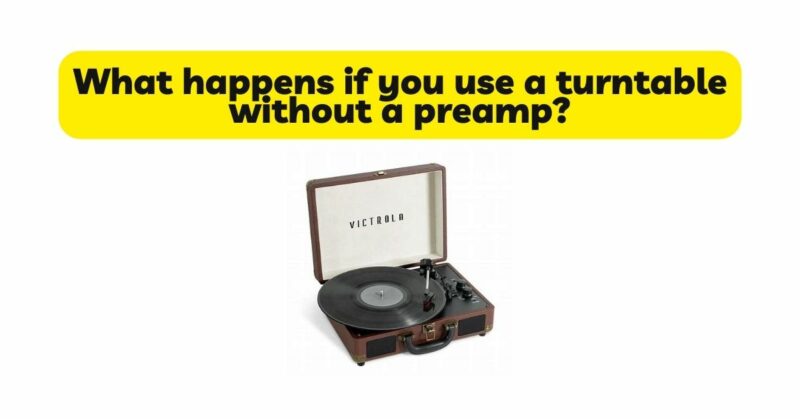
A preamplifier, commonly known as a preamp, plays a critical role in the audio chain, particularly when it comes to turntables. Its main function is to amplify the low-level signal produced by a turntable’s cartridge and provide the necessary equalization for accurate sound reproduction. However, have you ever wondered what happens if you use a turntable without a preamp? In this article, we will delve into the consequences of bypassing a preamp and explore the potential effects on sound quality, compatibility, and overall performance.
- The Importance of a Preamp: Before diving into the implications of using a turntable without a preamp, it’s crucial to understand why preamps are necessary in the first place. Turntable cartridges generate a weak phono-level signal that requires amplification to reach the line-level signal suitable for playback through speakers or audio systems. Preamps not only amplify the signal but also apply the correct equalization curve (such as RIAA equalization) to ensure accurate sound reproduction.
- Signal Amplification: When you use a turntable without a preamp, the most immediate consequence is a significantly reduced audio signal. The weak phono-level signal from the cartridge cannot reach an adequate level for direct connection to speakers or audio systems. As a result, the volume will be extremely low, making it difficult to hear the music or enjoy the full range of dynamics in the recordings.
- Frequency Response and Equalization: Another significant impact of bypassing a preamp is the absence of proper equalization. Turntables apply RIAA equalization during the vinyl mastering process, and preamps are designed to reverse this equalization curve during playback. Without a preamp, the signal will lack the necessary equalization adjustments, leading to an imbalanced frequency response. The bass, midrange, and treble may sound skewed, affecting the overall tonal accuracy and potentially distorting the intended sound.
- Compatibility Challenges: Using a turntable without a preamp can pose compatibility challenges. Most audio systems and powered speakers expect a line-level input, which the preamp provides. Without a preamp, the low-level signal from the turntable may not be compatible with these systems, resulting in a mismatched signal level and potential distortion. Additionally, some audio systems lack a dedicated phono input, which means they won’t have the necessary preamplification to accommodate a turntable without a preamp.
- Noise and Interference: Preamps play a crucial role in minimizing noise and interference that may be introduced into the audio signal. They help shield the delicate phono signal from external electromagnetic interference, reducing the likelihood of humming, buzzing, or other unwanted noises. When using a turntable without a preamp, the lack of proper shielding and amplification can make the audio susceptible to noise, compromising the listening experience.
- Limited Control and Adjustments: Preamps often provide additional features and adjustments to fine-tune the sound. These can include gain controls, impedance settings, cartridge loading options, and more. Bypassing a preamp means losing access to these control options, limiting the ability to customize and optimize the sound according to personal preferences or the characteristics of the specific turntable and cartridge combination.
- Possible Solutions: While using a turntable without a preamp can lead to various issues, there are alternative solutions to consider:
- External Phono Preamp: Investing in a dedicated external phono preamp will provide the necessary amplification and equalization, ensuring optimal sound quality and compatibility with audio systems.
- Turntable with Built-in Preamp: Consider upgrading to a turntable that includes a built-in preamp. These turntables simplify the setup process and offer convenience, as the preamp is integrated into the turntable itself.
- Phono Preamp/Receiver: If you already own a receiver with a dedicated phono input, connecting the turntable directly to the receiver will utilize its built-in preamp.
Conclusion: Using a turntable without a preamp can have significant consequences on sound quality, compatibility, and overall performance. The lack of proper signal amplification, equalization, and shielding can result in low volume, imbalanced frequency response, potential distortion, and susceptibility to noise. However, by investing in an external phono preamp or considering turntables with built-in preamps, you can ensure the accurate reproduction of your vinyl records, enjoying the full richness and depth of the music. Remember, a preamp is an integral part of the turntable setup, and neglecting its importance can compromise the vinyl listening experience.