
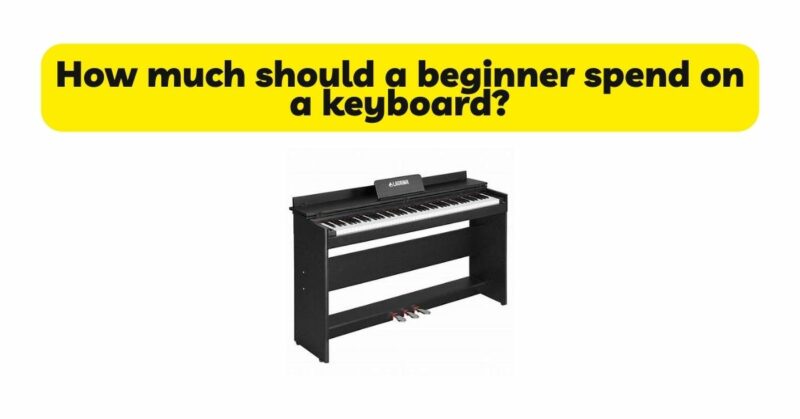
As a beginner aspiring to learn the keyboard, determining an appropriate budget for your instrument is a crucial step. While it’s important to find a keyboard that meets your needs, skill level, and musical aspirations, it’s equally essential to consider your financial constraints. In this article, we will explore the factors to consider when setting a budget for a beginner keyboard and provide guidance on how much a beginner should ideally spend on their instrument.
- Define Your Goals and Commitment: Before determining your budget, clarify your goals and commitment to learning the keyboard. Are you a casual learner seeking basic skills, or do you have long-term aspirations to become a proficient player? Your level of commitment and future plans will influence the amount you should invest in a keyboard.
- Consider Your Budget: Setting a budget that aligns with your financial situation is crucial. It’s important to strike a balance between affordability and the features and quality you desire in a keyboard. Assess your financial resources and determine a reasonable amount you can comfortably allocate towards purchasing a keyboard.
- Price Range for Beginner Keyboards: Beginner keyboards are generally available in a wide price range, which can be influenced by factors such as brand, features, quality, and type of keyboard. As a general guideline, beginners can expect to spend between $100 to $500 on a suitable keyboard. This price range accommodates various skill levels and offers a range of features to support your learning journey.
- Features vs. Price: Consider the features that are essential for your learning experience. While higher-priced keyboards may offer more advanced features, it’s important to assess which features are crucial for your current stage as a beginner. Avoid paying for unnecessary features that may not be beneficial for your immediate learning needs.
- Quality and Durability: While it may be tempting to opt for the lowest-priced option, be cautious about compromising on quality. Investing in a keyboard of reasonable quality ensures that it will withstand regular use and provide a satisfactory playing experience. Balance affordability with durability to make a wise investment.
- Brand Reputation: Brand reputation can play a role in determining the cost of a keyboard. Established brands often offer reliable instruments backed by years of expertise and customer support. However, lesser-known brands may also offer affordable options with decent quality. Research and read reviews to gauge the reputation and reliability of different brands before making a decision.
- Essential Features for Beginners: As a beginner, there are a few key features you should prioritize when selecting a keyboard:
a) Adequate Number of Keys: Ensure that the keyboard has a minimum of 61 keys to provide a sufficient range for learning and playing a wide variety of music.
b) Touch Sensitivity: Opt for a keyboard with touch sensitivity, as it allows for expressive playing by responding to the velocity of key presses.
c) Built-in Speakers: Having built-in speakers allows you to hear the sound directly from the keyboard, eliminating the need for additional amplification.
d) Connectivity Options: Consider keyboards with basic connectivity options such as USB ports or MIDI connections, as they enable you to connect to external devices or software for recording and expanding your musical possibilities.
- Consider Second-Hand Options: If you have budget constraints, exploring the second-hand market can be a viable option. Many reputable online platforms and local music stores offer used keyboards in good condition at lower prices. However, exercise caution when purchasing used instruments, and thoroughly inspect and test them before finalizing a purchase.
- Value for Money: While budgeting for a keyboard, seek the best value for your investment. Assess the overall package, including the keyboard’s quality, features, warranty, customer support, and included accessories. A slightly higher-priced keyboard with better quality and comprehensive features may offer better long-term value than a cheaper alternative.
- Long-Term Considerations: Consider your long-term goals and potential progression in playing the keyboard. If you anticipate rapid improvement or have aspirations to explore advanced techniques, investing in a slightly higher-priced keyboard with additional features and better quality may be a wise choice to accommodate your growth.
Conclusion: Determining how much a beginner should spend on a keyboard involves a careful consideration of personal goals, budget constraints, essential features, brand reputation, and long-term aspirations. As a general guideline, beginners can expect to spend between $100 to $500 on a suitable keyboard. Focus on obtaining a keyboard that balances affordability, essential features, and reasonable quality. Remember that while the price is important, the most critical factor is finding a keyboard that inspires and supports your learning journey. By setting a budget and conducting thorough research, you can find a beginner keyboard that suits your needs, provides a satisfying playing experience, and encourages your progress as a musician.